Finding the right fit comes down to four measurable features: seat width, seat depth, how evenly the seat distributes pressure, and how far the chair adjusts to fit a range of body types. A high weight-capacity number does not guarantee a good fit if the seat is too narrow, shallow, or flat to support wider hips and thighs without creating pressure points.
CoreChair was designed around documented seat dimensions and pressure-mapping research rather than a marketed capacity figure, which is why this guide focuses on the criteria that actually determine comfort.
Why Fit Matters More Than a Size Label for Plus Size Office Chairs
Most office chair marketing aimed at larger bodies leads with a single number: weight capacity, usually framed as a “big and tall” rating that reduces an entire body type to one figure on a spec sheet. That number says nothing about whether the seat is wide enough for wider hips, deep enough to support the thighs without cutting off circulation behind the knees, or shaped to spread weight evenly instead of concentrating it on a few pressure points.
Two people can weigh the same amount and still need very different chairs. Seat width, seat depth, hip shape, torso length, and how much support the sit bones need all vary independently of body weight. Treating weight capacity as the only relevant spec overlooks nearly every variable that determines whether a chair still feels supportive after four hours, let alone eight.
A better approach starts with the body, not the label. Looking at seat width and depth, pressure distribution, and adjustability range gives a much clearer picture of whether a chair will hold up during a full workday, regardless of what capacity number appears on the box.

What to Look For in an Office Chair for Plus Size Woman
Three criteria determine whether a chair actually delivers all-day comfort for a wider range of bodies: seat width and depth, pressure distribution, and adjustability range. Each one addresses a different part of how the body interacts with the seat over the course of a workday.
Seat Width and Depth: What Makes the Best Office Chair for Wide Hips
Seat width determines whether the hips and outer thighs rest fully on the seat surface without hanging off the edge or pressing against hard side bolsters. A seat that is too narrow forces the body to perch near the center of the cushion, concentrating weight instead of spreading it across a wider surface.
Seat depth matters just as much, and it is the dimension most buying guides skip. A seat that is too deep for a shorter torso pushes the lower back away from any backrest support and creates pressure behind the knees, while a seat that is too shallow leaves the thighs unsupported. The best fit comes from a seat that adjusts across a depth range rather than locking users into one fixed depth, since torso and thigh length do not scale with body weight in a predictable way.
Pressure Distribution, Not Just Padding
Thick padding is often marketed as the solution for larger bodies, but padding alone does not solve pressure distribution. A flat, heavily padded seat can still create concentrated pressure under the sit bones, because soft foam compresses unevenly and the underlying seat pan shape still determines where weight lands.
What actually reduces pressure points is a seat shaped to spread weight across a wider surface, cradling the sit bones and thighs rather than letting them sink into a single depression. Pressure-mapping research, such as the Cornell University pressure-mapping study, measures this directly by recording how much seat surface exceeds a threshold associated with reduced blood flow and discomfort. A seat that keeps more of that surface below the threshold is doing more real work than a seat that simply has more foam.
Adjustability Range
A chair that adjusts across a wide range accommodates far more real bodies than a chair built around a single average size. Seat height, seat depth, and tilt tension all need enough adjustment range to fit a genuinely diverse set of body proportions, not just a narrow midpoint.
The most useful adjustability range covers both shorter and taller users, since hip width, torso length, and leg length do not move together in a predictable pattern. A chair described as fitting a documented range, for example 5 feet to 6 feet 5 inches tall, is making a claim backed by a specific range rather than an assumption about one body type.
How CoreChair’s Design Fits a Wider Range of Bodies
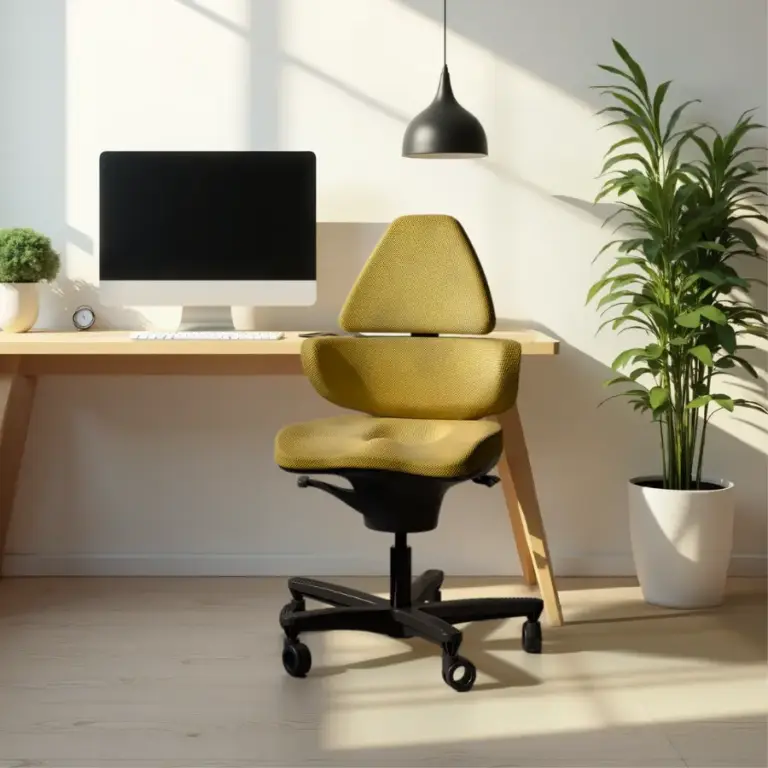
CoreChair’s Classic chair was built around the same fit criteria outlined above, rather than around a marketed capacity number. The seat measures 16.7 to 18.3 inches in depth, 19.3 inches in width, and adjusts from 17.2 to 19.2 inches in height, and the chair is designed to fit users from 5 feet to 6 feet 5 inches tall. Those figures come directly from CoreChair’s documented specifications.
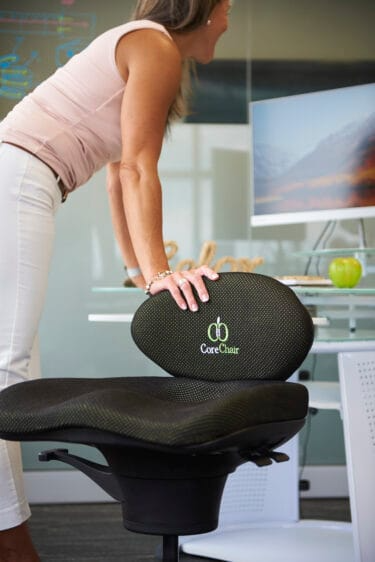
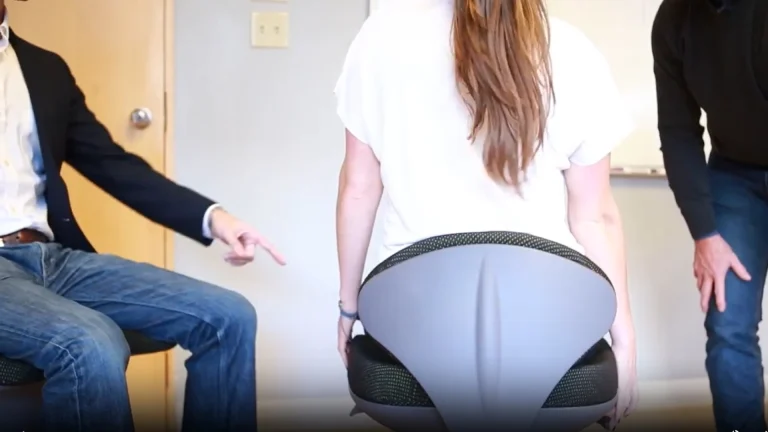
The sculpted seat shape is central to how CoreChair distributes pressure. Instead of a flat cushion, the seat is contoured to cradle the sit bones and support the thighs across a wider surface, the same principle examined in the Cornell University pressure-mapping study. That study compared CoreChair against a standard high-end ergonomic chair during a typing task and found fewer pressure points above the 80 mmHg threshold linked to reduced circulation, meaning weight was more evenly spread across the seat rather than concentrated in a few spots.
The Classic’s lack of full-length armrests reflects the same design logic. CoreChair’s design leaves the arms and shoulders free to settle into a natural position instead of being constrained by a fixed rest, which matters for anyone whose shoulder width or arm position does not match a narrow default assumption. Combined with a patented pivot mechanism that allows controlled movement in every direction, the seat supports the body instead of simply containing it.
CoreChair does not publish a specific weight-capacity figure, and that is a deliberate choice. The engineering focus stays on seat geometry, pressure distribution, and fit range, because those are the variables that determine whether a chair actually works for a given body. For someone comparing options, that means judging the CoreChair Classic on its documented dimensions and research results rather than on a capacity claim that competitor listings tend to lead with.

Common Mistakes When Shopping for Plus Size Office Chairs
Even shoppers who know what they need can be steered wrong by how plus size office chairs are typically marketed.
- Shoppers often prioritize a high weight-capacity number over seat width and depth, even though capacity alone does not describe how the seat is shaped.
- Buyers frequently assume more padding automatically means less pressure, when a poorly shaped seat can still create pressure points regardless of cushion thickness.
- Shoppers sometimes choose the largest available seat without checking depth, which can leave a shorter torso without back support or create pressure behind the knees.
- Many buyers skip testing the adjustability range and assume one seat height or depth setting will work for their proportions.
- Some shoppers avoid armrests altogether without checking whether a chair’s design intentionally omits them for better shoulder and arm positioning.
Avoiding these mistakes starts with asking different questions than most product listings answer. Instead of asking how much weight a chair holds, ask how the seat is shaped, how far it adjusts, and how it distributes pressure. Those questions lead to a genuinely better fit, regardless of which specific search term or size label started the search. Our related guide on an ergonomic computer chair for a heavy person covers these same fit principles from a slightly different angle and is worth reading alongside this one.
FAQ
What Makes the Best Office Chair for Plus Size Woman So Comfortable?
Comfort depends on seat width and depth, how evenly the seat spreads pressure, and whether the armrests and adjustability range fit real body proportions. Weight capacity alone does not address any of these details. The most comfortable option is usually the one whose seat geometry matches the user’s hip width, thigh length, and torso length, not the one with the highest capacity rating.
Do wider hips need a wider seat, or a differently shaped one?
Width matters, but shape matters just as much. A seat that is sculpted to cradle the sit bones and distribute weight across the hips and thighs will often feel more supportive than a flat seat that is simply wider. The best fit usually combines adequate width with a seat shape designed for even pressure distribution.
Is weight capacity the only spec worth checking?
No. Weight capacity says nothing about seat width, seat depth, pressure distribution, or adjustability range, all of which affect comfort far more directly. A chair with a high capacity rating can still be a poor fit if the seat is too narrow, too shallow, or too flat.
Can one ergonomic chair design fit both petite and plus size body types?
Yes, an ergonomic office chair for plus size woman can also suit a petite frame, provided the design offers a wide adjustability range rather than a single fixed size. A seat that adjusts across a documented height and depth range, combined with a shape that distributes pressure evenly, supports a broad range of body proportions rather than one narrow average.
What are the seat dimensions on the CoreChair Classic?
The CoreChair Classic seat measures 16.7 to 18.3 inches in depth and 19.3 inches in width, with a seat height that adjusts from 17.2 to 19.2 inches. The chair is designed to fit users from 5 feet to 6 feet 5 inches tall.
Should armrests be avoided for better comfort and fit?
Not necessarily, but full-length fixed armrests are not automatically better. For some body types, a design that omits full-length armrests allows the arms and shoulders to settle into a more natural position, which can matter more than having an armrest at all.
How long does it take to adjust to an active-sitting chair?
Most people need one to two weeks to adjust to an active-sitting chair, since the postural muscles that stabilize the pelvis and spine are being engaged in a new way. Mild muscle awareness during that period is a normal part of adjusting, not a sign that the chair does not fit.
Find the Right Fit with CoreChair
If you are ready to move past weight-capacity marketing and choose based on actual fit, the CoreChair Classic is built around the seat geometry and pressure-distribution research described above. Every purchase includes a 60-day satisfaction guarantee, so there is time to confirm the fit works before committing.
CoreChair also offers a complimentary CoreFit consultation, a one-on-one session with a Kinesiologist who can walk through seat dimensions, adjustability range, and fit questions specific to your body. The consultation is a low-risk way to get a direct answer before buying. Visit CoreChair to explore the Classic and schedule a CoreFit consultation.