If you have ever noticed that you tend to slide forward in your chair until you are resting on your lower back rather than your sit bones, you have experienced sacral sitting. It feels like a neutral, relaxed position — but it is one of the most structurally damaging postures you can maintain for hours at a time.
This habit is widespread, poorly understood, and almost never addressed by conventional ergonomic advice. Understanding what it is, why it happens, and how to stop it is one of the most practical things you can do for your long-term spinal health.
What Is Sacral Sitting?
Sacral sitting is a posture in which your body weight rests primarily on the sacrum — the triangular bone at the base of your spine — rather than on the ischial tuberosities, commonly called the sit bones. In a healthy, neutral sitting position, the sit bones bear your weight, the pelvis is in a neutral tilt, and the lumbar spine maintains its natural inward curve. When you slide into this collapsed posture, the pelvis rotates backward, weight transfers from the sit bones to the sacrum, and the lumbar curve flattens or even reverses.
From the outside it looks like a semi-reclined slouch — hips forward of the torso, lower back flat, upper back rounded, head projected forward. It often feels comfortable initially because it reduces the muscular effort required to stay upright. But short-term comfort masks serious structural consequences over time.
The Sacrum and Why It Matters
The sacrum is not designed to bear sitting load. It connects the lumbar spine to the pelvis and serves as the foundation for spinal stability. When you repeatedly rest your weight on it for hours each day, several damaging patterns develop: lumbar discs are loaded in a flexed position that accelerates degeneration; posterior chain muscles become lengthened and weakened; hip flexors adaptively shorten; and the movement patterns of the pelvis and lower back become disrupted.
This is why sacral pain when sitting is so common — and so often misdiagnosed. The pain is structural, the product of thousands of hours of loading a bone in a way it was never designed to bear.

Why This Pattern Happens
The Chair Design Problem
Most office chairs are designed for static sitting. Their seat pans are flat or slightly reclined, with insufficient contouring to position the pelvis correctly. When you sit in a flat-seated chair for any length of time, gravity and fatigue pull your pelvis into a posterior tilt. You slide forward. Your weight shifts from the sit bones to the sacrum. This posture becomes your default — not because you chose it, but because your chair made it inevitable.
The more comfortable a flat chair feels at first, the more likely it is promoting this problem. That initial comfort is the sensation of your postural muscles switching off and your skeleton collapsing into passive load-bearing.
Muscle Fatigue and Postural Collapse
Sitting upright on the sit bones requires active engagement of your core and postural muscles. These muscles fatigue. Within 20 to 30 minutes in a standard chair, the pelvis begins its backward rotation. Most workers spend the majority of their day in this collapsed position not by choice but by muscular exhaustion — they simply cannot maintain neutral pelvic alignment in a chair that provides no dynamic support.
Habit and Body Awareness
Many people who sit this way have never been told what correct sacral sitting posture actually means. Without a reference point for proper alignment — pelvis neutral, sit bones bearing weight, lumbar curve maintained — self-correction is impossible. And even those who know what good posture looks like struggle to maintain it in chairs not designed to support it.
The Damage Caused by This Sitting Pattern
Lumbar Disc Loading
The most serious consequence is the sustained flexion load placed on the lumbar intervertebral discs. Research consistently shows that lumbar flexion increases intradiscal pressure and promotes disc degeneration over time. This collapsed posture keeps the lumbar spine in persistent flexion — the exact loading pattern from which disc herniation and degenerative disc disease develop.
The lower back pain that millions of office workers attribute to “bad backs” or aging is frequently the cumulative result of years sitting this way.
Gluteal Inhibition
Prolonged weight-bearing on the sacrum compresses and stretches the gluteal muscles in a way that reduces their neural activation — sometimes called gluteal amnesia. When the glutes stop firing correctly, hamstrings and lower back muscles compensate, creating the imbalances that generate chronic pain and reduce movement quality outside the office.
Hip Flexor Shortening
The posterior pelvic tilt puts the hip flexors in a chronically shortened position. Over time they adaptively shorten, pulling the pelvis forward during standing and walking — paradoxically contributing to lumbar hyperextension when you leave the chair. Poor sacral sitting posture creates dysfunction in two directions simultaneously.
Upper Body Cascade
The problem does not stay in the lower back. The collapsed lumbar foundation forces the thoracic spine into increased kyphosis, the shoulders forward, and the head into forward projection. Neck pain, upper back tension, shoulder dysfunction, and headaches are all common downstream consequences. Sacral pain when sitting is frequently accompanied by these secondary complaints — clinicians often treat the upper body symptoms without recognizing the root cause lower down.
How to Correct This Posture
The Core Problem: Willpower Is Not Enough
Advice to “sit up straight” fails because it treats a structural problem as a behavioral one. You can correct your posture voluntarily for a few minutes — but you cannot override muscle fatigue with willpower for eight hours. The fix must come from the seating environment, not from sustained conscious effort.
This is the fundamental failure of conventional ergonomic guidance. Reminders, posture apps, and lumbar pillows address symptoms without changing the mechanical conditions that create the problem.
What Proper Seated Alignment Requires
Three simultaneous conditions are needed:
1. Pelvic positioning — the pelvis must be supported in a neutral tilt so the sit bones bear weight rather than the sacrum
2. Dynamic lumbar support — static support holds one position; real lumbar health requires support that follows movement
3. Continuous muscle engagement — the core muscles that maintain neutral pelvic alignment must remain active throughout the sitting session
None of these is achievable in a standard flat-seated chair for a full workday.
How Active Sitting Solves the Problem
The Seat Design That Changes Everything
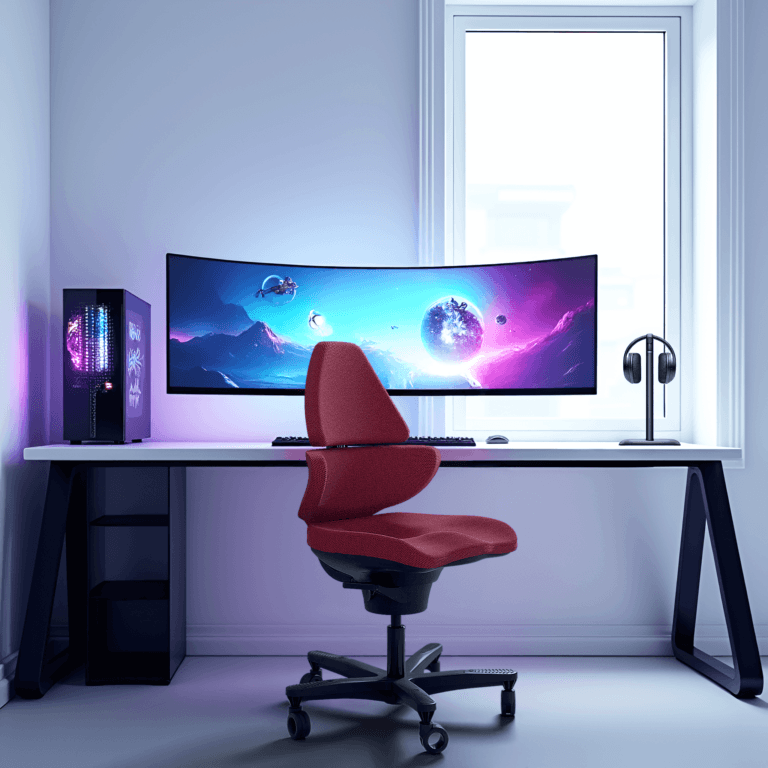
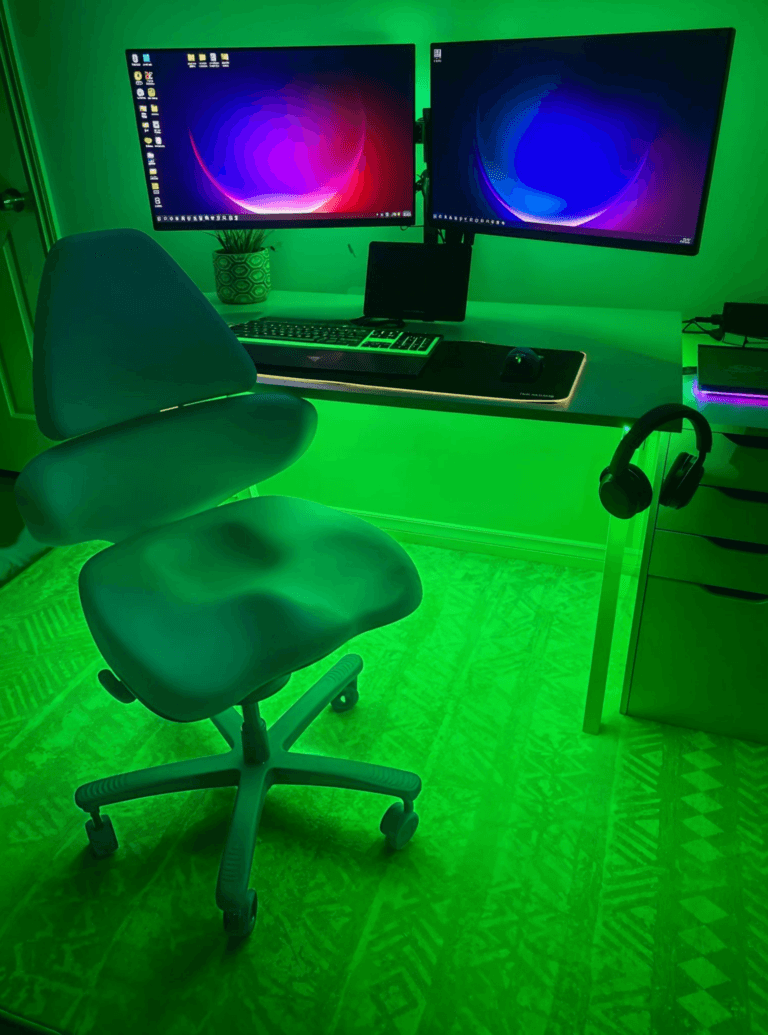
CoreChair is built around a sculpted seat design that makes sacral sitting structurally impossible. The contoured surface positions the ischial tuberosities — the sit bones — as the primary load-bearing point. The sacrum is unloaded. The pelvis is guided into neutral alignment by the shape of the seat itself, not by conscious postural effort.
Cornell University research confirmed that CoreChair achieves significantly better sitting pressure distribution than high-end conventional ergonomic chairs — with weight appropriately placed through the sit bones rather than structures not designed for sustained loading.
This sculpted design is the most direct available solution to the problem. When the seat itself positions you correctly, the downstream cascade of lumbar flattening, thoracic rounding, and forward head posture never gets the structural foundation to develop.
Movement That Prevents Postural Collapse
The core reason this pattern becomes default in standard chairs is fatigue — postural muscles that maintain neutral pelvic alignment exhaust and switch off. CoreChair’s patented 360-degree movement base changes this by continuously engaging those muscles at a low level throughout the sitting session.
Research from the University of Waterloo confirmed that CoreChair significantly increased trunk muscle activation compared to conventional ergonomic chairs and stability balls. This continuous engagement prevents the muscular fatigue that leads to posterior pelvic collapse — not by asking you to try harder, but by making low-level engagement the automatic consequence of sitting on the chair.
When your core muscles stay engaged, your pelvis does not rotate backward. Your sit bones remain the weight-bearing surface. The problem simply does not occur.
Relieving Sacral Pain When Sitting
For workers who already experience sacral pain when sitting, CoreChair provides relief through two mechanisms: pressure redistribution and movement.
The sculpted seat removes direct load from the sacrum — the immediate structural cause of pain. The movement base prevents the static loading patterns that cause discomfort to accumulate over time. The Memorial University study found that CoreChair reduced perceived back pain and promoted healthier sitting patterns. The University of Guelph study measured improved circulation during active sitting — supporting the tissue recovery that painful, compressed areas require.
The CoreChair Elite offers additional adjustability for users who need maximum customization for their specific pelvic and lumbar dimensions.
Supporting Whole-Body Posture
Correcting the root cause at the base corrects the full postural cascade above it. When the pelvis is neutral and the lumbar curve is maintained, the thoracic spine can extend, the shoulders can sit back and down, and the head can balance over the spine rather than projecting forward. The connection between sitting posture and overall health runs upward from the base of the spine — fix the foundation, and many downstream problems resolve.

Practical Steps to Stop This Pattern Today
1. Check How You Are Currently Sitting
Place your hands under your sitting bones. If you feel mostly soft tissue and bone in the wrong place rather than the firm prominence of your ischial tuberosities, you are likely in a collapsed posterior posture. Notice whether your lower back feels flat or reversed. Notice how far forward your hips have drifted relative to your shoulders.
2. Replace Your Chair
The most effective single step is replacing a flat-seated static chair with one designed to position the pelvis correctly. The CoreChair Classic is engineered for exactly this purpose — its sculpted seat positions the pelvis correctly from the moment you sit down.
3. Adjust Your Workstation Height
Even on CoreChair, a workstation that is too high or too low will pull you into compensatory postures. Your elbows should be at approximately 90 degrees when shoulders are relaxed, and your monitor at eye level. These adjustments support the pelvic alignment that CoreChair establishes.
4. Take Regular Movement Breaks
Every 60 minutes, stand up and walk for two to three minutes. This resets circulation, gives your postural muscles a full range of motion, and reinforces the movement patterns that prevent collapse from becoming habitual.
5. Strengthen Your Posterior Chain
Exercises targeting glutes, hamstrings, and lumbar extensors help reverse the muscle imbalances this sitting pattern creates. Hip bridges, Romanian deadlifts, and prone back extensions rebuild the posterior chain strength that supports neutral pelvic alignment. CoreChair’s continuous core engagement during sitting complements these exercises by maintaining the training stimulus throughout your workday.
Your Chair Is Choosing Your Posture
What is sacral sitting, ultimately? It is what happens when your chair fails to support you and your body chooses the path of least resistance — at the cost of your lumbar discs, your glutes, your hip flexors, and your entire postural chain.
The solution is not more discipline or more reminders. It is a chair that makes correct sitting automatic. CoreChair’s research-backed sculpted seat and active movement base address this by design — giving your sit bones the support they need and your postural muscles the engagement they require.
Explore the full CoreChair collection and read what real users say about the transformation that comes from sitting the way your body was designed to sit.
Stop sitting on your sacrum. Start sitting on your sit bones. The difference is everything.
Research and References
Mayo Clinic NEAT™ Certification — CoreChair has been certified for its measurable increases in daily energy output, aligning with NEAT™ (Non-Exercise Activity Thermogenesis) guidelines, which contribute to overall health.
Cornell University Pressure Mapping Study — This study highlights the better weight distribution and comfort offered by the CoreChair compared to high-end ergonomic chairs.
University of Waterloo Posture & Muscle Recruitment Study — CoreChair was found to increase trunk stability, movement, and core muscle activation, improving posture and muscle engagement during sitting.
University of Guelph Physiological & Cognitive Measures Study — The study showed improved blood flow, cognitive performance, and movement when using CoreChair, making it an effective tool for better overall health.
Memorial University Active Sitting Study — Participants using CoreChair reported reduced perceived back pain, improved sitting posture, and better lower limb blood flow compared to traditional sitting.
Additional Studies:
Biomechanical Benefits of Active Sitting (Leger et al., 2023) — Active chairs, like CoreChair, increase trunk movement, muscle activity, and postural variation, leading to better physical engagement.
Active Sitting vs Traditional Sitting and Standing (Leger et al., 2022) — This study emphasizes that active sitting improves circulation, muscle engagement, and energy expenditure compared to traditional sitting and standing.
Physiological and Cognitive Outcomes with Multi-Axial Chair (Triglav et al., 2019) — Multi-axial active chairs enhance circulation and reduce cognitive errors, contributing to better mental and physical performance.
Active Sitting with Backrest Support Feasibility (Kuster et al., 2018) — This study found that active chairs can incorporate backrest support without discomfort, combining the benefits of movement with ergonomic design.