The way you carry your body speaks before you say a word. Whether you are walking into a job interview, leading a meeting, or simply sitting at your desk, your posture communicates confidence — or the lack of it. The relationship between body posture and confidence is one of the most well-studied connections in behavioral psychology, and the implications for your daily life are significant. In fact, poor posture can even trigger anxiety and affect your mood.
The best part? You do not need years of therapy or self-help books to start building confidence. Sometimes the shift begins with something as simple as how you sit.
The Science Behind Posture and Confidence
Researchers have long observed that confident people sit and stand differently than those who feel insecure. But the relationship is not one-directional — your posture does not just reflect your confidence, it actively shapes it.
The Power Pose Research
In 2010, social psychologist Amy Cuddy published groundbreaking research showing that holding expansive, open postures for just two minutes increased testosterone levels by 20 percent and decreased cortisol by 25 percent. While the hormonal findings have been debated, subsequent studies have consistently confirmed the behavioral effect: people who adopt upright, open postures report feeling more confident, powerful, and assertive.
How Your Brain Reads Your Body
Your brain constantly monitors your physical state through a process called proprioception. When you sit upright with your chest open and shoulders back, your brain interprets these signals as indicators of safety, dominance, and control. When you slouch with rounded shoulders and a collapsed chest, the signals suggest vulnerability and submission.
This means posture and self confidence are linked at a neurological level. Your body is not just expressing emotion — it is generating it.
What Others See
Posture and confidence also interact through social perception. Research published in the European Journal of Social Psychology found that people who maintained upright posture were rated as more competent, likable, and trustworthy by observers. In professional settings, this translates directly to how colleagues, clients, and managers perceive your capabilities.
Why Traditional Chairs Undermine Your Confidence
Most people spend eight or more hours daily in an office chair. If that chair encourages slouching — and most do — you are spending the majority of your waking hours in a posture that actively diminishes your confidence.
Traditional office chairs create several problems:
- Passive support encourages your muscles to disengage, leading to gradual slouching
- Fixed positions lock you into static postures that compress your chest and round your shoulders
- Seat pressure causes discomfort that triggers fidgeting and hunching
- No core engagement means your stabilizing muscles weaken over time, making good posture harder to maintain
The result is a daily cycle: you start the morning sitting tall, and by afternoon you have gradually collapsed into a slouched position that drains your energy, mood, and confidence.
How Active Sitting Builds Lasting Confidence
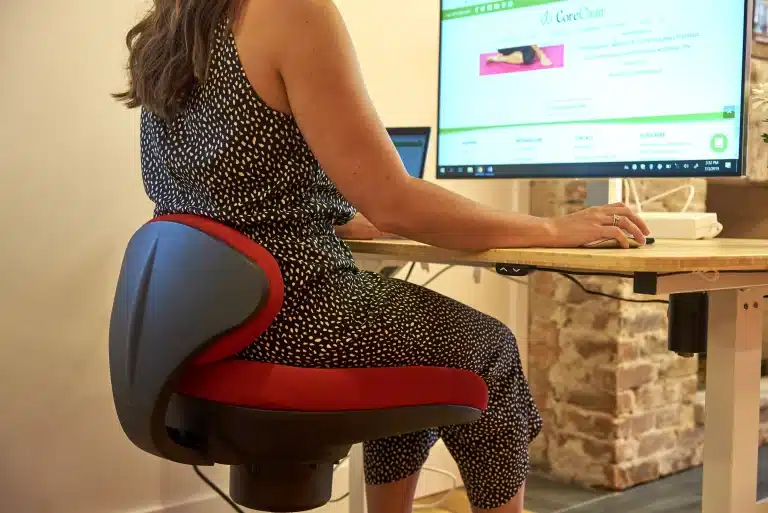
Active sitting breaks this cycle by keeping your body engaged, aligned, and naturally upright throughout the day. Instead of fighting gravity in a static chair, your body maintains confident posture as a byproduct of gentle, continuous movement.
Core Engagement Supports Upright Posture
Active sitting activates your deep stabilizing muscles — the same muscles responsible for keeping your spine tall and your chest open. When these muscles are engaged, maintaining the posture associated with confidence becomes effortless rather than exhausting.
CoreChair’s patented design specifically targets this mechanism. Its sculpted seat and 360° movement base encourage continuous micro-adjustments that keep your core active without conscious effort. University of Waterloo research confirmed that CoreChair significantly increases trunk muscle activation compared to both traditional ergonomic chairs and stability balls.
Reduced Discomfort Means Sustained Presence
Pain and discomfort are confidence killers. When you are shifting uncomfortably in your seat, you cannot project poise and authority. Cornell University pressure mapping research showed that CoreChair distributes sitting pressure more evenly than high-end ergonomic chairs, reducing the discomfort that causes slouching and fidgeting.
When your body feels comfortable, you sit taller, breathe deeper, and present yourself with greater composure.
Better Circulation Enhances Mental Clarity
Confidence is not just about posture — it is also about mental sharpness. When you feel foggy or sluggish, projecting confidence becomes difficult. Active sitting on CoreChair improves blood circulation, ensuring your brain receives adequate oxygen and nutrients for clear thinking and quick responses.
Research from the University of Guelph demonstrated that active sitting on CoreChair improved blood flow and cognitive performance — exactly the physical state that supports confident decision-making and communication.
Practical Steps to Build Posture and Confidence
1. Switch to Active Sitting
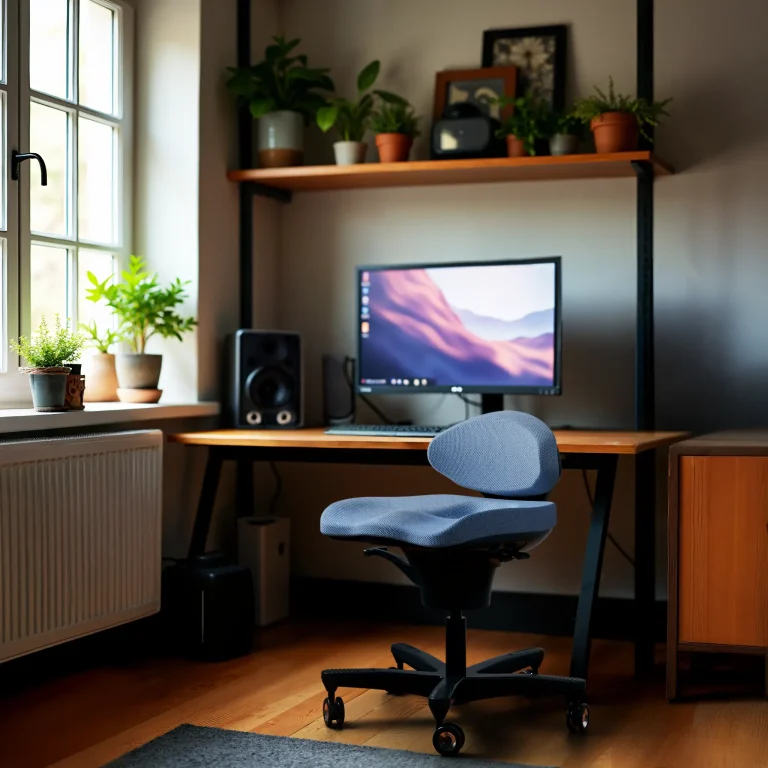
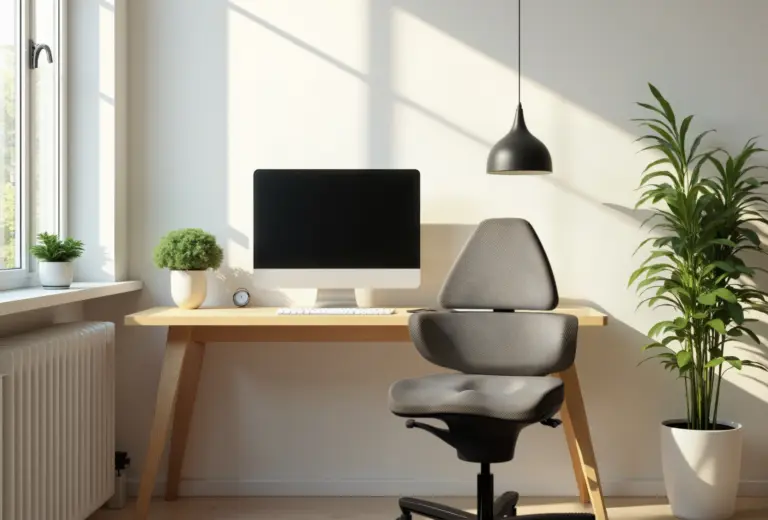
Replace your static office chair with one designed for movement. The CoreChair Elite or CoreChair Classic provide the ideal balance of support and dynamic motion, allowing your body to maintain confident posture naturally throughout the workday.
2. Practice the Confidence Check
Three times daily, pause and assess your posture:
- Are your shoulders back and relaxed?
- Is your chest open?
- Is your head balanced directly over your spine?
- Are you breathing deeply?
On a CoreChair, you will find that the answer is usually yes — because the chair’s design naturally guides you into this position.
3. Use Posture as a Pre-Performance Tool
Before important meetings, calls, or presentations, spend two minutes sitting tall with an open chest. This primes your nervous system for confidence and has been shown to improve performance in high-pressure situations.
4. Strengthen Through Sitting
Active sitting is not just about positioning — it is functional training. Every hour on a CoreChair builds the core strength and muscle memory needed to maintain confident posture even when you stand, walk, or present in front of a room.
The Compound Effect of Better Posture
Confidence and posture create a positive feedback loop. Better posture makes you feel more confident. Feeling more confident encourages you to maintain better posture. Over time, this loop compounds — what started as a physical adjustment becomes a genuine shift in how you experience yourself and how the world responds to you.
Studies show that people with consistently upright posture report higher self-esteem, better mood, increased resilience to stress, and greater willingness to take on challenges. These are not personality traits — they are outcomes of physical positioning that anyone can adopt. Learn more about the benefits of active sitting for your overall wellbeing.
Sit Like You Mean It
Body posture and confidence are inseparable. Every hour you spend slouched in a chair is an hour spent reinforcing insecurity, fatigue, and disengagement. Every hour spent sitting tall and open is an investment in how you feel, perform, and are perceived.
CoreChair makes confident posture your default setting. Its research-backed active sitting technology keeps your body engaged, your spine aligned, and your presence strong — all day, every day. Browse the full collection and read real customer reviews.
Stop trying to remember to sit up straight. Start sitting in a chair that does it for you.
Our Partners

Research and References
- Cornell University Pressure Mapping Study — Better weight distribution and comfort on CoreChair vs high-end ergonomic chairs.
- University of Waterloo Posture & Muscle Recruitment Study — CoreChair significantly increased trunk muscle activation and improved posture.
- University of Guelph Physiological & Cognitive Measures Study — Improved blood flow, cognitive performance, and movement on CoreChair.
- Memorial University Active Sitting Study — CoreChair promoted healthier sitting and improved lower limb blood flow.
- Mayo Clinic & Arizona State University Energy Expenditure Study — Higher energy expenditure during active sitting on CoreChair.
- Biomechanical Benefits of Active Sitting (Léger et al., 2023) — Active chairs increase trunk movement, muscle activity, and postural variation.
Active Sitting Increases Energy Expenditure (Davidson et al., 2025) — Significant increases in metabolism during standard office tasks using active seating.