Your glutes are not just muscles that help you stand up or climb stairs. They are the foundation of your entire posture. When your glutes are weak or inactive, your pelvis tilts, your lower back compensates, and your spine gradually falls out of alignment. The relationship between glutes and posture is fundamental — yet most people spend eight or more hours a day in chairs that shut these critical muscles down entirely.
If you have been struggling with lower back pain, a forward-leaning pelvis, or difficulty sitting upright, weak glutes may be the hidden cause. The good news is that you can begin reversing the damage without leaving your desk.
Why Weak Glutes Destroy Your Posture
Your gluteal muscles — particularly the gluteus maximus and gluteus medius — serve as the primary stabilizers for your pelvis and lower spine. When they are strong and active, they hold your pelvis in a neutral position, allowing your spine to maintain its natural curves.
When they are weak, everything shifts.
Anterior Pelvic Tilt
Weak glutes and posture problems almost always involve anterior pelvic tilt. When your glutes cannot hold the pelvis in place, the front of the pelvis drops forward while the back rises. This creates an exaggerated curve in your lower back, compressing spinal discs and straining the muscles along your spine.
This is not just a cosmetic issue. Anterior pelvic tilt caused by weak glutes leads to chronic back pain, hip tightness, and reduced mobility over time.
Overworked Lower Back
When your glutes stop doing their job, your lower back muscles pick up the slack. These smaller muscles are not designed for sustained stabilization, and forcing them into that role creates chronic tension, fatigue, and pain. Many people who complain of lower back pain are actually experiencing a glute activation problem.
Chain Reaction Through the Body
Posture and glutes are connected through your body’s kinetic chain. Weak glutes affect hip alignment, which affects knee tracking, which affects how your feet meet the ground. The result is a cascade of compensations that can lead to pain from your hips to your shoulders.
How Prolonged Sitting Weakens Your Glutes
The modern work environment is the primary culprit behind weak glutes. Traditional office chairs create the perfect conditions for gluteal amnesia — a condition where your glutes essentially forget how to activate.
Constant Compression
Sitting on a flat, padded surface compresses your glutes for hours at a time. This reduces blood flow to the muscles, limits nutrient delivery, and keeps the muscle fibers in a shortened, inactive state. Over months and years, the muscles physically weaken.
Zero Activation
Standard chairs require nothing from your glutes. You sit, your weight transfers through the seat, and your gluteal muscles remain completely dormant. Without regular activation signals, the neural pathways that fire these muscles gradually diminish — your brain literally forgets to use them.
Hip Flexor Tightening
While your glutes shut down, the muscles on the opposite side of your pelvis — the hip flexors — shorten and tighten. This creates a muscular imbalance that pulls your pelvis into anterior tilt, further inhibiting glute activation. The cycle reinforces itself daily.
How Active Sitting Reactivates Your Glutes
Active sitting offers a direct solution to gluteal amnesia by requiring continuous, subtle engagement of your pelvic stabilizers — including your glutes.
Continuous Micro-Movement
Unlike static chairs, active sitting platforms allow your body to move in multiple directions. These small movements constantly shift your center of gravity, forcing your glutes to fire repeatedly throughout the day. Each micro-adjustment is a mini-activation that keeps the neural pathways strong.
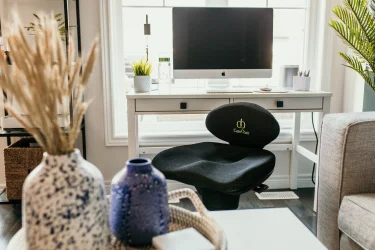
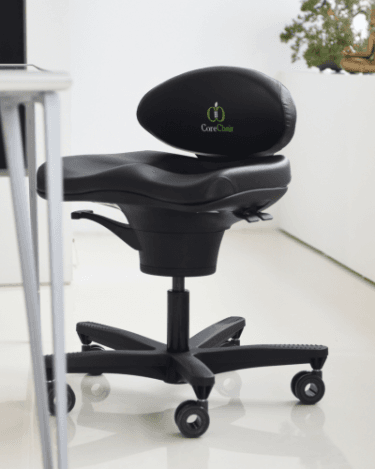
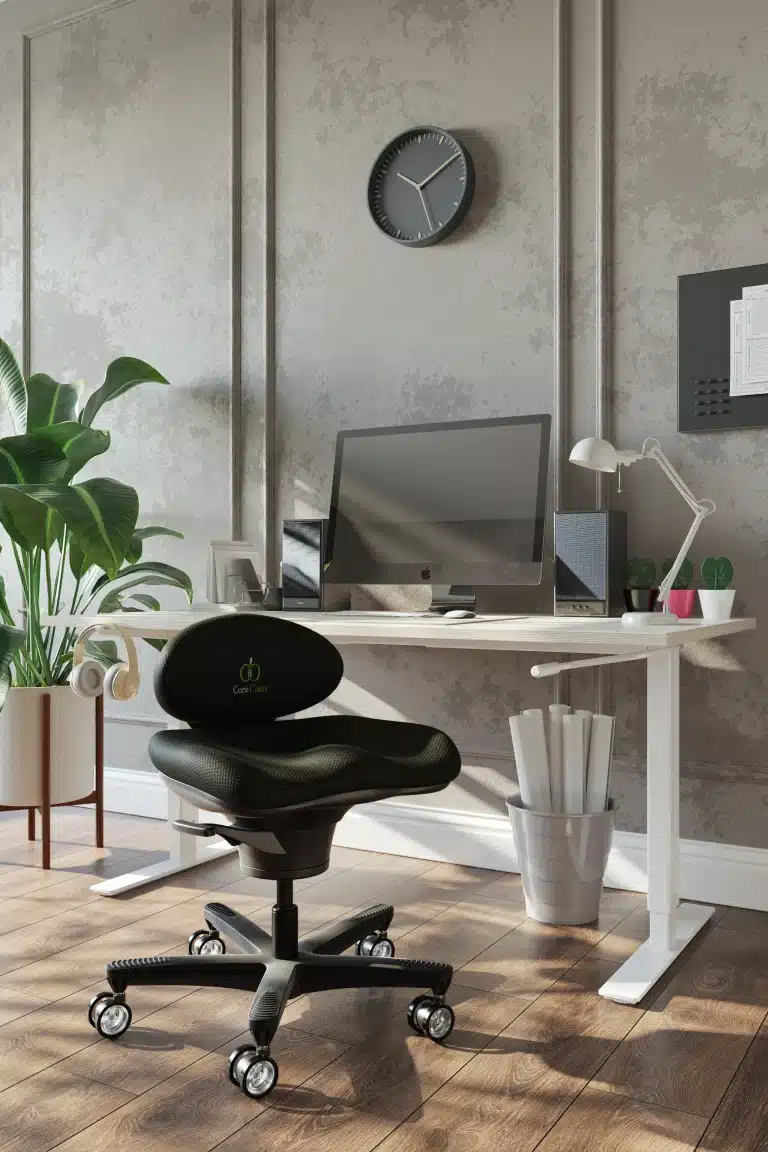
CoreChair was engineered specifically for this purpose. Its patented 360° movement mechanism creates a controlled range of motion that engages your glutes and core without requiring conscious effort. You simply sit, and your body does the work.
Pelvic Stability Training
Active sitting on CoreChair functions as passive pelvic stability training. The balanced, sculpted seat positions your pelvis in a neutral alignment while the movement base requires your glutes to maintain that position. Over time, this rebuilds the strength and activation patterns that static sitting destroyed.
Research from the University of Waterloo confirmed that CoreChair significantly increases trunk muscle activation compared to both traditional ergonomic chairs and stability balls — and this activation includes the gluteal and pelvic stabilizing muscles that are critical for proper posture.
Pressure Distribution
The CoreChair Classic and Elite feature a sculpted seat that distributes weight evenly, reducing the compression that causes gluteal amnesia in traditional chairs. Cornell University research demonstrated significantly better pressure distribution on CoreChair compared to high-end ergonomic alternatives.
Complementary Exercises for Stronger Glutes
While active sitting rebuilds glute activation throughout your workday, targeted exercises can accelerate your progress.
Glute Bridges
Lie on your back with knees bent and feet flat. Drive through your heels to lift your hips until your body forms a straight line. Squeeze your glutes at the top for two seconds. Perform three sets of 15 repetitions daily.
Standing Hip Extensions
Stand behind your chair and extend one leg straight back, squeezing your glute at the top of the movement. Keep your core engaged and avoid arching your lower back. Three sets of 12 per side.
Seated Pelvic Tilts on CoreChair
While sitting on your CoreChair, gently tilt your pelvis forward and backward, focusing on engaging your glutes during the backward tilt. This exercise leverages the chair’s movement base to strengthen your glutes during work hours. Learn more about how active sitting enhances your muscles and posture.
The Long-Term Impact
Strengthening your glutes through active sitting creates lasting changes in your posture and comfort. Within weeks of consistent use, most CoreChair users notice improved pelvic alignment, reduced lower back tension, and a natural ability to sit upright without effort.
The benefits extend beyond posture. Strong, active glutes improve athletic performance, reduce injury risk, increase daily energy expenditure, and support healthier movement patterns in everything you do outside the office.
Stop Sitting on Your Most Important Muscles
Glutes and posture are inseparable. Every hour you spend in a static chair is an hour your most important stabilizing muscles spend dormant, getting weaker. Active sitting reverses this by turning your chair into a tool that rebuilds strength, restores activation, and supports natural spinal alignment.
CoreChair makes it effortless. Backed by university research and designed for full workdays, it keeps your glutes engaged, your pelvis aligned, and your posture strong — without thinking about it.
Your glutes hold up your posture. It is time your chair helped them do their job. Explore the CoreChair collection.
Our Partners

Research and References
- Cornell University Pressure Mapping Study — Better weight distribution and comfort on CoreChair vs high-end ergonomic chairs.
- University of Waterloo Posture & Muscle Recruitment Study — CoreChair significantly increased trunk muscle activation and improved posture.
- Memorial University Active Sitting Study — CoreChair promoted healthier sitting, improved blood flow, and reduced perceived back pain.
- Mayo Clinic & Arizona State University Energy Expenditure Study — Higher energy expenditure during active sitting on CoreChair.
- Biomechanical Benefits of Active Sitting (Léger et al., 2023) — Active chairs increase trunk movement, muscle activity, and postural variation.
- Active Sitting vs Traditional Sitting and Standing (Léger et al., 2022) — Active sitting improves circulation, muscle engagement, and energy expenditure.
- Active Sitting Increases Energy Expenditure (Davidson et al., 2025) — Significant increases in metabolism during standard office tasks using active seating.