You might not think twice about how you sit at your desk, but your posture could be silently fueling your anxiety. Research is increasingly showing that the way we hold our bodies directly influences how we feel — and slouching through your workday may be doing more damage than a sore back.
If you have ever noticed feeling more tense, restless, or uneasy after hours of hunching over a laptop, you are not imagining things. Bad posture and anxiety are more closely connected than most people realize.
The Surprising Connection Between Posture and Anxiety
Your body and mind are in constant communication. When you slouch or hunch forward, your chest compresses, your breathing becomes shallow, and your shoulders round inward. This physical position sends signals to your brain that mimic a defensive, stressed state.
A 2017 study published in the Journal of Behavior Therapy and Experimental Psychiatry found that participants who sat upright reported higher self-esteem, better mood, and lower fear compared to those who slouched. The research confirmed that poor posture and anxiety share a bidirectional relationship — one feeds the other.
When your body is in a collapsed position, your nervous system interprets it as a threat response. Cortisol levels rise, heart rate may increase, and your fight-or-flight system activates — all from simply sitting the wrong way.
How Poor Posture Physically Triggers Stress
Understanding why posture and anxiety are linked requires looking at what happens inside your body when you sit poorly for extended periods.
Restricted Breathing
A slouched position compresses your diaphragm and lungs. This limits the amount of oxygen reaching your brain and muscles, triggering shallow chest breathing instead of deep belly breathing. Shallow breathing is one of the most common physical triggers for anxiety and panic responses.
Increased Muscle Tension
Poor posture forces certain muscle groups to overcompensate. Your neck, shoulders, and upper back carry extra strain, leading to chronic tension. This persistent physical discomfort creates a feedback loop — your body feels tight and stressed, which increases mental tension and worry. If left uncorrected, this tension can also lead to shoulder pain and further postural damage.
Disrupted Blood Flow
Sitting in a static, hunched position reduces circulation throughout your body. Reduced blood flow means less oxygen and nutrients reaching your brain, which can impair focus and cognitive performance, increase fatigue, and heighten feelings of anxiety and restlessness.
Hormonal Imbalance
Research from Harvard University demonstrated that “power poses” — open, expansive postures — increase testosterone and decrease cortisol. The reverse is also true. Closed, collapsed postures like slouching elevate cortisol, the primary stress hormone, making you feel more anxious throughout the day.
Signs Your Posture May Be Contributing to Anxiety
Many people do not connect their sitting habits with their mental state. Here are warning signs that your posture may be amplifying your anxiety:
- You feel more anxious or restless after long periods of desk work
- Your breathing feels shallow or restricted while sitting
- You experience chronic neck, shoulder, or upper back tension
- You notice your mood drops significantly during the workday
- You feel mentally drained even after light tasks
If these symptoms sound familiar, your sitting posture may be a significant contributing factor.
Practical Ways to Correct Your Posture and Reduce Anxiety
The good news is that correcting your posture can have a measurable, positive effect on anxiety. Here are evidence-based strategies.
1. Practice Active Sitting
Instead of sitting motionless in a static chair, active sitting encourages continuous micro-movements that keep your core engaged, your spine aligned, and your blood flowing. This dynamic approach to sitting prevents the compressed, slouched positions that trigger anxiety responses.
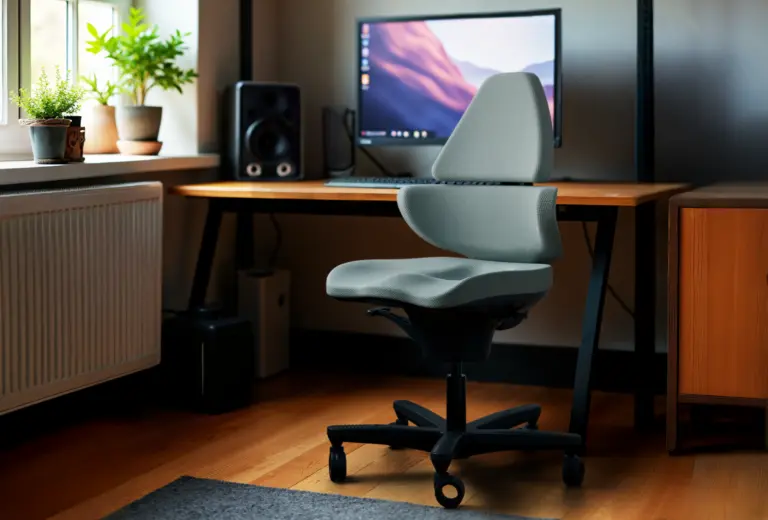
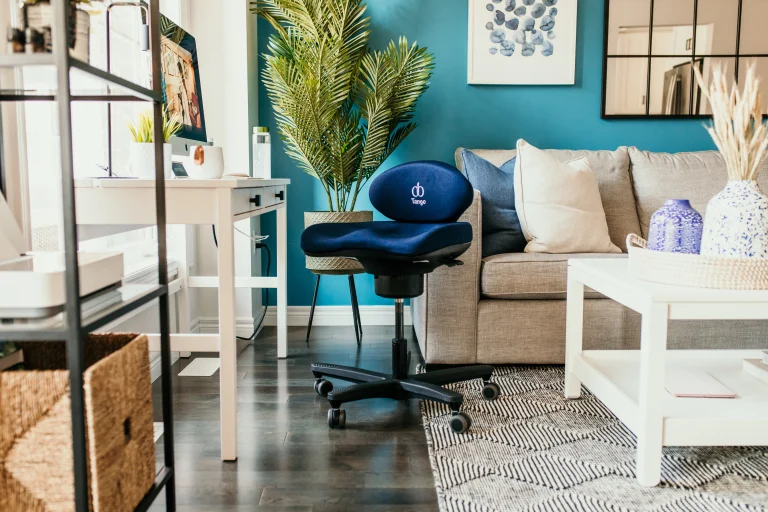
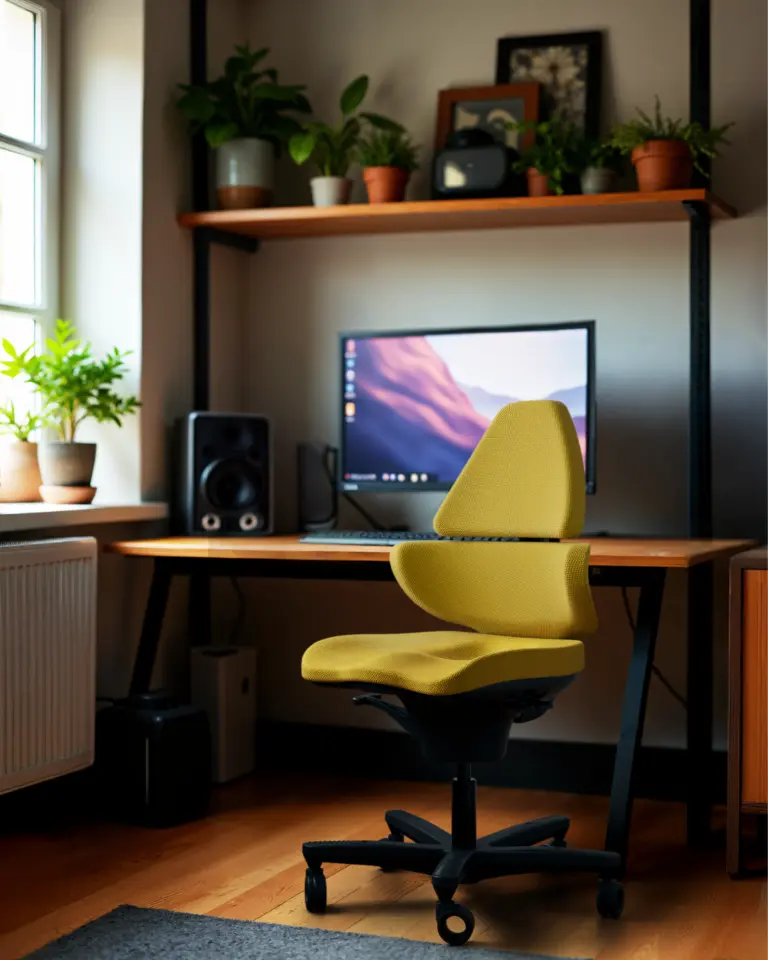
CoreChair is specifically designed around this principle. Its patented 360° movement base promotes natural motion while sitting, helping maintain proper posture without conscious effort. University research has shown that active sitting on CoreChair improves posture, increases circulation, and enhances overall comfort — all factors that directly counteract the physical triggers of anxiety.
2. Focus on Breathing
Set reminders throughout your workday to check your breathing. Place both feet flat on the floor, sit tall, and take five slow, deep belly breaths. This immediately activates your parasympathetic nervous system and reduces stress hormones.
3. Adjust Your Workstation
Position your screen at eye level so you do not need to tilt your head forward. Keep your keyboard and mouse close to your body to prevent reaching. A properly set up workstation makes maintaining good posture effortless.
4. Take Movement Breaks
Stand and move for two to three minutes every 30 to 45 minutes. Walk, stretch, or simply change positions. Breaking up long static sitting sessions prevents the buildup of physical tension that feeds anxiety.
5. Strengthen Your Core
A strong core supports proper spinal alignment naturally. Exercises like planks, bird-dogs, and dead bugs build the stabilizing muscles that keep you upright. Active sitting on a CoreChair also builds core strength passively throughout your workday.
Why Active Sitting Is Effective for Anxiety Management
Traditional ergonomic chairs attempt to support your body in a fixed position. While this may reduce some physical discomfort, it does not address the root problem: your body is not designed to be motionless for hours.
Active sitting solves this by allowing continuous, gentle movement. This keeps your muscles engaged, your circulation flowing, and your posture naturally upright — preventing the slouched, compressed position that triggers anxiety.
Clinical research supports this approach. Studies from the University of Waterloo showed that CoreChair increased trunk muscle activation and improved posture compared to both traditional ergonomic chairs and stability balls. Unlike balance balls, CoreChair provides stable, supportive seating suitable for full workdays without sacrificing movement. Learn more about the benefits of active sitting and how it compares to traditional ergonomic chairs.
Start Sitting Better, Start Feeling Better
The connection between bad posture and anxiety is real and well-documented. Every hour you spend slouched at your desk may be quietly amplifying stress, tension, and anxious feelings. The solution does not require medication or complicated routines — it starts with how you sit.
By choosing active sitting and maintaining better posture, you give your body the physical foundation it needs to support a calmer, more focused mind. CoreChair makes this transition simple, backed by research and designed for the demands of modern work life. Explore the CoreChair collection and find the right fit for your workspace.
Your posture shapes your mental state. Take control of both.
Research and References
- Cornell University Pressure Mapping Study — Graduate research showing better weight distribution and comfort on CoreChair vs high-end ergonomic chairs.
- University of Waterloo Posture & Muscle Recruitment Study — CoreChair increased trunk stability and core muscle activation compared to ergonomic chairs and stability balls.
- Memorial University Active Sitting Study — CoreChair promoted healthier sitting posture, improved blood flow, and reduced perceived back pain.
- University of Guelph Physiological & Cognitive Measures Study — CoreChair provided benefits for blood flow, skin sensitivity, cognitive performance, and movement.
- Physiological and Cognitive Outcomes with Multi-Axial Chair (Triglav et al., 2019) — Active multi-axial chairs improve circulation and reduce cognitive errors.
- Biomechanical Benefits of Active Sitting (Léger et al., 2023) — Active chairs increase trunk movement, muscle activity, and postural variation.
- Active Sitting vs Traditional Sitting and Standing (Léger et al., 2022) — Active sitting improves circulation, muscle engagement, and energy expenditure.
Our Partners