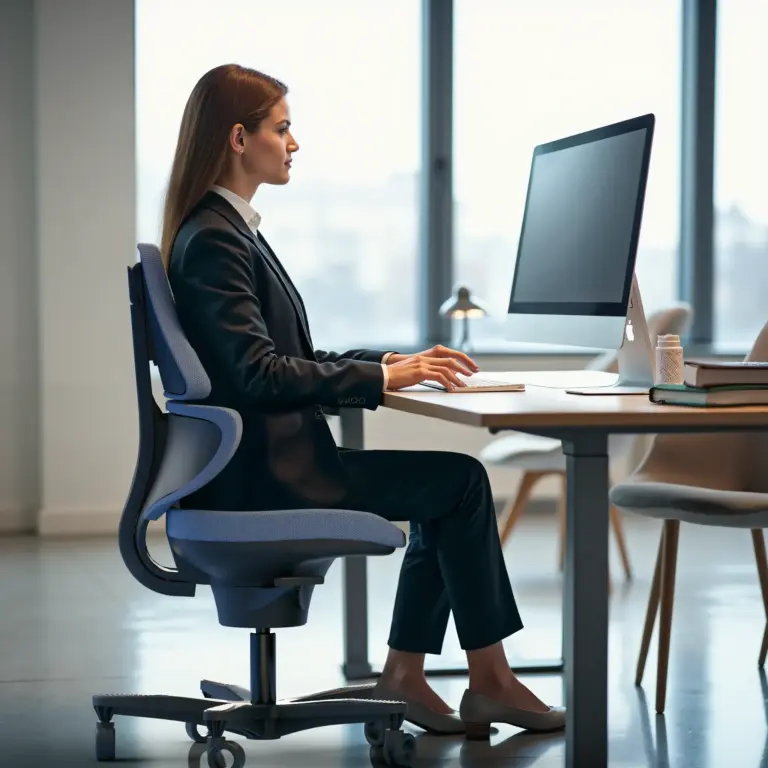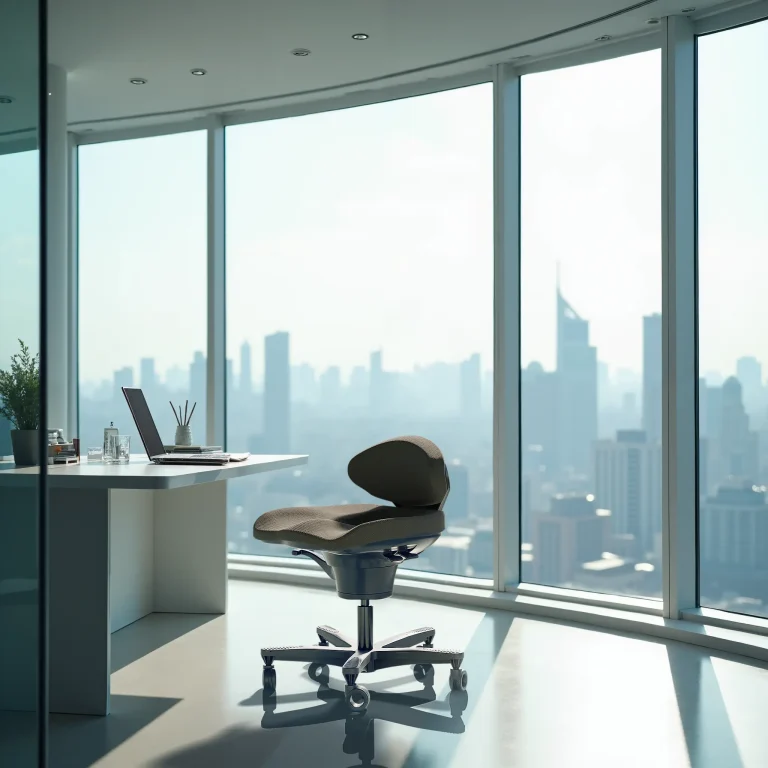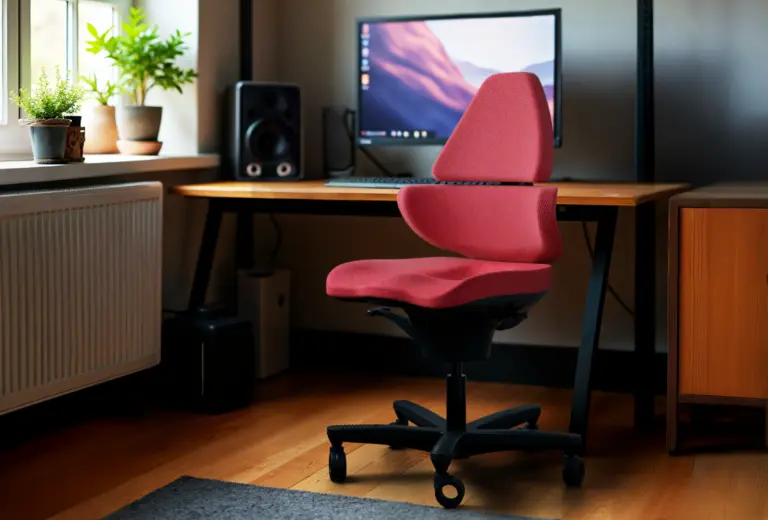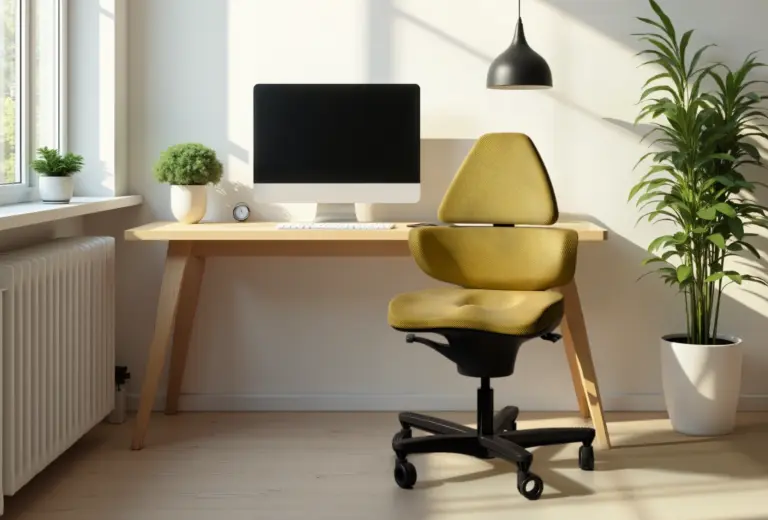
Ankylosing spondylitis is not simply back pain. It is a systemic inflammatory condition that progressively affects the sacroiliac joints, the spine, and in many cases the peripheral joints, eyes, and other organs. Its relationship with sitting is consequently more complex – and more consequential – than for most musculoskeletal conditions. The wrong ankylosing spondylitis chair does not merely create discomfort; it can actively worsen inflammation, accelerate structural change, and contribute to the postural deformity that advanced AS causes.
For people with ankylosing spondylitis, the question of what kind of chair should I sit in is not a comfort preference. It is a clinical one.
Why AS and Sitting Are a Critical Combination
Inflammation and Static Posture
The defining feature of ankylosing spondylitis is enthesitis – inflammation at the sites where ligaments, tendons, and joint capsules attach to bone. In plain terms: the spots where soft tissue meets bone become inflamed and reactive. In the spine, this occurs at the facet joints, the sacroiliac joints, and the intervertebral disc attachments. When the spine is held in a static, unsupported posture for prolonged periods, the mechanical loading on these inflamed attachment sites worsens – generating more pain and sustaining the inflammatory environment.
This is why morning stiffness and pain after prolonged sitting are among the most consistent symptoms of AS. The spine stiffens when it is held still. The inflammatory tissue thickens and becomes more reactive. And when you finally move, the restricted range of motion and increased pain are the direct consequence of the static period that preceded it.
Progressive Postural Change
Untreated or poorly managed AS tends to drive a characteristic postural deterioration: progressive thoracic kyphosis (rounding of the upper back), loss of lumbar lordosis, forward head posture, and hip flexion contracture. Each of these changes is worsened by sustained sitting in a posture that promotes these alignments – a rounded-back chair with posterior pelvic tilt and minimal thoracic support.
Chairs that allow you to slump into a kyphotic position are not neutral for AS. They are actively contributing to the postural trajectory that the disease is already trying to impose. The best ankylosing spondylitis chair is therefore one that actively counteracts this trajectory – supporting upright spinal alignment, encouraging movement, and maintaining the extension bias that resists kyphotic deformity.
Stretching in a Chair Does Wonders for People with Ankylosing Spondylitis
There is a well-established principle in AS management: stretching in a chair does wonders for people with ankylosing spondylitis. Rheumatologists and physiotherapists consistently recommend maintaining spinal extension, thoracic rotation, and hip mobility as the first-line non-pharmacological interventions for AS. These movements keep the affected joints mobile, reduce the stiffness that inflammation generates, and slow the progressive fusion that advanced disease produces.
The challenge is that most conventional office chairs make these movements impossible or awkward. A chair that moves with you – that allows small rotational, lateral, and flexion-extension movements during normal sitting – provides a continuous, low-grade version of the movement therapy that AS patients need throughout the day, not just during formal exercise sessions.
Ankylosing Spondylitis and Recliner Chairs
Ankylosing spondylitis and recliner chairs have a complex relationship worth addressing directly. Many people with AS are drawn to recliners because lying or semi-reclined positions relieve acute pain temporarily – the horizontal position unloads the spine and reduces pressure on the inflamed sacroiliac joints.
But sustained use of recliner chairs during work or daily activity promotes hip flexion and posterior pelvic tilt – the same positional biases that AS drives structurally. Recliners also tend to prevent the spinal extension that physiotherapists prioritise in AS management. For most AS patients, recliners are appropriate for acute pain relief but are counterproductive as a primary ankylosing spondylitis chair for daily work and activity.
What to Look for in the Best Chairs for Ankylosing Spondylitis
Extension Support, Not Flexion Accommodation
The single most important design principle for an ankylosing spondylitis chair is that it should support spinal extension rather than accommodate flexion. Chairs that allow or encourage kyphotic posture are antithetical to AS management – regardless of how comfortable they feel in the short term, because AS-related stiffness makes the flexed position temporarily comfortable even as it accelerates deformity.
Look for:
- A seat design that promotes neutral or anterior pelvic tilt
- Lumbar support that maintains the lumbar curve
- A chair back that supports the thoracic spine in extension rather than rounding
Dynamic Movement Capability
What kind of chair should I sit in with ankylosing spondylitis is, fundamentally, a question about movement. The chair must allow continuous spinal movement – the micro-movements that prevent the static inflammatory loading that makes AS so much worse after prolonged sitting. A dynamic, multi-directional movement mechanism is not a luxury for AS patients; it is a functional necessity.
The movement should be controlled and smooth – not the unstable wobbling of a balance ball, which AS patients with established spinal involvement often cannot tolerate – but a supported, resistance-regulated movement that stays within a safe range.
Seat Pressure Distribution
Many AS patients also have sacroiliac joint involvement – direct inflammation in the SI joints that makes sacral pressure particularly painful. The seat design should distribute weight through the ischial tuberosities rather than concentrating it at the sacrum, as conventional flat seats tend to do under conditions of posterior pelvic tilt.

How CoreChair Supports Users with Ankylosing Spondylitis
Active Sitting as Movement Therapy in the Chair
CoreChair’s patented movement design enables the continuous, controlled spinal movement that AS management requires. The pelvis and lower spine are free to move through their natural range during normal seated activity – forward, back, side to side, and in rotational patterns – with up to 14 degrees of tilt available in all directions.
University of Waterloo research confirmed that CoreChair produces significantly greater trunk muscle activation and movement compared to both conventional chairs and stability balls. For AS patients, this continuous activation serves a therapeutic purpose beyond general fitness: it maintains the joint mobility and spinal movement that the inflammatory process is continuously trying to restrict. This is exactly why choosing the right ankylosing spondylitis chair matters so much for day-to-day disease management.
Pelvic Support and Extension Bias
CoreChair’s sculpted seat supports the pelvis in a neutral position – directly counteracting the posterior pelvic tilt and lumbar flattening that AS drives and that conventional chairs reinforce. This extension bias aligns with the fundamental principle of AS physiotherapy: maintain extension, resist flexion, keep the spine as upright and mobile as possible throughout the day.
The Memorial University study demonstrated reduced perceived back pain and improved lower limb blood flow with CoreChair – outcomes that reflect both the improved postural mechanics and the circulatory benefits of active sitting. This is particularly relevant for AS patients, who have inflammatory-mediated circulation changes in the affected joints.
Sacroiliac Pressure Relief
Cornell University’s pressure mapping research confirmed CoreChair’s superior pressure distribution compared to conventional ergonomic chairs. For AS patients with sacroiliac joint involvement, this reduced sacral and posterior pelvic pressure directly supports pain management – removing the compressive loading on the SI joint that aggravates inflammation and pain during prolonged sitting.
Stability and Support for Advanced AS
The CoreChair Elite introduces the Clever Spine – a patent-pending structure that connects the seat pan and pelvic stabilizer to an upper back pad, allowing natural extension, flexion, and rotation through the thoracic spine. For AS patients, this is particularly relevant: thoracic mobility is one of the first functional losses in progressive disease, and a chair that supports rather than restricts thoracic movement directly complements physiotherapy goals. Movement resistance remains adjustable – allowing a firmer configuration during acute flares while preserving the extension-biased sitting position.
Practical Guidance for Managing AS at a Desk
1. Prioritise Spinal Extension Throughout the Day
Set a reminder every 30–45 minutes to perform a brief extension break: stand up, place your hands in the small of your back, and gently extend the thoracic spine backwards 3–5 times. This interrupts the flexion loading of sustained sitting and counteracts the structural tendency of AS toward kyphosis.
2. Use the Movement in Your Chair Deliberately
If you use CoreChair or another dynamic seat, take advantage of the movement capability consciously – particularly during tasks that do not require precise fine motor control (phone calls, thinking, reading). Let your pelvis move, rotate gently, and explore the range of motion available. This is the in-chair version of the stretching that your physiotherapist recommends.
3. Manage Temperature and Circulation
Inflammatory conditions are worsened by cold and ischemia. Keep your work environment warm enough that your muscles and joints stay supple. CoreChair’s active sitting design improves lower limb blood flow – directly supporting the circulatory environment that inflamed joints need to manage their inflammatory load.
4. Coordinate with Your Rheumatologist and Physiotherapist
Seating choice should be part of a comprehensive AS management plan that includes medication, physiotherapy, and regular monitoring of disease activity. A physiotherapist can help you configure your seating setup optimally for your current level of spinal involvement and provide guidance on the in-chair movement patterns that best complement your exercise programme. The active sitting benefits that CoreChair provides complement both physiotherapy and medical management of AS by maintaining the movement and alignment that treatment aims to preserve.
Movement Is Medicine – Your Chair Should Be Part of It
For people with ankylosing spondylitis, the chair is not a neutral piece of furniture. It is either an ally in maintaining mobility and postural health, or an environmental factor that works against the treatment goals you and your clinical team have established.
CoreChair’s research-backed active sitting design makes it one of the best chairs for ankylosing spondylitis – not because it treats the disease, but because it creates the seated environment that the disease demands: upright, mobile, extension-biased, and pressure-distributing throughout a full workday. Understanding the deep connection between posture and long-term wellbeing is especially important for AS patients, where every structural and postural decision has compounding consequences alongside an active inflammatory process.
Explore how CoreChair addresses back and spinal pain, the full collection, and what users report about comfort and support during long working hours with challenging spinal and inflammatory conditions.


Patrick Harrison
BSc KINESIOLOGY
Founder of CoreChair, Patrick has spent over 40 years developing ergonomic and mobility solutions that help people sit, move, and work more comfortably.
Research and References
- Cornell University Pressure Mapping Study – Better weight distribution and comfort on CoreChair vs high-end ergonomic chairs.
- University of Waterloo Posture & Muscle Recruitment Study – CoreChair increased trunk stability, movement, and core muscle activation.
- University of Guelph Physiological & Cognitive Measures Study – Improved blood flow, skin sensitivity, and movement on CoreChair.
- Memorial University Active Sitting Study – Reduced perceived back pain, improved sitting posture, and better lower limb blood flow.
- Biomechanical Benefits of Active Sitting (Leger et al., 2023) – Active chairs increase trunk movement, muscle activity, and postural variation.
- Active Sitting vs Traditional Sitting and Standing (Leger et al., 2022) – Active sitting improves circulation, muscle engagement, and energy expenditure.
- Physiological and Cognitive Outcomes with Multi-Axial Chair (Triglav et al., 2019) – Active multi-axial chairs improve circulation and reduce cognitive errors.
- Active Sitting with Backrest Support Feasibility (Kuster et al., 2018) – Active chairs can incorporate backrest support without discomfort, combining dynamic movement with ergonomics.