The Paradox of Passive Support
While traditional ergonomics promotes semi-reclined sitting to reduce spinal disc pressure, this approach creates a fundamental paradox: the very act of over-supporting the body introduces a cascade of new ergonomic challenges that can undermine workplace functionality and long-term musculoskeletal health.
The semi-reclined position, typically at 100-135 degrees, may reduce gravitational loading on the lumbar spine, but it does so by fundamentally altering the body’s relationship with its work surface—and not for the better.
The Reaching Problem: Upper Body Strain
When seated in a reclined position, the distance between your torso and work surface increases dramatically. This position comes with its own problems, such as putting more pressure on the neck, shoulders and arms, and restricting torso movement.
The Biomechanical Dilemma
To interact with a keyboard, mouse, or any desk-based task while reclined, users must reach forward. This forward reach engages the upper back, neck, and shoulder muscle groups in sustained static contraction. The muscles must work continuously to hold the arms in an extended position, creating:
- Sustained muscle tension in the trapezius, levator scapulae, and rhomboid muscles
- Shoulder protraction (rounding forward) as arms extend toward the work surface
- Increased neck flexion as the head moves forward to maintain visual contact with the screen
- Compromised breathing as the chest compresses during forward reaching
Research using MRI technology reveals that the upper cervical spine segments move forward in the reclined position compared to upright sitting. This forward migration of the neck creates exactly the kind of postural stress that ergonomics aims to prevent.
The Armrest Dependency
To combat the fatigue from sustained forward reaching, users need to use keyboard trays at hip level or accessories to hold keyboards suspended across their lap, and must adjust armrests for comfortable access to interface devices. This creates a dependency on additional equipment and still doesn’t solve the fundamental problem—the body is working against the reclined position to perform forward-oriented tasks.
Armrests become essential rather than optional, but they introduce their own issues: restricted lateral movement, pressure points on forearms, and fixed arm positions that limit natural gesture and reach patterns.
Restricted Movement and Postural Variability
One of the most significant drawbacks of reclined sitting is the restriction it places on natural movement and postural adjustment.
Loss of Torso Mobility
The semi-reclined position locks the torso against the backrest, severely limiting the body’s ability to:
- Rotate for multi-directional tasks
- Lean forward for detailed work
- Shift weight dynamically
- Engage in natural fidgeting and micro-movements that promote circulation
In the reclined position, individuals have little opportunity for independent movement because they don’t have the strength to overcome gravity, often resulting in passive positioning with the head tilted back or flopped forward.
Static Posture Trap
Ironically, while reclined sitting may reduce pressure on lumbar discs, it promotes prolonged static posture—precisely what modern ergonomics recognizes as problematic. The body becomes cast into the chair’s shape rather than maintaining dynamic engagement with gravity and the environment.
Core Muscle Deactivation
Perhaps the most insidious effect of reclined, over-supported sitting is the complete disengagement of core musculature.
The Deconditioning Effect
When the backrest provides all the support, the body’s intrinsic stabilizing muscles have no reason to activate. Over time, this leads to:
- Progressive core weakness as abdominal, back, and pelvic floor muscles atrophy
- Loss of proprioception as the neuromuscular system loses feedback about body position and balance
- Decreased spinal stability when outside the supportive chair environment
- Reduced capacity for dynamic tasks that require trunk control and strength
- The muscles that should be working to maintain upright posture—the very antigravity muscles humans developed to function in Earth’s gravitational field—become progressively weaker through disuse.
Visual and Cognitive Challenges
The reclined position also creates challenges for visual ergonomics and cognitive engagement.
Screen Positioning Difficulties
The 135-degree angle is great for relieving back pressure while taking a break, but introduces its own postural problems when trying to work. To maintain appropriate screen viewing angles while reclined:
- Monitors must be repositioned higher and farther away
- The eyes must work harder to maintain focus at increased distances
- Bifocal or progressive lens users face particular challenges with altered viewing angles
- Multiple monitor setups become ergonomically complex
Reduced Alertness and Engagement
The reclined posture signals relaxation to the nervous system. While beneficial for rest, this can be counterproductive during work requiring sustained attention and cognitive performance. The body associates reclining with rest, not active engagement—potentially reducing alertness, focus, and productivity.
Circulatory Concerns
While reclined sitting may offer some benefits for spinal loading, it doesn’t address—and may exacerbate—circulatory issues associated with prolonged sitting.
The semi-reclined position still allows blood pooling in the lower extremities, particularly when combined with elevated legs on a footrest. Without active muscle engagement to pump blood back toward the heart, venous return remains compromised, potentially leading to:
- Leg swelling and discomfort
- Reduced circulation to extremities
- Decreased metabolic activity
- Increased risk of deep vein thrombosis during extremely prolonged sitting
Functional Limitations for Dynamic Work
Modern work increasingly requires dynamic movement: reaching for documents, collaborative interaction with colleagues, shifting between computer tasks and phone calls, and adapting to varying task demands throughout the day.
The semi-reclined position is fundamentally incompatible with this dynamic work reality. It optimizes for one narrow criterion—lumbar disc pressure—while compromising functional versatility. Users face a stark choice: maintain the reclined position and struggle with reach and movement limitations, or constantly adjust chair position throughout the day, eliminating the consistency that proper ergonomics requires.
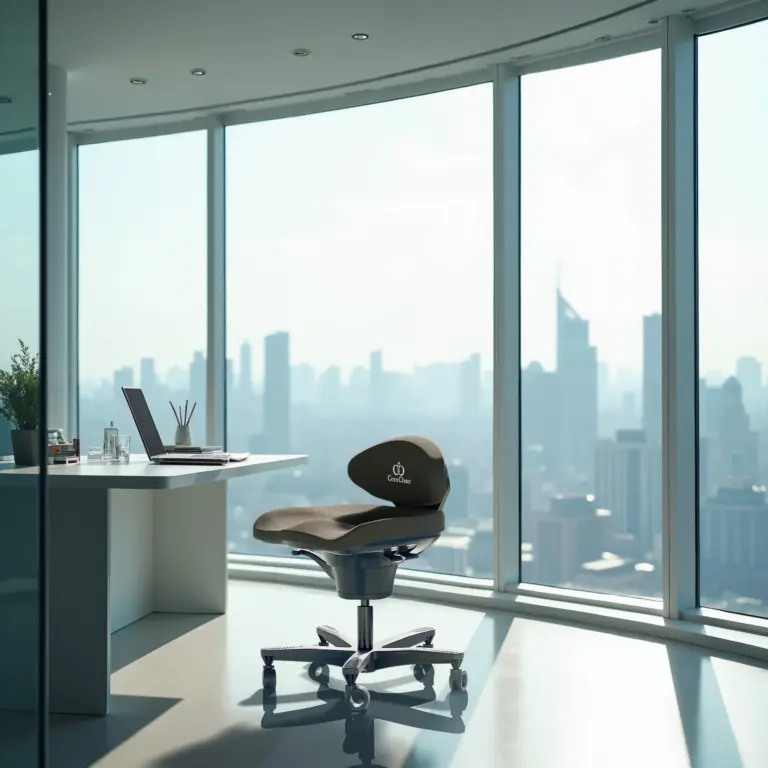
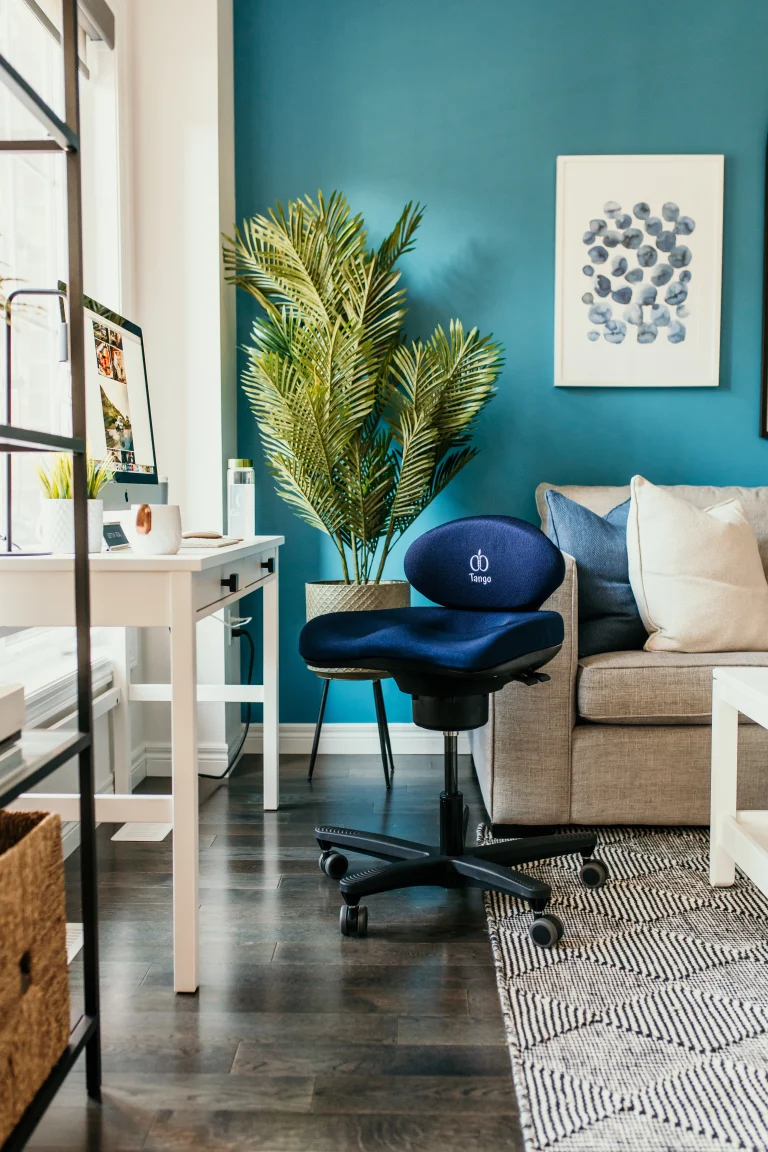
The CoreChair Alternative: Active Support Through Pelvic Foundation
CoreChair addresses the spinal loading concerns of traditional upright sitting without introducing the functional limitations of reclined postures. The distinction is fundamental: rather than over-supporting through passive reclining, CoreChair provides targeted support where it matters most—at the pelvis.
CoreChair– your simple solution to back pain.
Similar to an orthotic device that is designed to embrace and support various boney structures and joints within our bodies, CoreChair optimizes pelvic support with a complimentary sculpted seat and pelvic support cushion. In harmony, these cushions embrace your pelvis to encourage an upright neutral pelvic orientation. Like building a house, we need to start with a good foundation.
The outcome is a stable base that allows balance in our spine as well as the ability of our spine to work as designed with ease of natural movement through flexion, extension and rotation.
A healthy spine also requires a diversity of movement which involves stimulating blood flow, mobilizing the joints, strengthening core muscles and hydrating the vertebral discs. Often when we experience back pain our tendency is to rest up and stop strenuous activity. While this may be recommended in the short term, long term it may not be helpful. Movement and specific back exercises are needed to help alleviate and remedy back pain. Moving on a CoreChair provides an excellent opportunity to gradually work the back and core in a controlled manner to help avoid stiffness, strengthen and alleviate pain.
A study completed by Memorial University concluded that participants sitting in the CoreChair adopted a more upright posture, experienced less back pain and stiffness and had enhanced blood flow when compared to sitting in a traditional office chair.

Reduced Back Pain
Pelvic support provides the foundation for a balanced healthy spine to prevent slumping, optimize posture, and reduce back pain and discomfort.

Core Strength
Movement is the key to maintaining core strength and more movement will definitely build strength. One absolute is that if you don’t use it you will lose it.
Extraordinary comfort meets incredible pelvic support.
Proper distribution of our weight when sitting is a critical factor in chair selection as it translates into seating comfort. Poorly designed chairs can result in uncomfortable pressure points and restriction of circulation. The seat of the CoreChair is aggressively sculpted to embrace your sit bones and provide even weight distribution allowing your circulation to flow freely, so you can focus on your work, not your discomfort.
Graduate students from Cornell University (with guidance from Dr. Alan Hedge), investigated sitting pressure on CoreChair compared to a high-end ergonomic office chair and discovered that CoreChair has more evenly dispersed weight thereby significantly lowering pressure points. This means significantly better comfort for you.
Sculpted Seat
Sculpted seat harmonizes with pelvic stabilizer to relieve pressure points, prevents sliding, and provide added comfort.

Pelvic Support
Our seat cushion works in conjunction with the pelvic support to stabilize the pelvis, optimize sitting posture, and reduce back pain.
Boosting brain power through movement.
Being physically active not only helps us avoid negative outcomes such as chronic disease and obesity, but also helps to boost our brainpower! Cognition, how we understand and interact in the world, related to the brain-based skills needed to learn, remember and solve problems. Physical activity, whether exercise in the gym or incidental movement on your CoreChair, aids our cognitive power by stimulating blood flow to the brain, delivering oxygen and glucose to make us better able to work on tasks both simplistic and complex. Introduce movement into your workday and experience the benefits of improved focus, increased productivity, and more brainpower!
Dr. Leah Bent conducted a four-hour investigation at the University of Guelph and discovered there was a significant reduction in calf circumference indicative of improved lower extremity blood flow and a significant reduction of errors commissioned utilizing SART (Sustained Attention to Response Task) suggesting enhanced cognitive function with blood flow.

Blood Flow
Movement stimulates your lymphatic system and blood flow to keep your vital systems working well.

Brain Power
Increased blood flow to the brain keeps you alert and creative, making you happier and more productive in the workplace.
IMPROVING YOUR HEALTH ONE MOVE AT A TIME.
There’s a distinct difference between exercise and physical activity. Exercise is a subcategory of physical activity and is planned, structured, repetitive and purposeful with a fitness objective. Physical activity includes exercise in addition to other activities that involve movement including pacing, household chores and other recreational activities.
CoreChair is proud to be NEAT™ Certified (NEAT™ stands for the science of Non Exercise Activity Thermogenesis, developed by Mayo Clinic). We now know that activity, all activity, is good for our health.

Increased Caloric Burn
Movement burns calories and helps manage our weight and mood, which bolsters our energy! CoreChair users can expect an increased metabolic demand of 20%!

Increased Circulation
Swollen ankles? Movement stimulates your circulation. Not just to make your heart pump but also assists your vascular return.
Pelvic-Centered Support Philosophy
The sculpted seat and pelvic/sacral support work together to create an optimal foundation for the ascending spine. By supporting the pelvis in proper alignment, CoreChair allows the spine to find its natural balanced position without casting the entire torso against a backrest.
This approach offers several critical advantages:
Maintained Spinal Alignment Without Over-Support
The small 90-degree backrest provides a reference point for lower back positioning without restricting upper body movement or forcing users into a fixed reclined posture. The spine maintains its natural S-curve through active engagement rather than passive molding to a backrest shape.
Preserved Functional Reach
With an upright balanced position, users remain naturally oriented toward their work surface. No forward reaching is required—the body is already positioned optimally for desk-based tasks. This eliminates the upper back, neck, and shoulder strain inherent in reclined sitting while maintaining easy access to keyboards, mice, documents, and other work tools.
Active Core Engagement
Perhaps most significantly, CoreChair’s dynamic platform encourages continuous low-level core muscle activation. Rather than allowing core muscles to disengage through over-support, the chair’s gentle movement requires ongoing postural adjustments that keep stabilizing muscles active and strong.
This isn’t the exhausting balancing act of an exercise ball—the adjustable tension allows users to dial in the right amount of challenge for their current strength level, gradually building core capacity over time rather than allowing progressive deconditioning.
Movement Freedom and Postural Variability
The pivoting seat mechanism actively encourages movement in all directions—forward, backward, side to side, and rotationally. This freedom of movement allows:
Natural torso rotation for multi-directional tasks
Dynamic weight shifting throughout the day
Micro-movements that stimulate circulation
Postural variability without requiring conscious position changes
Users can lean forward for detailed work, shift laterally for conversations, and move naturally throughout their tasks—all while maintaining pelvic stability and spinal alignment.
Gravity as Stimulus, Not Enemy
Rather than trying to minimize gravity’s effects through passive support, CoreChair transforms gravity into a positive stimulus. The continuous need to maintain balance against gravitational forces keeps the neuromuscular system engaged, preserving:
- Proprioceptive awareness and balance capabilities
- Antigravity muscle strength and endurance
- Neurological integration between sensory input and motor control
- Natural movement patterns that transfer to activities outside the chair
The Functional Ergonomics Paradigm
CoreChair represents a shift from passive ergonomics (reducing harmful forces) to active ergonomics (promoting beneficial engagement). While traditional reclined seating asks: “How can we minimize stress on the spine?” CoreChair asks: “How can we optimize the body’s natural capacity to maintain healthy posture while supporting productive work?”
The answer lies not in over-support that creates dependency and introduces new problems, but in targeted pelvic support combined with movement freedom that builds strength, maintains circulation, and preserves the body’s innate ability to balance and adapt.
Long-Duration Success
For extended sitting sessions, this distinction becomes crucial. Reclined sitting may feel comfortable initially but creates accumulating challenges: fatigue from sustained reaching, restricted movement causing stiffness, progressive muscle weakness, and functional limitations that interfere with work performance.
CoreChair’s approach yields opposite results: comfort that improves over time as core strength builds, movement that prevents stiffness, maintained muscle engagement that supports long-term health, and preserved functionality for dynamic work demands.
Conclusion: Support Versus Over-Support
The semi-reclined position advocated by traditional ergonomists reflects a well-intentioned but ultimately limited understanding of human ergonomics. Yes, reclining spreads gravitational forces over more of the supported spine—but at what cost?
The price includes: upper body strain from forward reaching, dependency on armrests and accessories, restricted torso movement, core muscle deactivation, visual ergonomic complications, functional limitations for dynamic work, and a passive relationship with gravity that promotes long-term deconditioning.

CoreChair offers a more sophisticated solution: support the pelvis to create a stable foundation, allow the spine to find its natural balanced alignment, encourage gentle movement to maintain circulation and muscle engagement, and preserve full functionality for varied work tasks.
In choosing between these philosophies, the question becomes: Do you want to be passively supported in a position that reduces one type of stress while creating multiple others? Or do you want to be actively supported in a way that builds strength, maintains function, and works with your body’s natural design?
For anyone spending significant time in a chair, the answer should be clear: targeted support beats over-support, and active engagement beats passive positioning. CoreChair embodies this principle, transforming sitting from a physiological liability into an opportunity for sustained health and functionality.