Some people walk into a room and command attention without saying a word. They move with quiet confidence, sit with effortless elegance, and project a calm authority that puts others at ease. We call this quality poise – and it is far more physical than most people realize.
Poise and posture are not separate qualities. They are two dimensions of the same thing. Posture is the structural foundation – how your body is aligned. Poise is the expression – how that alignment translates into grace, composure, and presence. You cannot have genuine poise without good posture, and good posture without awareness naturally evolves into poise.
Understanding this connection gives you a practical path to developing both – starting with the way you sit.
What Poise Actually Is
Poise is often treated as a personality trait – something you either have or you do not. But that is a misconception. Poise is a physical skill built on a physical foundation.
The Physical Roots of Poise
Watch someone with genuine poise. Their head is balanced over their spine, not jutting forward. Their shoulders are open and relaxed, not rounded or elevated. Their movements are smooth and unhurried because their body is working from a stable, aligned base. They appear calm because they are physically calm – their posture supports easy breathing, reduced muscle tension, and a regulated nervous system.
Now watch someone without poise. They fidget. They shift constantly. Their movements are abrupt or awkward. They appear unsettled because they are physically unsettled – their misaligned posture creates discomfort, restricted breathing, and muscular tension that manifests as restlessness and unease.
Poise is not acting. It is the natural result of a well-aligned, well-supported body.
Poise as Composure Under Pressure
True poise reveals itself under stress. The ability to remain calm, measured, and present during difficult conversations, high-pressure presentations, or unexpected challenges depends heavily on your physical state. When your posture supports deep breathing, low cortisol, and muscular relaxation, composure comes naturally. When your posture is collapsed and your body is in a low-grade stress state, composure requires enormous effort – and usually fails.
How Posture Creates Poise
The pathway from posture to poise runs through several interconnected systems.
Breathing and Calm
An upright, open posture allows full diaphragmatic breathing – slow, deep breaths that activate the parasympathetic nervous system and promote calm. This is the physiological foundation of composure. When you can breathe fully, your heart rate stabilizes, your cortisol drops, and your mind clears. You respond rather than react. That is poise.
A slouched posture compresses the diaphragm and forces shallow chest breathing – a pattern that activates the stress response, increases heart rate, and promotes anxiety and emotional reactivity. No amount of willpower can produce poise when your breathing mechanics are working against you.
Movement Quality
Poise is visible in how you move – smooth transitions, deliberate gestures, unhurried actions. This movement quality depends on postural alignment. When your spine is stacked, your core is engaged, and your joints are in neutral alignment, movement originates from a stable center. It looks and feels effortless.
When your posture is misaligned, every movement requires compensation. You shift weight awkwardly, gesture jerkily, and move with visible effort. The physical struggle undermines the appearance and reality of poise.
Emotional Regulation
Research in embodied cognition has shown that posture directly shapes emotional experience. Upright, open postures generate feelings of confidence, stability, and control. Collapsed postures generate withdrawal, vulnerability, and emotional flatness. Poise requires emotional stability – the ability to remain centered regardless of circumstances. Your posture either supports that stability or undermines it.
Social Signaling
Poise and posture together create powerful nonverbal communication. An aligned, open body signals competence, trustworthiness, and approachability. Others respond to this signaling by treating you with more respect and deference — which reinforces your sense of composure and confidence. Poor posture signals insecurity and disengagement, inviting social responses that further erode poise.
The Workday Erosion of Poise
Most professionals begin their day with reasonable posture and poise. But the standard office chair systematically destroys both over the course of a workday.
The Morning Baseline
You arrive at work feeling relatively aligned. Your posture is reasonably upright, your breathing is adequate, and your composure is intact. You handle morning meetings and tasks with clarity and calm.
The Midday Decline
By midday, your static chair has allowed gravity to pull you into a slouch. Your chest compresses, your breathing shallows, your core disengages. Your movements become less fluid as discomfort builds. Your emotional baseline shifts toward irritability and fatigue. Poise begins to erode.
The Afternoon Collapse
By mid-afternoon, the physical foundation of poise has crumbled. You are deep in a slouch, breathing shallowly, cortisol elevated, muscles tense from compensating for poor alignment. Your composure is fragile. Your movements are restless. The poise you had at nine in the morning is gone – not because of anything you did wrong, but because your chair spent six hours dismantling it.
This daily cycle means that the hours when you most need poise – difficult afternoon meetings, end-of-day decisions, interactions with clients – are precisely the hours when your chair has stripped it away.
How Active Sitting Builds Lasting Poise
Developing poise requires maintaining the postural foundation that supports it – not for two minutes, but for the full workday. Active sitting makes this possible.
Sustained Upright Alignment
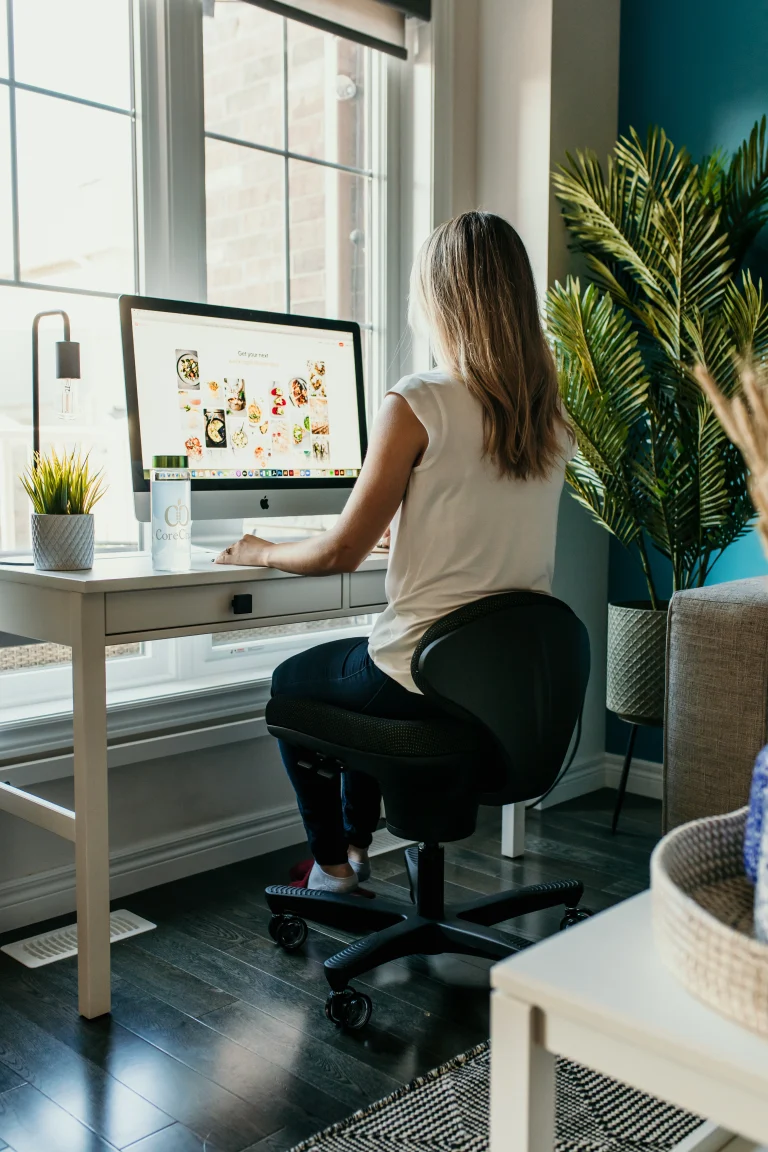
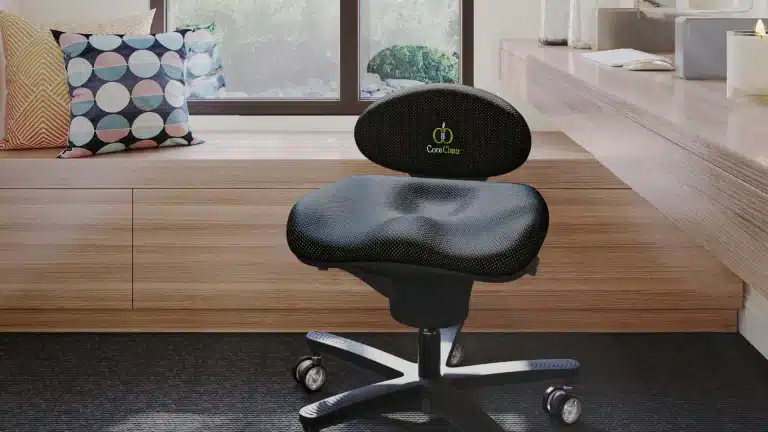
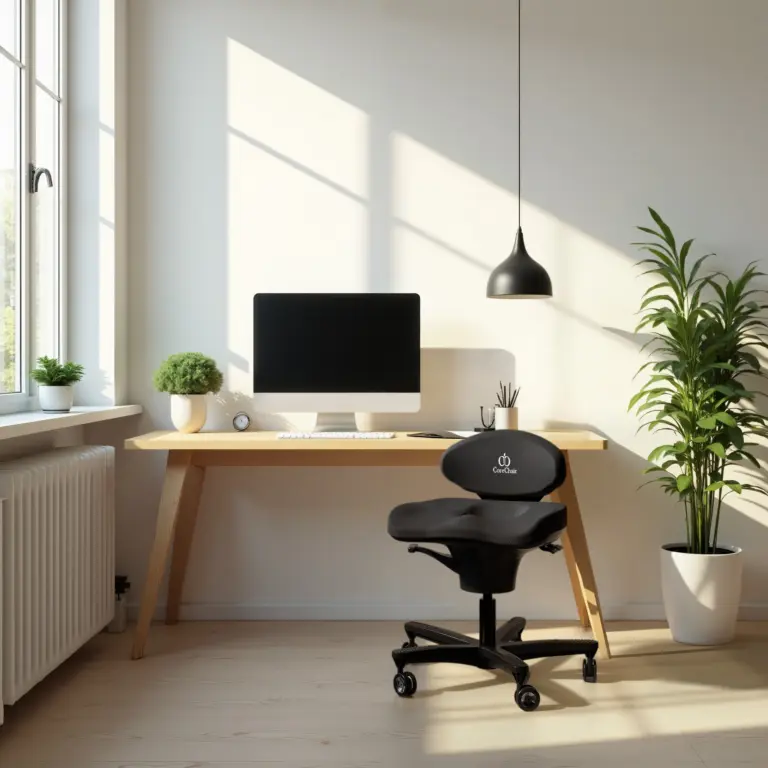
CoreChair is engineered with a sculpted seat and patented movement base that positions your pelvis in neutral alignment. When the pelvis is neutral, the spine naturally stacks upright, the chest opens, and the head balances over the shoulders. This is the postural foundation of poise – and CoreChair maintains it automatically, without the conscious effort that fades within minutes on a static chair.
Fluid, Natural Movement
Poise is characterized by smooth, purposeful movement – not rigid stillness. CoreChair’s 360-degree movement base encourages continuous, gentle motion that keeps your body responsive and your movements fluid. This dynamic stability mirrors the quality of movement that defines physical poise.
Research from the University of Waterloo showed that CoreChair increased trunk muscle activation and movement compared to static ergonomic chairs – supporting the kind of engaged, responsive physical state from which poise naturally emerges.
Deep, Effortless Breathing
By keeping the chest open and the diaphragm uncompressed, CoreChair supports the deep breathing that underpins composure. You do not need breathing reminders or techniques – the posture itself enables full respiration, keeping your nervous system regulated and your emotional state calm throughout the day.
Comfort That Lasts
Physical discomfort destroys poise. When your body hurts, you fidget, shift, and lose the physical calm that projects composure. Cornell University research demonstrated that CoreChair distributes sitting pressure more evenly than high-end ergonomic alternatives – eliminating the discomfort that erodes poise during long work sessions.
The CoreChair Elite provides additional adjustability for users who demand maximum comfort customization.
Sustained Circulation and Energy
Poise requires energy – the mental and physical resources to remain present, alert, and composed. Static sitting impairs circulation and accelerates fatigue. The University of Guelph study found that active sitting on CoreChair improved blood flow and cognitive performance, providing the sustained energy that poise demands throughout an entire workday.
Practical Steps to Develop Poise and Posture Together
1. Start Every Day on a CoreChair
Begin your workday with posture that supports poise. The CoreChair Classic establishes an aligned, open baseline from the first minute – setting a physical foundation that carries through your morning and beyond.
2. Practice the Three-Breath Reset
Three times daily, pause and take three slow, deep breaths. Notice your posture. Notice your shoulders. Notice the quality of your breathing. This brief practice builds the body awareness that is essential to developing poise – and CoreChair makes the alignment correction automatic.
3. Move with Intention
Poise is not about moving less – it is about moving deliberately. When you stand, stand fully. When you walk, walk with your head balanced and your shoulders open. When you sit, sit with engagement. Active sitting on CoreChair trains this deliberate quality of movement by keeping your body responsive rather than collapsed.
4. Prepare Physically for Key Moments
Before important meetings, conversations, or presentations, take 30 seconds to align your posture: sit tall, open your chest, relax your shoulders, and take three breaths. This primes every system – hormonal, respiratory, muscular, and neurological – that supports poise under pressure.
5. Build Core Strength Passively
A strong core is the structural foundation of both posture and poise. Active sitting on CoreChair engages your stabilizing muscles continuously throughout the day, gradually building the strength that makes aligned, poised posture your natural default.
Poise Is a Practice, Not a Gift
Poise and posture are inseparable. You build poise by building the physical alignment, breathing capacity, muscular engagement, and emotional regulation that make composure natural – and you build all of these through how you sit for eight hours every day.
CoreChair’s research-backed active sitting design provides the postural foundation from which genuine poise develops – naturally, consistently, and throughout the workday. Explore the full collection and discover what real users say about the transformation.
Research and References
- Cornell University Pressure Mapping Study – Better weight distribution and comfort on CoreChair vs high-end ergonomic chairs.
- University of Waterloo Posture & Muscle Recruitment Study – CoreChair increased trunk stability, movement, and core muscle activation.
- University of Guelph Physiological & Cognitive Measures Study – Improved blood flow, cognitive performance, and movement on CoreChair.
- Memorial University Active Sitting Study – CoreChair promoted healthier sitting, improved blood flow, and reduced perceived back pain.
- Mayo Clinic NEAT™ Certification —-asurable increases in daily energy output under NEAT™ guidelines.
- Physiological and Cognitive Outcomes with Multi-Axial Chair (Triglav et al., 2019) – Active multi-axial chairs improve circulation and reduce cognitive errors.
- Biomechanical Benefits of Active Sitting (Leger et al., 2023) – Active chairs increase trunk movement, muscle activity, and postural variation.
- Effects on Reading and Typing Productivity (Doroff et al., 2019) – Active sitting supports cognitive performance and task productivity.