Your body is not just a vehicle that carries your brain around. It is an active participant in shaping how you feel. The connection between posture and emotions runs deeper than most people realize — and the way you sit for eight hours a day is quietly influencing your mood, stress levels, energy, and emotional resilience.
This is not speculation. Decades of research in embodied cognition have demonstrated that body posture and emotion are locked in a continuous feedback loop. Change your posture, and you change how you feel. Let your posture collapse, and your emotions follow.
How Your Body Shapes Your Emotions
The traditional view of emotions treats them as purely mental events — something that happens in your brain and then maybe affects your body. But modern neuroscience tells a different story.
The Embodied Cognition Model
Researchers in embodied cognition have shown that your brain does not generate emotions in isolation. It constantly reads signals from your body — muscle tension, breathing patterns, posture, facial expressions — and uses that information to construct your emotional experience.
When you sit upright with an open chest and relaxed shoulders, your brain reads those signals as safety, alertness, and engagement. When you slouch with a compressed chest and rounded shoulders, the signals suggest withdrawal, defeat, and vulnerability. Your brain then generates emotions that match those physical signals.
This means posture and emotion are not just correlated — they are causally linked. Your body is not reflecting your emotions. It is helping create them.
The Facial Feedback Parallel
This concept follows the same principle as the well-known facial feedback hypothesis. Just as forcing a smile can gradually improve your mood, forcing an upright posture can shift your emotional state toward confidence, alertness, and positivity. The body leads, and the mind follows.
Hormonal Pathways
Body posture and emotion also connect through your endocrine system. Open, expansive postures have been shown to increase testosterone and decrease cortisol — a hormonal profile associated with confidence, reduced stress, and emotional stability. Closed, collapsed postures do the opposite, creating a chemical environment that promotes anxiety, stress, and low mood.
The Emotional Cost of Sitting Poorly
Most people do not think of their office chair as an emotional influence. But consider what happens during a typical workday in a standard chair.
Morning: Alert and Upright
You start the day sitting relatively tall. Your chest is open, your breathing is deep, and your mood is generally positive. Your posture is supporting a healthy emotional state.
Midday: The Gradual Collapse
Without active support, gravity slowly pulls you into a slouch. Your chest compresses, your breathing becomes shallow, and your head drifts forward. Your brain begins reading these signals as fatigue, disengagement, and low energy. Your mood dips accordingly.
Afternoon: Emotional Drain
By mid-afternoon, most static chair sitters are deep in a collapsed posture. Cortisol is elevated, energy is depleted, and emotional resilience is low. Irritability, frustration, and emotional flatness become common — and most people blame their workload rather than their chair.
This daily cycle means your chair is not neutral. It is actively shaping your emotional experience for the worse. Understanding how posture impacts your overall wellbeing is essential for breaking this pattern.
How Active Sitting Supports Emotional Health
Active sitting interrupts the posture-emotion collapse cycle by keeping your body in a state that supports positive emotions throughout the day.
Sustained Upright Posture
The most direct way active sitting supports emotional health is by maintaining the open, upright posture associated with positive emotional states. Instead of gradually collapsing, your body stays engaged and aligned — and your brain keeps receiving signals of alertness, confidence, and energy.
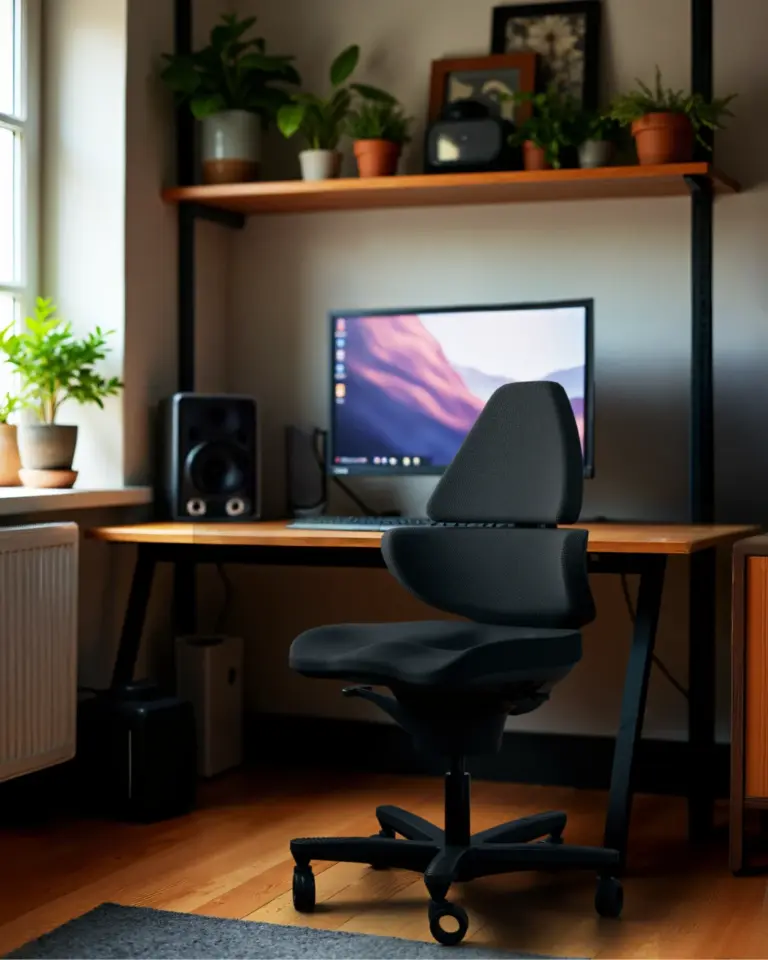
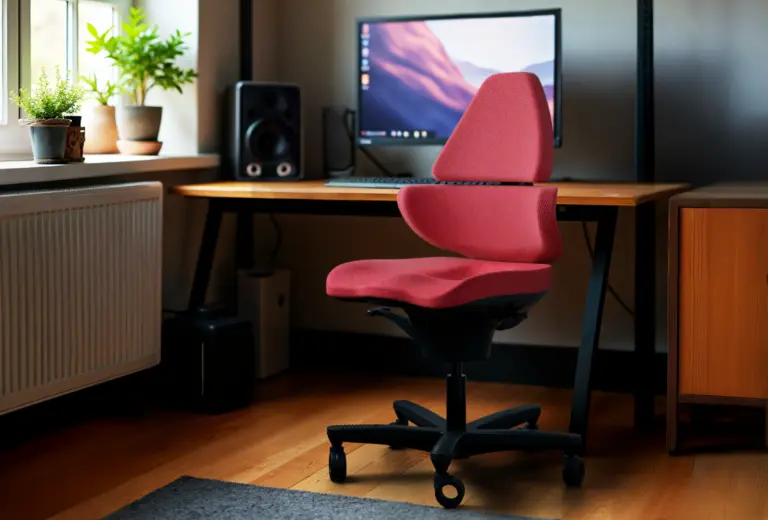
CoreChair achieves this through its patented movement base and sculpted seat. The design naturally positions your pelvis in neutral alignment, which supports an upright spine without muscular effort. Your chest stays open, your breathing stays deep, and your brain stays in a positive feedback loop.
Continuous Movement Elevates Mood
Movement is one of the most powerful mood regulators available. Even small amounts of physical activity trigger the release of endorphins, improve serotonin function, and reduce cortisol. Active sitting provides continuous micro-movement that delivers these benefits passively throughout the workday.
Research from Memorial University found that CoreChair promoted increased movement and reduced perceived discomfort — both factors that directly support better emotional states during prolonged sitting.
Reduced Physical Discomfort
Pain and discomfort are powerful negative emotional triggers. When your body hurts, your emotional state deteriorates rapidly. Cornell University research showed that CoreChair distributes sitting pressure more evenly than high-end ergonomic alternatives, reducing the physical discomfort that drives negative emotions.
The CoreChair Elite takes this further with additional adjustability for users who need maximum comfort customization for long work sessions.
Better Circulation Supports Brain Function
Your emotional regulation depends on adequate blood flow to the prefrontal cortex — the brain region responsible for managing emotions. Slouched, static sitting impairs this circulation. Active sitting on CoreChair improves blood flow, ensuring your brain has the resources it needs to regulate emotions effectively.
The University of Guelph study measured improvements in both blood flow and cognitive performance during active sitting — including the mental functions that underpin emotional regulation.
Practical Ways to Use Posture for Emotional Wellbeing
1. Start Your Day on a CoreChair
Begin your workday in a chair that supports upright posture from the first minute. This sets a positive emotional baseline that is easier to maintain than trying to recover from a midday slump.
2. Use Posture as an Emotional Check-In
Three times daily, notice your posture. If you have collapsed into a slouch, recognize that your emotional state has likely followed. Sit tall, open your chest, and take three deep breaths. Notice how quickly your mood shifts.
3. Match Posture to Challenging Moments
Before difficult conversations, stressful meetings, or demanding tasks, consciously adopt an upright, open posture. This primes your emotional system for resilience and composure rather than reactivity and stress.
4. Prioritize Movement
Even brief movement breaks amplify the emotional benefits of good posture. Stand, stretch, walk for a minute, then return to your CoreChair. This combination of active sitting and movement breaks creates the strongest possible emotional foundation for your workday.
Your Chair Is an Emotional Tool
Emotion and posture are not separate systems — they are one integrated experience. The way you sit shapes how you feel, and how you feel shapes everything else: your productivity, your relationships, your decisions, and your quality of life.
CoreChair transforms your chair from an emotional liability into an emotional asset. Its research-backed active sitting design keeps your body in the posture that supports positive emotions — naturally, automatically, and all day long. Browse the full collection and read what real users say about the difference.
You cannot always control what happens in your day. But you can control how you sit through it.
Our Partners

Research and References
- Cornell University Pressure Mapping Study — Better weight distribution and comfort on CoreChair vs high-end ergonomic chairs.
- University of Waterloo Posture & Muscle Recruitment Study — CoreChair significantly increased trunk muscle activation and improved posture.
- University of Guelph Physiological & Cognitive Measures Study — Improved blood flow, cognitive performance, and movement on CoreChair.
- Memorial University Active Sitting Study — CoreChair promoted healthier sitting, improved blood flow, and reduced perceived back pain.
- Mayo Clinic NEAT™ Certification — CoreChair demonstrated measurable increases in daily energy output under NEAT™ guidelines.
- Physiological and Cognitive Outcomes with Multi-Axial Chair (Triglav et al., 2019) — Active multi-axial chairs improve circulation and reduce cognitive errors.
- Biomechanical Benefits of Active Sitting (Léger et al., 2023) — Active chairs increase trunk movement, muscle activity, and postural variation.
- Effects on Reading and Typing Productivity (Doroff et al., 2019) — Active sitting supports cognitive performance and task productivity.