When desk workers develop elbow pain, the conversation almost always starts and ends at the elbow itself. They ice it, wrap it, rest it, and wait. Then they go back to the same chair, the same desk height, the same collapsing posture – and the pain returns within days or weeks. The cycle repeats because nobody asked the right question.
The right question is not “what is wrong with my elbow?” It is “what is my sitting environment doing to my arm?” Elbow pain from computer chair use is an ergonomic injury that follows a predictable mechanical chain beginning at the pelvis, travelling through the spine and shoulder, and landing at the elbow. Treat the elbow and the chain keeps running. Change the chair and the chain breaks.
How the Chair Creates the Loading Pattern
When Desk and Chair Heights Don’t Match
Elbow pain from tall desk low chair is one of the most preventable ergonomic problems around – yet it keeps showing up because almost nobody actually measures the height relationship between their chair and desk before they start working. When the desk is too high for the chair, every keystroke means the shoulder has to climb slightly to reach it. That sustained, low-grade elevation of the shoulder girdle exhausts the muscles across the top of the neck and shoulder – the ones tasked with holding your arm up all day. Over hours, that fatigue converts into tension that radiates straight down to the elbow.
Armrests complicate things further. Too high, and the shoulder stays permanently hitched upward, pushing the elbow outward into the armrest surface. Too low – or missing entirely – and the whole dead weight of your arm is suspended from the shoulder joint, pulling it forward and down, which compresses a completely different set of structures along the inner elbow.
The Posture Chain That Ends at Your Elbow
Computer chair elbow pain has a story that begins well before the elbow. It begins when a conventional chair allows the pelvis to roll backward. The moment the pelvis tilts, the lower back flattens. The upper back rounds. The head drifts forward. And to bring the hands to the keyboard from that position, the shoulder blades must swing wide – a movement that rotates the arms inward and demands continuous work from the muscles that control the forearm and outer elbow.
Keep that up for five, six, seven hours a day, and the tendons where those forearm muscles anchor to the outer elbow become progressively irritated. The attachment point breaks down faster than it can repair itself. Desk workers end up with the same overuse injury as tennis players – except their racket is a keyboard, and the real culprit is the chair that caused the posture in the first place.
This is the overlooked mechanism behind most elbow pain from chair cases. Elbow pain from computer chair use builds quietly – the chair just keeps allowing the same damaging arm position, day after day, until the tissue gives out.
The Hidden Cost of Leaning on the Armrest
Chronic pain when elbows rest on chair arm is a different problem with its own anatomy. The inner side of your elbow is one of the least-protected spots on the arm – a major nerve runs close to the surface there, with very little cushioning between it and whatever you’re leaning on. Prop your arm on a hard armrest for hours at a time and that nerve takes a sustained beating.
The warning signs start small: a dull ache or faint burning sensation at the inner elbow during the workday. If nothing changes, things escalate – odd tingling into the two outer fingers, then numbness that doesn’t fully clear overnight, and eventually a noticeable drop in grip strength. A firmer or narrower armrest surface makes this worse by focusing all that pressure onto a smaller area rather than spreading it.
What’s rarely recognised is that this pattern is almost always driven by postural collapse. You don’t lean on armrests as a preference – you lean on them because your chair has allowed your spine to slump, and the armrests are the only available support. Fix the posture, and the leaning disappears.
What Good Chair Design Does for Elbow Health
Starting Where the Problem Starts
A chair designed to prevent elbows pain from chair use does not begin with armrest design. It begins with pelvic support. When the pelvis is held in a neutral position, the spine stacks correctly, the shoulder girdle settles over the ribcage, and the arms reach the keyboard with the shoulder in its natural resting position – no elevation, no inward rotation, no extra demand on the outer elbow.
This is structural correction, not ergonomic compensation. Adjustable armrests, forearm pads, and keyboard trays are all downstream tools that work better when the postural foundation is correct. Without that foundation, they are adjustments applied to a problem that keeps regenerating.
Movement as Injury Prevention
Static sitting means sustained loading. Every minute the arm is held in the same position is another minute of uninterrupted tension on the same tissues, the same muscles, the same attachment points. Movement – even small, continuous movement through the lower body – changes this. When the pelvis and lower spine are gently mobile, the shoulder and arm naturally shift position more often, distributing load rather than concentrating it.
This is not a conscious exercise. It happens automatically when the chair enables it.
How CoreChair Addresses Elbow Pain
Correcting the Posture Chain
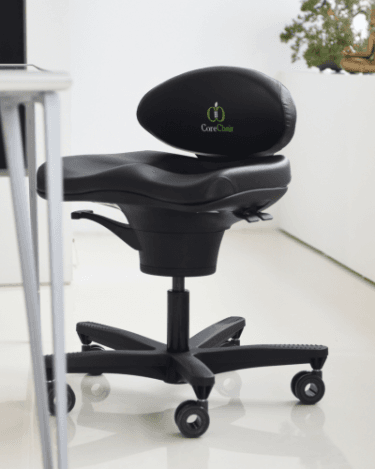
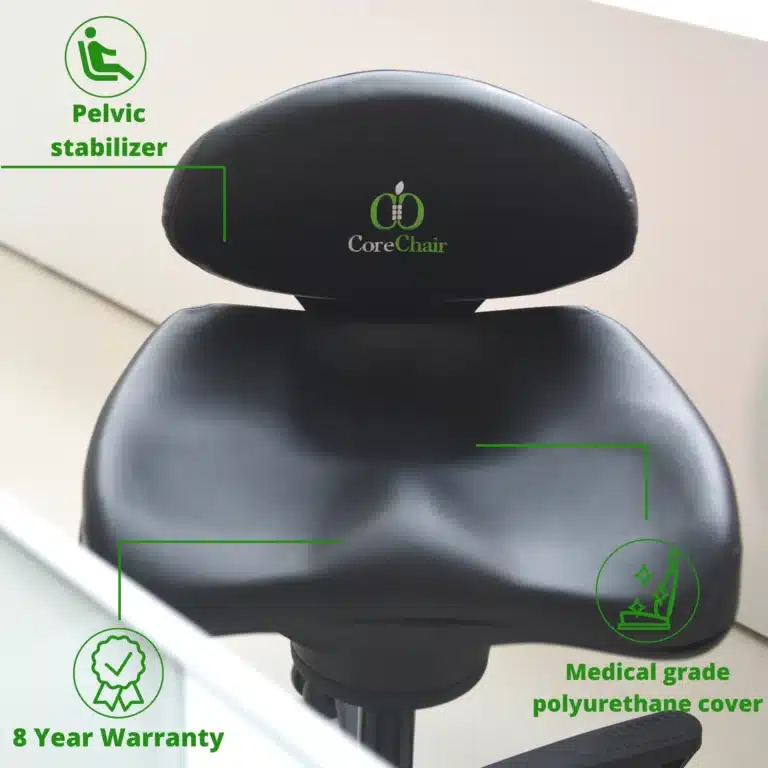
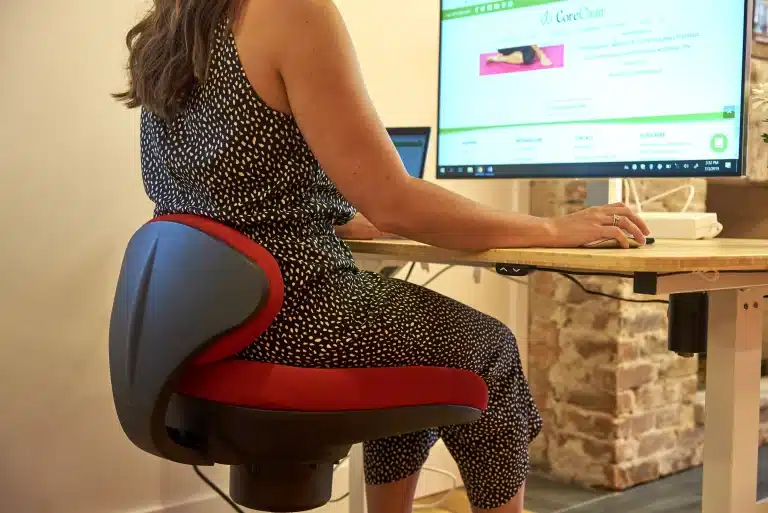
CoreChair’s sculpted seat and patented movement base hold the pelvis in a neutral position throughout the workday – which means the posture chain that delivers elbow pain from computer chair use never gets the conditions it needs to form. Lumbar lordosis is maintained. The thorax stays open. The shoulders stay back. The arms can reach the keyboard without the compensatory mechanics that wear down elbow tissue over time.
University of Waterloo research confirmed that CoreChair produced significantly greater trunk muscle activation and postural stability than conventional ergonomic chairs. Stable, upright trunk posture is the precondition for arm mechanics that do not damage the elbow.
Reducing Armrest Dependency
Elbow swollen and pain gaming chair presentations – particularly bursa inflammation from sustained hard-surface contact at the outer elbow – follow a consistent pattern: the person has been propping themselves up on their armrests because their chair does not support them from below. For users who do require arm support, the CoreChair Elite features low-profile arm supports integrated into the lower back pad — positioned to provide support without restricting movement or forcing the shoulder into elevation.
Circulation and Recovery
Memorial University’s research and the University of Guelph study both documented improved blood flow during active sitting on CoreChair. For people managing persistent elbow pain with an inflammatory component, this circulatory benefit extends to the arm – supporting tissue repair by delivering oxygen and nutrients while clearing the waste products that accumulate during sustained loading.
Davidson et al. (2025) showed that active sitting generates meaningfully higher metabolic activity during standard office tasks, reflecting the improved physiological environment that helps overloaded tissue recover rather than deteriorate further.

Practical Steps for Elbow Pain at a Desk
1. Fix the Desk-to-Chair Height Relationship
Before any other intervention, measure the relationship between your chair and desk. Your keyboard should sit at a height where your elbows can rest near 90 degrees with your shoulders completely relaxed – no shrug, no reach. Elbow pain from tall desk low chair is resolved at this step more reliably than anywhere else. Raise the chair or lower the desk until that relationship is right.
2. Keep the Keyboard Close
The keyboard should be within easy reach – not so far that extending the arm becomes necessary. A keyboard tray positioned slightly below desk height can reduce the shoulder elevation that drives arm loading.
3. Reduce Hard Surface Contact at the Elbow
If elbow pain is already present, minimise direct contact between the inner elbow and hard armrest surfaces. A gel elbow pad provides broad pressure distribution if armrest use cannot be avoided during recovery.
4. Correct the Sitting Foundation
If you’re dealing with elbow pain from computer chair posture problems, addressing the sitting foundation is the most reliable long-term fix. The CoreChair Classic removes the sitting posture problem that makes elbow pain unavoidable for many desk workers. The CoreChair Elite adds the Clever Spine upper back support and integrated low-profile arm supports — relevant for users whose elbow pain is part of a broader upper body tension pattern involving the mid-back, shoulders, and neck.
5. Build Shoulder Girdle Strength
Weak muscles around the shoulder blade require the arm to work harder during keyboard use, which concentrates more load at the elbow. Rowing movements, resistance band exercises for the outer shoulder, and deliberate engagement of the muscles under the armpit during reaching tasks all reduce this downstream loading over time. Active sitting that corrects bad posture and shoulder pain at the postural root provides the structural foundation that these exercises can then build on effectively.
The Elbow Is Where the Problem Arrives, Not Where It Starts
Treating elbow pain at the elbow is treating the last link in a mechanical chain that runs from the floor up. Rest and ice interrupt the inflammatory response but leave the loading pattern intact. The same posture in the same chair recreates the same injury from the same origin.
CoreChair’s research-backed design intercepts this process at its actual source – the sitting environment that allows the posture chain to form in the first place. Change the chair, break the chain.
The connection between sitting posture and whole-body health extends beyond any single pain site – correcting the sitting foundation produces changes across the upper body, not just at the elbow. Explore the CoreChair collection and read what users report about the upper body pain relief that follows from finally addressing the real cause.


Patrick Harrison
BSc KINESIOLOGY
Founder of CoreChair, Patrick has spent over 40 years developing ergonomic and mobility solutions that help people sit, move, and work more comfortably.
Research and References
- Cornell University Pressure Mapping Study – Better weight distribution and comfort on CoreChair vs high-end ergonomic chairs.
- University of Waterloo Posture & Muscle Recruitment Study – CoreChair increased trunk stability, movement, and core muscle activation.
- University of Guelph Physiological & Cognitive Measures Study – Improved blood flow, skin sensitivity, and movement on CoreChair.
- Memorial University Active Sitting Study – Reduced perceived back pain, improved sitting posture, and better lower limb blood flow.
- Active Sitting Increases Energy Expenditure (Davidson et al., 2025) – Significant increases in metabolism and oxygen consumption during active sitting.
- Biomechanical Benefits of Active Sitting (Leger et al., 2023) – Active chairs increase trunk movement, muscle activity, and postural variation.
- Active Sitting vs Traditional Sitting and Standing (Leger et al., 2022) – Active sitting improves circulation, muscle engagement, and energy expenditure.
- Physiological and Cognitive Outcomes with Multi-Axial Chair (Triglav et al., 2019) – Active multi-axial chairs improve circulation and reduce cognitive errors.