Millions of people visit a chiropractor every year hoping to fix their posture, relieve back pain, and move without discomfort. The adjustments help – sometimes dramatically. But many patients notice the same pattern: they leave the clinic feeling aligned, and within days or weeks, their posture has reverted, their pain has returned, and they are booking another appointment.
The relationship between posture and chiropractic is real and well-supported. But chiropractic adjustments alone cannot fix a posture problem that eight hours of daily sitting keeps recreating. Understanding what chiropractic care actually does — and where it ends — reveals why your office chair may be the missing piece in any posture correction strategy.
What Chiropractic Care Does for Posture
Spinal Alignment and Structural Correction
Chiropractors focus on the spine and its relationship to the nervous system. Poor posture — particularly the forward head carriage, thoracic rounding, and lumbar flattening common in office workers — creates abnormal spinal curves, joint dysfunction, and muscular imbalances. Left uncorrected, these patterns compress intervertebral discs, irritate spinal nerves, and generate the chronic pain that drives most patients to seek care.
Chiropractic adjustments restore joint mobility, reduce inflammation in spinal structures, and allow the musculature surrounding the spine to relax. When the spine is properly aligned, postural muscles can work at their correct length-tension relationship — supporting upright posture without the compensatory strain that misalignment creates.
What Chiropractors Actually Treat
The most common posture problems addressed through chiropractic care include:
- Forward head posture — where the head drifts forward of the shoulder line, adding up to 27 pounds of effective load to the cervical spine for every inch of forward displacement
- Thoracic kyphosis — excessive rounding of the upper back that compresses the chest and impairs breathing
- Lumbar hypolordosis — flattening of the natural lower back curve, often caused by posterior pelvic tilt from prolonged sitting
- Scoliotic patterns — lateral curvature that develops or worsens through habitual asymmetric loading
- Sacroiliac joint dysfunction — misalignment at the base of the spine that generates low back and hip pain
Each of these conditions is directly influenced by how you sit for the majority of your waking hours.
The Sitting-Posture-Spine Connection
How Eight Hours of Sitting Undoes Chiropractic Work
Here is the fundamental problem with posture and chiropractic treatment: a standard office chair is designed to hold you still. And stillness is one of the primary drivers of the postural dysfunction that chiropractors spend their careers correcting.
When you sit in a static chair, gravity acts on your body continuously. Without movement signals to engage your stabilizing muscles, your spine gradually collapses into the path of least resistance — forward head, rounded shoulders, flat lumbar curve. By the time most office workers reach midday, they are sitting in a posture that would alarm their chiropractor.
Multiply this by five days a week, fifty weeks a year, and you have thousands of hours of spinal loading in exactly the configuration that chiropractic seeks to correct. Adjustments performed twice a week cannot compete with eight hours of daily postural collapse. The chair wins.
Body Posture and Chiropractic: The Lifestyle Factor
Chiropractors are increasingly aware that body posture and chiropractic outcomes are inseparable. Progressive practitioners prescribe postural exercises, ergonomic interventions, and movement strategies alongside adjustments — because they know that structural correction achieved in the clinic will not hold unless the patient’s daily environment supports it.
The most common ergonomic recommendation is a chair that supports neutral spinal alignment. But neutral alignment in a static chair is a static solution. It holds you in one position rather than training the dynamic postural control that protects the spine during real-world movement.
Why Standard Ergonomic Chairs Are Not Enough
Most ergonomic office chairs are marketed as posture solutions. They offer lumbar support, adjustable armrests, and recline functions designed to reduce spinal load. These features help — but they address the symptoms of static sitting without addressing the cause.
Lumbar support props the lower back but does not engage the muscles responsible for maintaining that curve independently. A chair that holds your posture for you is not training posture — it is doing the work your muscles should be doing. And when you leave that chair, your unsupported postural muscles are no weaker than when you sat down.
The same logic applies to chiropractic and posture improvement. Adjustments restore joint mechanics. But if the muscles, habits, and environment that recreate dysfunction are left unchanged, the mechanical gains from adjustment will be temporary.
How Active Sitting Supports Chiropractic and Posture Improvement
Lasting chiropractic and posture improvement requires a daily environment that reinforces — rather than reverses — the changes made during treatment. Active sitting is designed precisely for this.
Maintaining Neutral Spinal Alignment
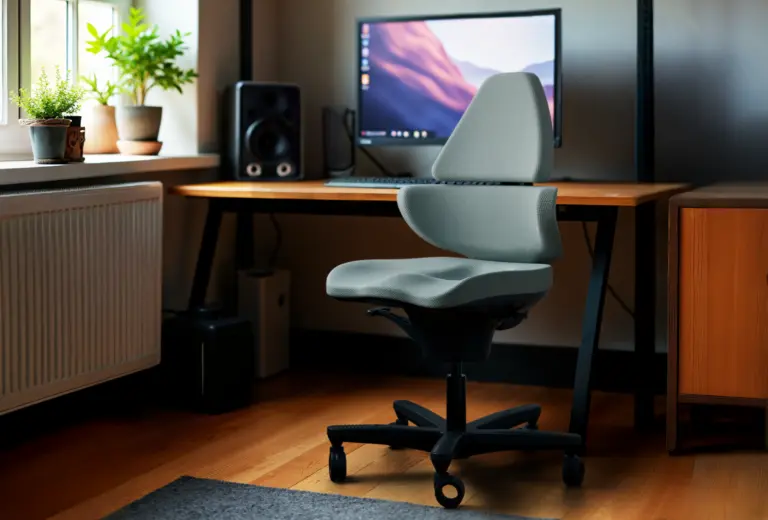
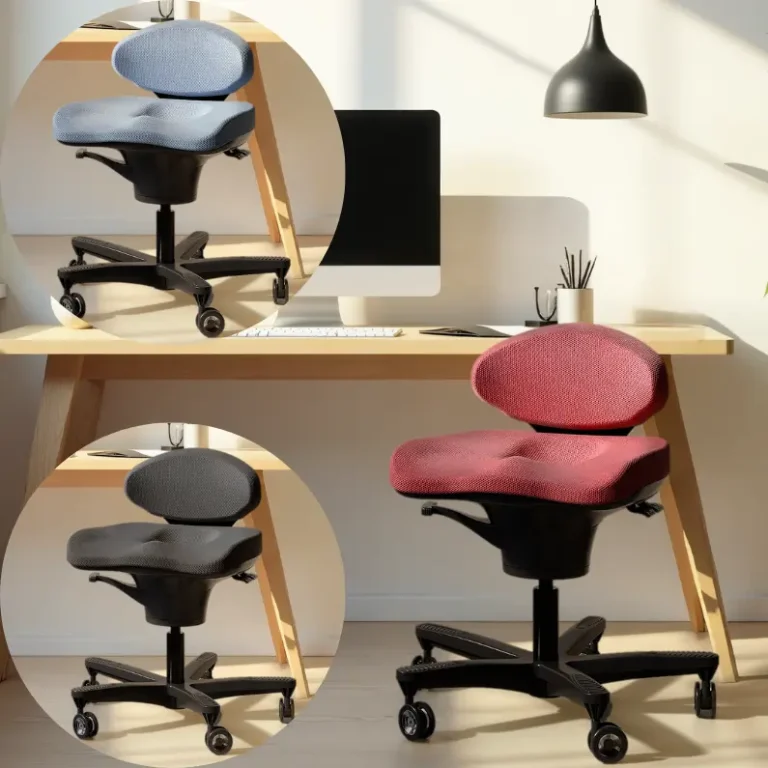
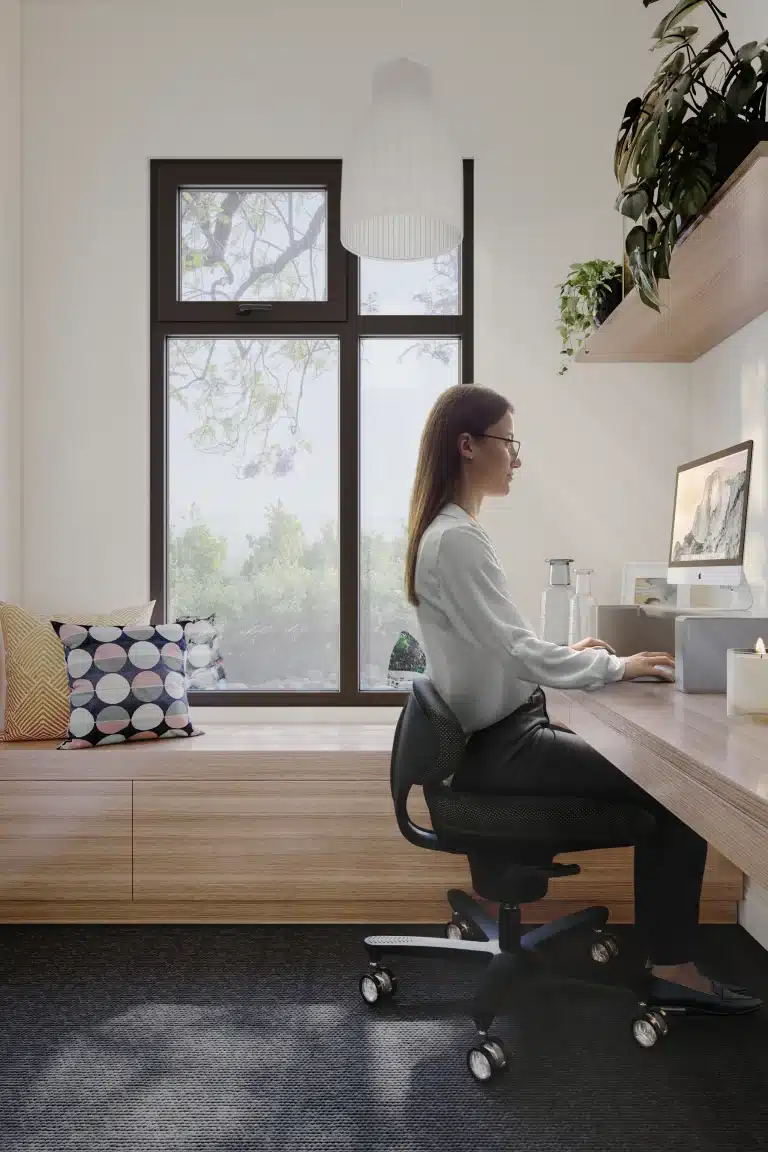
CoreChair is engineered with a sculpted seat and patented movement base that positions the pelvis in neutral alignment. When the pelvis is neutral, the lumbar curve is naturally maintained, the thoracic spine can extend, and the head can balance over the shoulders — the postural configuration that chiropractors work to restore.
This is not passive support. CoreChair’s design encourages your postural muscles to maintain this alignment actively, which builds the muscular endurance and motor control that makes good posture sustainable outside the chair.
Research from the University of Waterloo confirmed that CoreChair significantly increased trunk muscle activation compared to conventional ergonomic chairs and stability balls. This ongoing engagement trains the stabilizing muscles that protect the spine — the same muscles that chiropractic treatment depends on to hold its corrections.
Continuous Movement Prevents Postural Collapse
CoreChair’s 360-degree movement base introduces continuous, low-amplitude motion throughout the sitting session. This movement prevents the static loading that collapses the spine over time. Instead of holding a single position while gravity slowly defeats it, your body continuously adjusts — maintaining spinal position through active micro-correction rather than passive support.
This is the mechanism that bridges body posture and chiropractic outcomes. Movement keeps the spine mobile, the muscles engaged, and the postural patterns established during adjustment from reverting during the hours between clinic visits.
Pressure Relief That Protects Spinal Structures
One of the most damaging aspects of static sitting is the sustained compression it places on intervertebral discs. These structures depend on movement to exchange nutrients and fluids — static loading starves them and accelerates degeneration. Disc health is central to posture and overall spinal wellbeing.
Cornell University research demonstrated that CoreChair achieves significantly better sitting pressure distribution than high-end ergonomic alternatives. Reduced spinal compression during the workday means less structural damage accumulating between chiropractic visits — and better conditions for the disc and joint recovery that adjustments initiate.
Circulation and Tissue Recovery
Spinal adjustment initiates a healing process that requires adequate circulation to complete. Blood flow delivers anti-inflammatory mediators, repair nutrients, and oxygen to the adjusted joints and surrounding soft tissues. Static sitting impairs this circulation — limiting the recovery that chiropractic care triggers.
The University of Guelph study measured significantly improved blood flow and physiological measures during active sitting on CoreChair. The Memorial University study confirmed improved lower limb circulation and healthier sitting patterns. This improved circulation helps the healing process initiated by chiropractic continue during the workday rather than being interrupted by the circulatory impairment of static sitting.
Reducing the Stress Load on the Spine
Chronic pain and the emotional stress it generates elevate cortisol, which slows tissue repair and amplifies pain sensitivity. Poor sitting posture activates the stress response through shallow breathing, muscular tension, and sympathetic nervous system activation. This biochemical environment works against the recovery that chiropractic care initiates.
CoreChair’s upright posture supports deep diaphragmatic breathing and parasympathetic activation — reducing the stress load that impairs recovery and sensitizes pain. Patients who sit on CoreChair between adjustments are creating a better internal environment for the healing their chiropractor has set in motion.
Practical Steps for Better Chiropractic and Posture Outcomes
1. Switch Your Chair Before Your Next Appointment
The single most impactful environmental change most patients can make is replacing their static office chair. The CoreChair Classic provides the active sitting foundation that maintains spinal alignment throughout the workday — extending the benefit of every chiropractic visit.
2. Communicate with Your Chiropractor
Tell your chiropractor about your sitting habits and equipment. Progressive practitioners will integrate ergonomic guidance into your care plan. Many chiropractors now specifically recommend active sitting solutions for patients with desk-work-related posture problems.
3. Perform Your Prescribed Exercises
Most chiropractors prescribe exercises to reinforce the corrections made during adjustment. These are designed to build the muscular endurance that holds spinal alignment between visits. Active sitting on CoreChair supports the same muscle groups — making your exercises more effective by training those muscles passively throughout the day.
4. Address Your Full Workstation
Chiropractic and posture improvement require a complete ergonomic review. Monitor height, keyboard position, and screen distance all influence your spinal alignment. CoreChair addresses the seating component — but your chiropractor can recommend adjustments to the rest of your workstation that complete the picture.
5. Prioritize Movement Breaks
Even active sitting benefits from regular movement breaks. Stand, walk, or perform gentle spinal mobility work every 60 minutes. These breaks amplify the benefits of both CoreChair and chiropractic by further reducing static spinal loading and promoting circulation.

The Chair Your Chiropractor Cannot Prescribe — But Should
Posture and chiropractic care are most powerful in combination. Adjustments restore the structure. Active sitting preserves it. The two interventions address the same problem from complementary directions — and together, they create lasting results that neither achieves alone.
CoreChair’s research-backed active sitting design maintains the neutral spinal alignment, muscular engagement, circulatory support, and stress reduction that chiropractic and posture improvement depend on. Explore the full collection and read what real users report about the difference active sitting makes between clinic visits.
Your chiropractor corrects your spine twice a week. Your chair shapes it for eight hours a day. Choose accordingly.
Research and References
- Physiological and Cognitive Outcomes with Multi-Axial Chair (Triglav et al., 2019) – Active multi-axial chairs improve circulation and reduce cognitive errors.
- Cornell University Pressure Mapping Study – Better weight distribution and comfort on CoreChair vs high-end ergonomic chairs.
- University of Waterloo Posture & Muscle Recruitment Study – CoreChair increased trunk stability, movement, and core muscle activation.
- Mayo Clinic & Arizona State University Energy Expenditure Study – CoreChair showed higher energy expenditure during typical office tasks.
- Mayo Clinic NEAT™ Certification – Measurable increases in daily energy output under NEAT™ guidelines.
- University of Guelph Physiological & Cognitive Measures Study – Improved blood flow, cognitive performance, and movement on CoreChair.
- Memorial University Active Sitting Study – Improved lower limb blood flow, healthier sitting, and reduced perceived back pain.
- Active Sitting Increases Energy Expenditure (Davidson et al., 2025) – Significant increases in metabolism and oxygen consumption during active sitting.
- Biomechanical Benefits of Active Sitting (Leger et al., 2023) – Active chairs increase trunk movement, muscle activity, and postural variation.