Most people associate dizziness with inner ear problems or dehydration. But there is another common trigger that rarely gets attention: the way you sit. Bad posture and dizziness are connected through your circulatory system, your neck alignment, and your vestibular function — and if you spend hours hunched at a desk, your sitting habits could be the reason you feel lightheaded, unsteady, or off-balance.
Understanding the link between posture and dizziness is the first step toward finding relief — often without medication or invasive treatment.
How Poor Posture Causes Dizziness
Dizziness from poor posture is not imaginary. There are several well-documented physiological mechanisms that explain why slouching and hunching can make you feel lightheaded or disoriented.
Cervical Spine Compression
When you sit with a forward head posture — chin jutting out, shoulders rounded — you compress the vertebrae and soft tissues in your cervical spine. This area contains the vertebral arteries, which supply blood directly to your brainstem and inner ear. Compression or irritation of these structures can reduce blood flow and trigger dizziness, a condition sometimes called cervicogenic dizziness.
The further your head shifts forward from its balanced position, the greater the strain. For every inch of forward head posture, your neck bears an additional ten pounds of effective weight — dramatically increasing compression and contributing to chronic pain.
Restricted Blood Flow to the Brain
Poor posture and dizziness are also linked through general circulatory restriction. A slouched position compresses your chest and abdomen, reducing the efficiency of your heart and lungs. Less efficient circulation means less oxygen reaching your brain — and insufficient cerebral blood flow is one of the most common causes of lightheadedness.
Research has consistently shown that static, slouched sitting impairs circulation. The University of Guelph study on CoreChair specifically measured improvements in blood flow during active sitting compared to traditional chairs.
Disrupted Vestibular Input
Your vestibular system — the balance center in your inner ear — relies on accurate information about your head position relative to gravity. When your posture shifts your head out of neutral alignment, it can send conflicting signals to your brain about your actual orientation. This mismatch between what your vestibular system reports and what your body is doing can create a persistent sense of dizziness or unsteadiness.
Muscle Tension and Trigger Points
Chronic poor posture creates tension in the neck, shoulder, and upper back muscles. Tight muscles in this region — particularly the suboccipital muscles at the base of your skull — can refer sensations of dizziness and disorientation. Many people who experience unexplained dizziness discover that addressing their posture and muscle tension resolves the problem.
Why Traditional Chairs Make It Worse
Standard office chairs contribute to posture-related dizziness in several ways.
Static sitting encourages your body to gradually slump into the worst possible position for your cervical spine. Without movement or active engagement, gravity slowly pulls your head forward and your shoulders inward over the course of hours.
Padded backrests create a false sense of support while actually encouraging a reclined position that pushes your head forward relative to your spine. This is the exact posture that compresses the cervical structures responsible for dizziness.
Most importantly, traditional chairs provide zero circulation support. Your blood pools in your lower extremities, your heart works harder to push blood upward, and your brain receives less oxygen — a direct recipe for lightheadedness. Understanding good posture vs bad posture while sitting is essential for breaking this pattern.
How Active Sitting Reduces Dizziness
Active sitting directly addresses every mechanism that connects poor posture and dizziness.
Restored Cervical Alignment
Active sitting naturally brings your head back over your spine. When your core is engaged and your pelvis is in a neutral position, your cervical spine aligns properly without conscious effort. This relieves compression on the vertebral arteries and reduces cervicogenic dizziness.
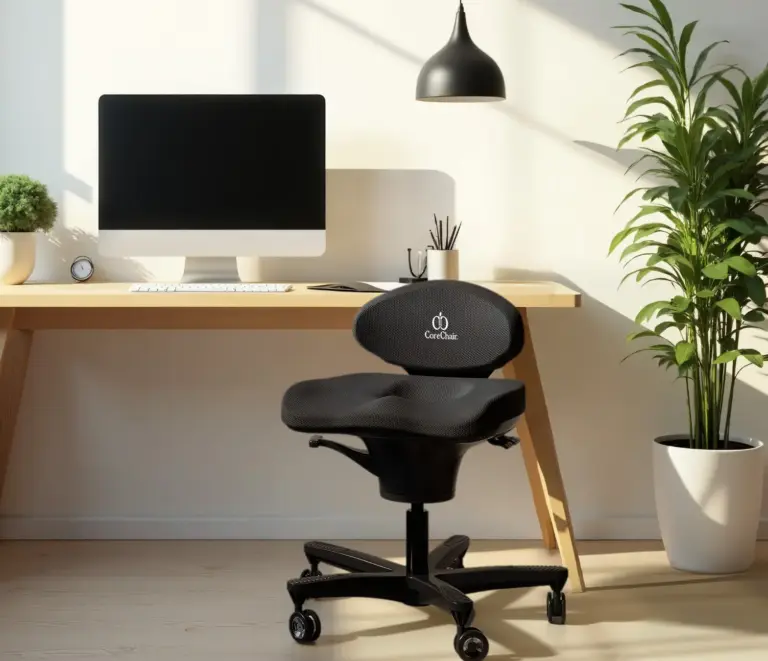
CoreChair promotes this alignment through its sculpted seat and movement base. By positioning your pelvis correctly, the entire spinal chain — including your neck — falls into a healthier position. University of Waterloo research confirmed that CoreChair users maintain significantly better posture than those in standard ergonomic chairs.
Improved Circulation
The continuous micro-movements of active sitting act as a gentle pump for your circulatory system. Each small adjustment helps push blood back toward your heart and brain, preventing the pooling and reduced flow that cause lightheadedness.
Memorial University research found that CoreChair improved lower limb blood flow during sitting — a direct measurement of the circulatory benefit that combats posture-related dizziness. The University of Guelph study also measured improved blood flow and cognitive performance during active sitting.
Reduced Muscle Tension
Active sitting prevents the static muscle loading that creates trigger points and chronic tension. By keeping your muscles gently active rather than locked in one position, active sitting eliminates the sustained compression that causes tension-related dizziness.
The CoreChair Classic allows just enough movement to keep your neck, shoulder, and upper back muscles from seizing up — without the instability of a balance ball that could actually worsen dizziness symptoms.
Practical Steps to Address Posture-Related Dizziness
1. Switch to Active Sitting
Replace your static chair with a CoreChair to maintain proper spinal alignment and circulation throughout the workday. This single change addresses the root causes of posture-related dizziness rather than just treating symptoms.
2. Check Your Head Position
Your ears should align directly over your shoulders when viewed from the side. If your head is forward of this line, your cervical spine is compressed. On a CoreChair, the natural pelvic positioning helps bring your head back into alignment automatically.
3. Stay Hydrated
Dehydration amplifies posture-related dizziness. Keep water at your desk and drink consistently throughout the day. Proper hydration supports the blood volume your circulatory system needs to deliver oxygen to your brain effectively.
4. Perform Gentle Neck Mobility
Slowly rotate your head through its full range of motion several times per hour. Tilt your ear toward each shoulder, look left and right, and gently tuck your chin. These movements prevent the cervical stiffness that contributes to dizziness.
When to Seek Professional Help
While poor posture and dizziness are often connected, persistent or severe dizziness should always be evaluated by a healthcare professional. If your dizziness is accompanied by vision changes, severe headaches, loss of coordination, or hearing loss, seek medical attention promptly.
For posture-related dizziness, many physical therapists and ergonomic consultants recommend active sitting as part of a comprehensive treatment approach. CoreChair is used in healthcare and rehabilitation settings for exactly this purpose.
Sit Better, Feel Steadier
Dizziness and posture are more closely linked than most people realize. The hours you spend slouched at your desk may be quietly compressing your cervical spine, restricting blood flow to your brain, and disrupting your balance system. Active sitting on a CoreChair corrects these issues at the source — keeping your spine aligned, your blood flowing, and your balance system functioning properly.
Stop blaming your dizziness on stress or fatigue. Your chair might be the real problem. Discover the CoreChair difference and see what real users experience.
Our Partners

Research and References
- University of Waterloo Posture & Muscle Recruitment Study — CoreChair increased trunk stability and core muscle activation compared to ergonomic chairs and stability balls.
- University of Guelph Physiological & Cognitive Measures Study — Improved blood flow, cognitive performance, and movement on CoreChair.
- Memorial University Active Sitting Study — CoreChair promoted healthier sitting, improved lower limb blood flow, and reduced perceived back pain.
- Cornell University Pressure Mapping Study — Better weight distribution and comfort on CoreChair vs high-end ergonomic chairs.
- Physiological and Cognitive Outcomes with Multi-Axial Chair (Triglav et al., 2019) — Active multi-axial chairs improve circulation and reduce cognitive errors.
- Active Sitting vs Traditional Sitting and Standing (Léger et al., 2022) — Active sitting improves circulation, muscle engagement, and energy expenditure.
- Active Sitting with Backrest Support Feasibility (Kuster et al., 2018) — Active chairs can incorporate support without discomfort, combining dynamic movement with ergonomics.