Testosterone is not just about muscle mass and athletic performance. It regulates energy, mood, cognitive sharpness, motivation, bone density, and metabolic function in both men and women. And while most conversations about testosterone focus on diet, exercise, sleep, and supplements, there is a powerful factor that almost everyone overlooks – the way you sit.
The link between posture and testosterone levels is supported by published research and grounded in well-understood hormonal mechanisms. Your body position physically influences your endocrine system. Eight hours a day in a slouched, collapsed posture may be quietly suppressing one of the most important hormones for daily performance and long-term health.
The Research: Posture and Testosterone Study Findings
The Power Pose Research
The most well-known posture and testosterone study comes from social psychologist Amy Cuddy and her colleagues at Harvard University. Their 2010 research found that participants who held expansive, open postures for just two minutes experienced a measurable increase in testosterone and a decrease in cortisol – while those who held closed, contracted postures experienced the opposite: testosterone dropped and cortisol rose.
The magnitude was striking. Open postures produced roughly a 20 percent increase in testosterone and a 25 percent decrease in cortisol. Closed postures produced approximately a 10 percent decrease in testosterone and a 15 percent increase in cortisol. Two minutes of body positioning created a meaningful hormonal shift.
Replication and Refinement
Subsequent research has refined these findings. While some replication studies questioned the exact magnitude of the effect, the core finding – that body posture influences hormonal profiles – has been supported across multiple laboratories and methodologies. The scientific consensus holds that expansive, upright postures are associated with more favorable testosterone-to-cortisol ratios compared to collapsed, closed postures.
What matters for office workers is not a two-minute power pose before a meeting. It is the cumulative hormonal effect of spending eight hours a day in a posture that either supports or suppresses testosterone production.
The Cortisol Connection
Posture and testosterone levels cannot be discussed without addressing cortisol. These two hormones have an inverse relationship – when cortisol is chronically elevated, testosterone production is suppressed. Slouched, compressed postures elevate cortisol. This means poor sitting posture attacks testosterone from two directions: it reduces direct testosterone production and it increases the hormone that suppresses it.
How Slouched Sitting Suppresses Testosterone
The Eight-Hour Hormonal Drain
Consider the typical office worker. They arrive at work and sit in a standard chair. Within 30 minutes, gravity and fatigue begin pulling them into a forward hunch. Shoulders round, chest collapses, spine curves, head drifts forward. This is the closed, contracted posture that research associates with lower testosterone and higher cortisol.
This is not a brief two-minute exposure. It is sustained for hours. Day after day, week after week, the hormonal signal is consistent: suppress testosterone, elevate cortisol. Over time, this creates a baseline hormonal environment that affects energy, mood, body composition, motivation, and cognitive function.
Muscle Disengagement and Hormonal Signaling
Your body produces testosterone partly in response to muscular demand. When muscles are engaged – even at low levels -they send biochemical signals that support testosterone production. Slouched, static sitting disengages your major stabilizing muscles, particularly the core and posterior chain. Without these engagement signals, your body reduces testosterone output because there is less apparent demand.
Circulatory Impairment
Testosterone production depends on adequate blood flow to the testes and adrenal glands. Static, compressed sitting restricts pelvic and lower body circulation. Over hours of sitting, this circulatory impairment may reduce the delivery of precursor hormones and nutrients necessary for testosterone synthesis.
The Stress Cascade
Poor posture triggers a physiological stress response that extends beyond cortisol. Shallow breathing from a compressed chest activates the sympathetic nervous system. Chronic sympathetic activation shifts your body into a survival-oriented hormonal profile — one that prioritizes cortisol and adrenaline over growth and repair hormones like testosterone. Understanding how posture impacts your stress response reveals why your chair choice matters far more than most people realize.
How Active Sitting Supports Healthy Testosterone Levels
Correcting the posture-testosterone connection requires more than occasional reminders to sit up straight. It requires a seating solution that maintains testosterone-supportive posture automatically throughout the workday.
Sustained Expansive Posture
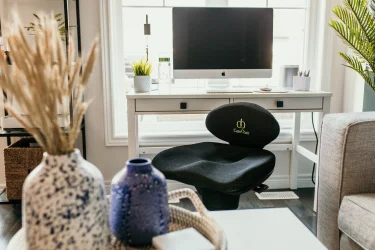
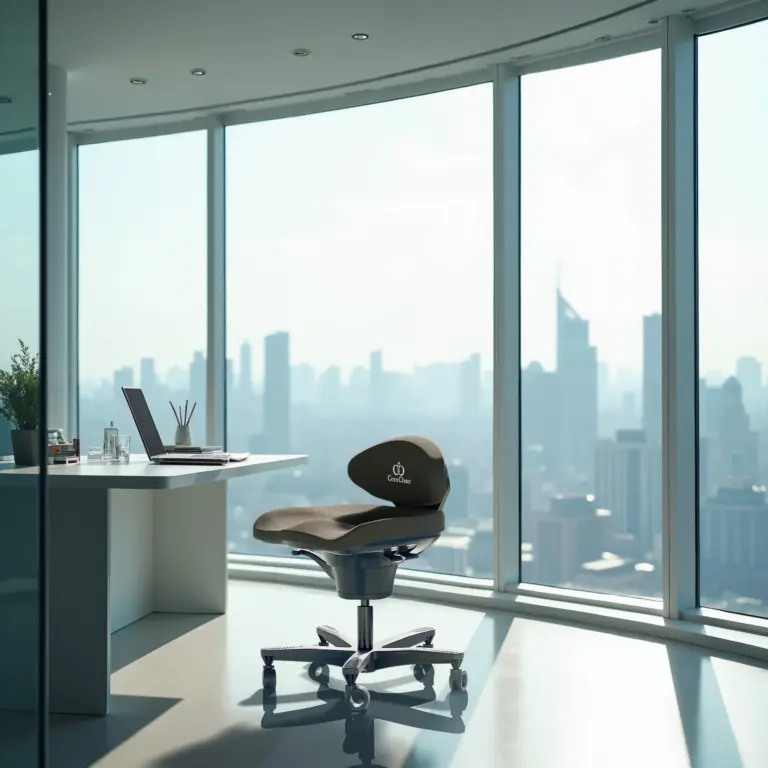
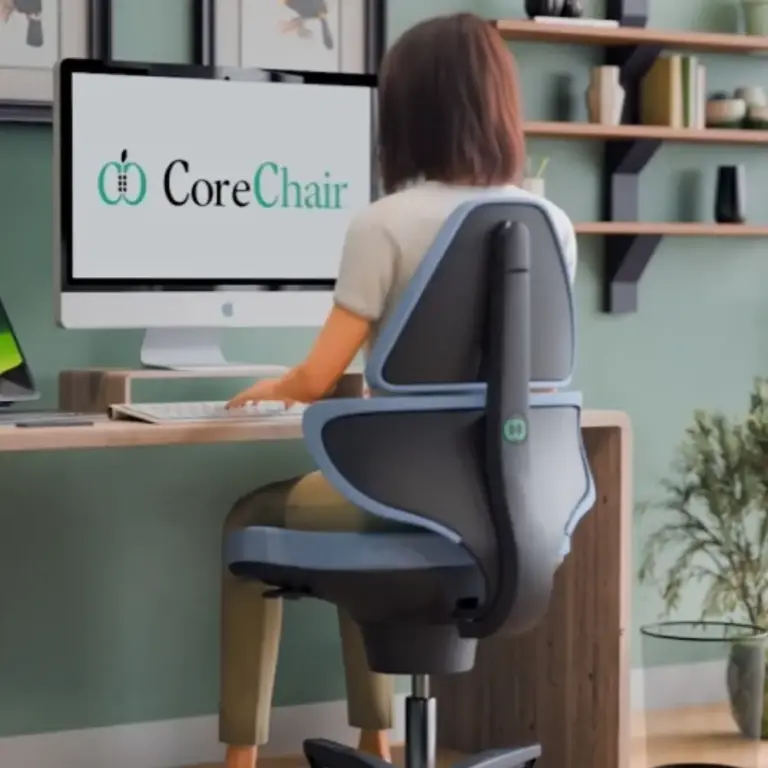
CoreChair is engineered with a sculpted seat and patented movement base that positions your pelvis in neutral alignment. This naturally produces the upright, open-chested posture that research associates with higher testosterone and lower cortisol – without conscious effort or muscular strain.
Instead of fighting gravity all day to maintain good posture, your body settles into the alignment that supports optimal hormonal function as a default.
Continuous Muscle Engagement
CoreChair’s movement base requires ongoing subtle activation of your core, trunk stabilizers, and postural muscles. This low-level engagement provides the muscular demand signals that support testosterone production – turning eight hours of sitting into eight hours of gentle, sustained physical activity.
Research from the University of Waterloo confirmed that CoreChair significantly increased trunk muscle activation compared to traditional ergonomic chairs and stability balls. Unlike stability balls, CoreChair delivers this activation safely and sustainably for a full workday.
Increased Energy Expenditure
The Mayo Clinic NEAT™ certification confirmed that CoreChair produces measurable increases in daily energy expenditure. Davidson et al. (2025) further demonstrated significant increases in metabolism and oxygen consumption during active sitting. Higher metabolic activity signals your endocrine system that your body is active and requires the hormonal support — including testosterone — to match that activity level.
Improved Pelvic Circulation
Active sitting on CoreChair keeps the pelvis mobile and reduces the static compression that impairs lower body circulation. The University of Guelph study measured improved blood flow during active sitting – supporting the circulatory conditions necessary for healthy testosterone production.
Memorial University research specifically found that CoreChair improved lower limb blood flow and promoted healthier sitting patterns – directly relevant to maintaining pelvic circulation throughout the workday.
Reduced Physical Stress
Discomfort and pain are powerful cortisol triggers. When your body hurts, cortisol rises and testosterone falls. Cornell University research demonstrated that CoreChair distributes sitting pressure more evenly than high-end ergonomic alternatives, reducing the physical discomfort that drives cortisol elevation.
The CoreChair Elite offers additional adjustability for users who need maximum comfort customization during long work sessions.
Practical Strategies to Support Testosterone Through Posture
1. Make Active Sitting Your Default
Replace your static chair with a CoreChair so that testosterone-supportive posture is your baseline, not something you have to remember. The cumulative hormonal benefit of eight hours of upright, open posture far exceeds any brief power pose.
2. Combine Sitting and Standing
Alternate between active sitting on CoreChair and standing breaks every 45 to 60 minutes. Standing in an expansive posture reinforces the hormonal benefits, and the transition itself keeps your muscles engaged and circulation flowing.
3. Avoid Crossed Legs and Compressed Positions
Crossing your legs or sitting with a forward lean compresses your pelvic region and restricts circulation. Maintain an open hip angle and keep both feet grounded to support blood flow to the areas responsible for testosterone production.
4. Breathe Diaphragmatically
Deep belly breathing activates the parasympathetic nervous system, reducing cortisol and creating a hormonal environment that favors testosterone. Practice diaphragmatic breathing throughout your workday — CoreChair’s upright posture naturally supports this by keeping your chest open and your diaphragm uncompressed.
5. Align Your Full Workstation
Ensure your monitor is at eye level and your keyboard is close to your body. A workstation that supports upright posture eliminates the environmental factors that pull you into the collapsed position that suppresses testosterone. Your overall posture and health foundation depends on your entire setup working together.
Your Chair Is a Hormonal Choice
Posture and testosterone levels are linked through direct hormonal pathways, muscular signaling, circulatory function, and stress response. Every hour you spend in a collapsed, static posture is an hour of suppressed testosterone and elevated cortisol. Every hour in an upright, dynamic posture is an hour of hormonal support.
CoreChair’s research-backed active sitting design maintains the posture, movement, and circulatory conditions that support healthy testosterone regulation — naturally and throughout the entire workday. Explore the full collection and see what real users report.
Research and References
- Cornell University Pressure Mapping Study – Better weight distribution and comfort on CoreChair vs high-end ergonomic chairs.
- University of Waterloo Posture & Muscle Recruitment Study – CoreChair increased trunk stability, movement, and core muscle activation.
- Mayo Clinic & Arizona State University Energy Expenditure Study – CoreChair showed higher energy expenditure during typical office tasks.
- Mayo Clinic NEAT™ Certification – Measurable increases in daily energy output under NEAT™ guidelines.
- University of Guelph Physiological & Cognitive Measures Study – Improved blood flow, cognitive performance, and movement on CoreChair.
- Memorial University Active Sitting Study – Improved lower limb blood flow, healthier sitting, and reduced perceived back pain.
- Active Sitting Increases Energy Expenditure (Davidson et al., 2025) – Significant increases in metabolism and oxygen consumption during active sitting.
- Biomechanical Benefits of Active Sitting (Leger et al., 2023) – Active chairs increase trunk movement, muscle activity, and postural variation.
- Physiological and Cognitive Outcomes with Multi-Axial Chair (Triglav et al., 2019) – Active multi-axial chairs improve circulation and reduce cognitive errors.