The way you sit is saying something about you – even when you are not speaking. Your sitting posture and personality are deeply intertwined: the position of your body shapes how others perceive you, how you perceive yourself, and over time, how you actually behave.
This is not pop psychology. Research in embodied cognition and social psychology has demonstrated that posture directly influences personality expression, self-perception, and interpersonal dynamics. Your chair is not just a piece of furniture. It is a tool that either supports or undermines the person you present to the world.
The Science Behind Posture and Personality
Your Body Tells Your Brain Who You Are
Your brain does not form your self-image from thoughts alone. It constantly reads physical signals from your body – muscle tension, spinal alignment, chest openness, head position – and uses them to construct your sense of self in the moment.
When you sit upright with an open chest and squared shoulders, your brain interprets these signals as dominance, capability, and readiness. When you slouch with a collapsed chest and forward head, the signals suggest submission, withdrawal, and disengagement. Over thousands of hours of sitting, these momentary signals become habitual patterns -and habitual patterns shape personality.
Posture and Personality Traits
Psychologists have long observed correlations between posture and personality traits. People who habitually maintain upright, open postures tend to score higher on measures of extraversion, assertiveness, and emotional stability. Those who consistently adopt closed, collapsed postures tend toward introversion, passivity, and higher anxiety.
The critical insight is that this relationship is not one-directional. It is not simply that confident people sit tall. Sitting tall actively generates confidence. Posture is both an expression of personality and a driver of it.
The Hormonal Mechanism
Research has shown that expansive, upright postures increase testosterone and decrease cortisol – creating a hormonal profile associated with confidence, decisiveness, and resilience. Collapsed postures reverse this pattern, elevating cortisol and suppressing testosterone, which promotes caution, passivity, and stress reactivity.
Over weeks and months, these hormonal shifts do not just affect your mood – they influence your default behavioral patterns. In other words, they shape your personality.
How Sitting Posture Shapes the Way Others See You
Your posture communicates before you open your mouth. In meetings, interviews, and everyday interactions, sitting posture and personality perception are inseparable.
First Impressions Are Postural
Studies in nonverbal communication consistently show that people form judgments about competence, confidence, and trustworthiness within seconds – primarily based on body language. A person sitting upright with an open posture is perceived as more capable, more authoritative, and more approachable than someone slouched in the same chair.
Leadership Perception
In workplace settings, posture is directly linked to perceived leadership ability. People who sit tall and maintain an open, engaged posture are more likely to be seen as leaders, to be given opportunities, and to be trusted with responsibility. Those who slouch are unconsciously categorized as passive, disengaged, or lacking confidence – regardless of their actual abilities.
Social Dynamics
Posture affects interpersonal dynamics in every conversation. When you sit with collapsed posture, you signal to others that you are withdrawn or uncertain. This invites dominant behavior from colleagues and can create a cycle where your posture undermines your social standing, which further reinforces the collapsed posture.
The Hidden Cost of Eight Hours in a Bad Chair
Most professionals spend the majority of their waking hours seated at a desk. If your chair encourages a slouched, collapsed posture, you are spending eight hours a day training your brain, your hormones, and your social behavior toward passivity and low confidence.
The Gradual Personality Shift
This does not happen overnight. It happens gradually – so slowly that you do not notice. Over months of static, slouched sitting:
- Your default posture becomes more closed and compressed
- Your hormonal profile shifts toward higher cortisol and lower testosterone
- Your brain increasingly associates your body state with withdrawal and disengagement
- Others begin perceiving you as less confident and less authoritative
- You start behaving in ways that match these perceptions
This is not about having a bad day. It is about a slow, consistent reshaping of how you show up in the world — driven entirely by how you sit.
The Emotional Feedback Loop
Poor posture does not just affect how others see you. It affects how you see yourself. When your body is in a collapsed position, your internal emotional state follows. You feel less capable, less motivated, and less willing to take risks. These feelings reinforce the posture, creating a feedback loop between posture and emotions that is difficult to break with willpower alone.
How Active Sitting Supports a Confident Personality
Breaking the slouch-passivity cycle requires more than reminders to sit up straight. Conscious correction fades within minutes because your chair keeps pulling you back into the same collapsed position. The solution is a chair that makes confident posture your default.
Natural Upright Alignment
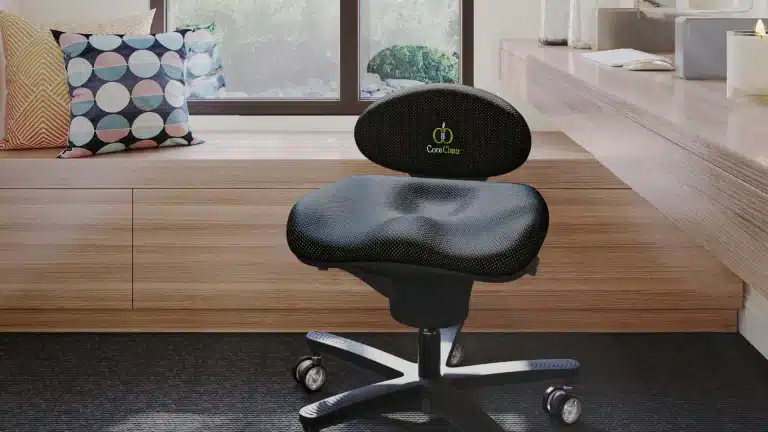
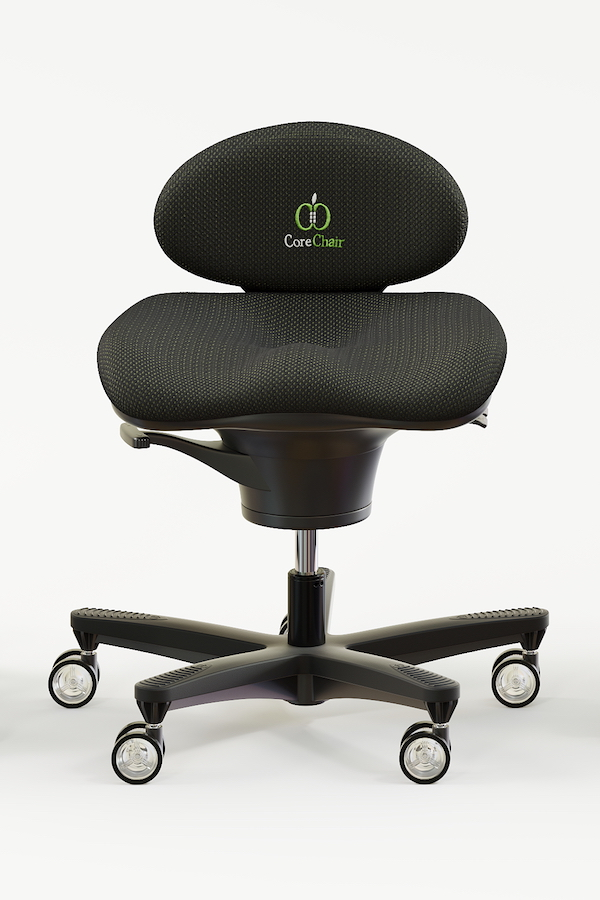
CoreChair is engineered with a sculpted seat and patented movement base that positions your pelvis in a neutral tilt. When your pelvis is aligned, your spine naturally stacks upright, your chest opens, and your shoulders settle back – the posture associated with confidence, assertiveness, and positive personality expression.
This happens automatically. You do not need to think about it, remind yourself, or fight against your chair. The design does the work.
Movement Sustains Engagement
Static sitting leads to fatigue, which leads to slouching, which leads to the passive body language that undermines personality expression. CoreChair’s 360-degree movement base keeps your body gently active throughout the day. This sustained engagement prevents the energy decline that causes postural collapse.
Research from the University of Waterloo showed that CoreChair increased trunk muscle activation and improved posture compared to traditional ergonomic chairs and stability balls – maintaining the kind of engaged, upright body position that supports confident personality expression.
Reduced Discomfort Prevents Withdrawal
Pain and discomfort trigger unconscious withdrawal behaviors – the exact body language that signals passivity and low confidence. Cornell University research found that CoreChair distributes sitting pressure more evenly than high-end ergonomic chairs, eliminating the discomfort that drives people into closed, defensive postures.
The CoreChair Elite provides additional adjustability for users who need maximum comfort during long sessions.
Better Circulation Supports Mental Sharpness
Confident personality expression requires mental clarity – the ability to think quickly, respond decisively, and stay engaged. The University of Guelph study found that active sitting on CoreChair improved blood flow and cognitive performance, providing the mental sharpness that supports confident, assertive behavior.
Practical Strategies for Using Posture to Strengthen Personality
1. Start Your Day in an Active Chair
The posture you adopt in the first hour of your workday sets the tone for everything that follows. Begin your day on a CoreChair to establish an upright, open baseline that carries through your morning.
2. Prepare for Key Moments Physically
Before important meetings, presentations, or difficult conversations, take 30 seconds to consciously expand your posture. Sit tall, open your chest, place both feet flat, and take three deep breaths. This primes your hormonal and neurological systems for confident performance.
3. Notice Your Postural Defaults
Three times throughout your workday, check in with your body. Where has your posture drifted? If you are in a collapsed position, recognize that your personality expression has likely followed. Reset and notice how your mental state shifts with your posture.
4. Build Core Strength Passively
A strong core supports upright posture without effort. Active sitting on CoreChair engages your stabilizing muscles throughout the day, gradually building the strength that makes confident posture your natural default – not something you have to force.
5. Align Your Environment
Your monitor should be at eye level, your keyboard close to your body, and your chair supporting natural pelvic alignment. When your workstation supports good posture, maintaining the body language of confidence becomes effortless.
Your Chair Is Shaping Who You Are
Posture and personality are not separate – they are two expressions of the same system. The way you sit for eight hours a day is shaping your hormones, your self-perception, your emotional patterns, and the way the world responds to you. A chair that lets you slouch is a chair that slowly erodes your confidence.
CoreChair’s research-backed active sitting design keeps your body in the posture that supports confident, engaged, assertive personality expression – naturally and throughout the workday. Explore the full collection and discover what real users say about the difference.
Research and References
- Cornell University Pressure Mapping Study – Better weight distribution and comfort on CoreChair vs high-end ergonomic chairs.
- University of Waterloo Posture & Muscle Recruitment Study – CoreChair increased trunk stability, movement, and core muscle activation.
- University of Guelph Physiological & Cognitive Measures Study – Improved blood flow, cognitive performance, and movement on CoreChair.
- Memorial University Active Sitting Study – CoreChair promoted healthier sitting, improved blood flow, and reduced perceived back pain.
- Mayo Clinic NEAT™ Certification – CoreChair demonstrated measurable increases in daily energy output under NEAT™ guidelines.
- Physiological and Cognitive Outcomes with Multi-Axial Chair (Triglav et al., 2019) – Active multi-axial chairs improve circulation and reduce cognitive errors.
- Biomechanical Benefits of Active Sitting (Leger et al., 2023) – Active chairs increase trunk movement, muscle activity, and postural variation.
- Effects on Reading and Typing Productivity (Doroff et al., 2019) – Active sitting supports cognitive performance and task productivity.