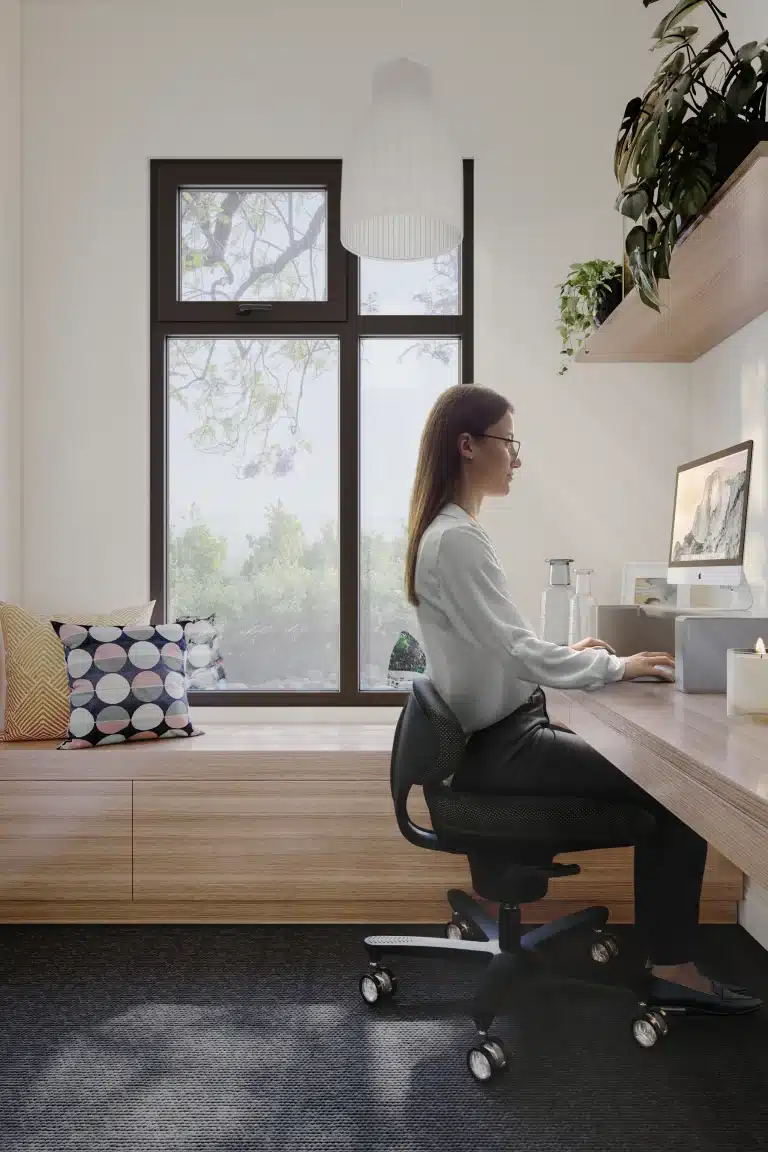
You have tried adjusting your diet. You have added workouts to your week. But that stubborn belly fat refuses to move. What if the missing piece is not what you do at the gym – but how you sit at your desk for the other eight hours of your day?
The relationship between posture and belly fat is more significant than most people realize. Bad posture does not just make your stomach look bigger – it actively creates conditions that promote abdominal fat storage and make it harder for your body to burn calories. And sitting posture and belly fat are connected through mechanisms that no amount of crunches can override if you spend your workday slouched in a static chair.
How Bad Posture Contributes to Belly Fat
The Slouch Creates the Pouch
When you slouch, your abdominal muscles disengage completely. Your core switches off. Without active engagement, these muscles weaken over time, losing their ability to hold your midsection firm. The result is a protruding belly that is partly muscular laxity and partly the visible consequence of fat that has no structural resistance.
Stand in front of a mirror and slouch. Then stand tall and engage your core. The visual difference is immediate – but the metabolic difference is what matters over months and years.
Cortisol and Abdominal Fat Storage
Poor posture elevates cortisol – the primary stress hormone. This is not speculation. Research has shown that collapsed, closed postures increase cortisol levels, while open, upright postures decrease them. Chronically elevated cortisol is one of the strongest drivers of visceral fat accumulation – the deep belly fat that wraps around your organs and is most resistant to diet and exercise.
When your sitting posture keeps cortisol elevated for eight hours a day, five days a week, your body is receiving a constant signal to store fat in your abdomen. No workout can fully compensate for that level of hormonal disruption.
Reduced Metabolic Rate
Static, slouched sitting is the lowest energy state your body can occupy while awake. Your muscles are disengaged, your circulation is sluggish, and your metabolic rate drops to near-resting levels. Over a full workday, this means hundreds of calories that could have been burned are instead stored – often as belly fat.
The difference between static sitting and active sitting may seem small in any given hour. But compounded over weeks, months, and years, it represents a significant metabolic gap that directly affects your waistline.
Digestive Compression
A hunched posture compresses your abdominal organs, including your stomach and intestines. This compression slows digestion, can contribute to bloating, and may impair the efficient processing of nutrients. Poor digestion does not directly cause fat gain, but it creates an environment where your body is less efficient at processing what you eat – and inefficiency favors storage over utilization.
Why Exercise Alone Cannot Fix a Sitting Problem
Many people attack belly fat exclusively through diet and exercise while ignoring the eight hours they spend sitting. This approach has a fundamental flaw.
The Math Does Not Add Up
A typical workout burns 300 to 500 calories in 45 minutes. But if your sitting posture keeps your metabolism suppressed for eight hours, the deficit created by inactivity can exceed what you burn at the gym. You cannot out-exercise a metabolic environment that is working against you for the majority of your day.
Core Engagement Is a Full-Day Job
Your core muscles are designed to work continuously at low levels – maintaining posture, stabilizing your spine, supporting movement. When you only engage them during a 45-minute workout and let them shut off for eight hours of slouched sitting, you are using them for a fraction of their intended capacity. Building a strong, flat midsection requires consistent engagement, not just occasional intense effort.
Cortisol Does Not Reset at the Gym
Exercise does reduce cortisol temporarily. But if you return to a slouched posture for the rest of the day, cortisol rises again. The net hormonal effect of one hour of exercise followed by seven hours of stress-promoting posture still favors fat storage. Addressing posture and belly fat means addressing the full day, not just the workout window.
How Active Sitting Fights Belly Fat
Active sitting attacks belly fat through multiple mechanisms simultaneously — and it does so during the hours when most people are passively gaining weight.
Continuous Core Engagement
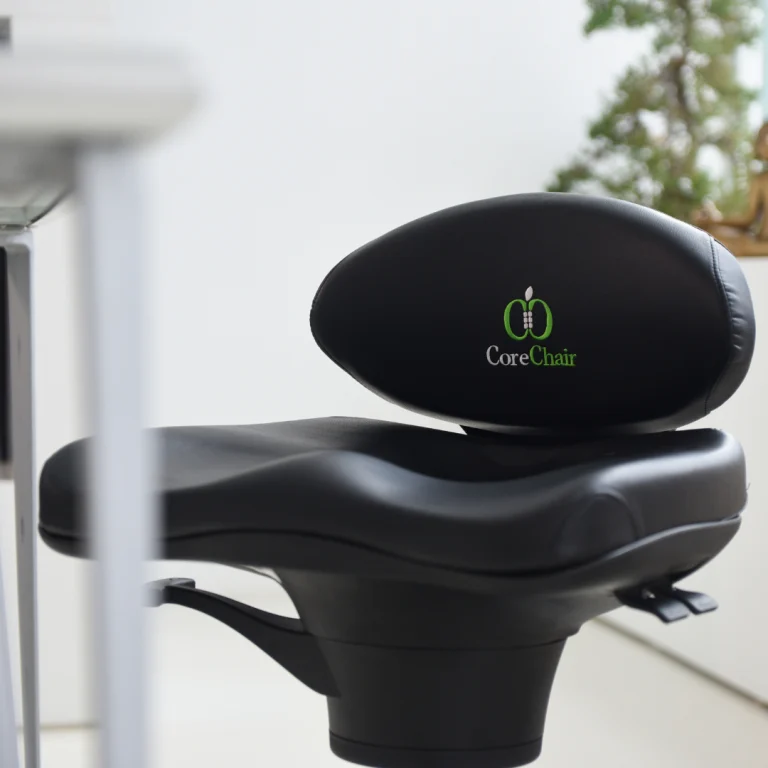
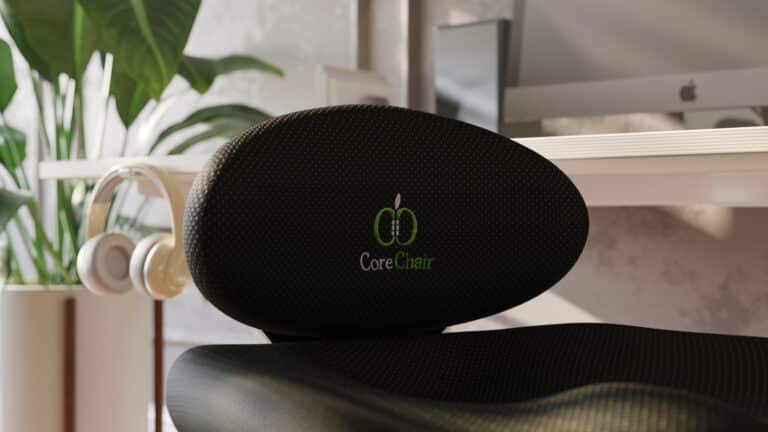
CoreChair is built on a patented movement base that requires continuous, subtle core engagement to maintain balance. This is not exhausting or distracting – it is the kind of low-level activation your core muscles are designed for. But over an eight-hour workday, this sustained engagement keeps your abdominal muscles active, toned, and metabolically demanding.
Research from the University of Waterloo confirmed that CoreChair significantly increased trunk muscle activation compared to both traditional ergonomic chairs and stability balls – delivering core engagement that stability balls promise but cannot safely sustain for a full workday.
Higher Caloric Burn Throughout the Day
Active sitting burns measurably more calories than static sitting. The Mayo Clinic evaluated CoreChair under its NEAT™ (Non-Exercise Activity Thermogenesis) certification and confirmed that it produces meaningful increases in daily energy expenditure. Additional research by Davidson et al. (2025) showed significant increases in metabolism and oxygen consumption during standard office tasks using active seating.
These are not dramatic calorie burns – but they do not need to be. Small, consistent increases in daily energy expenditure, sustained over months, create the caloric deficit that reduces belly fat without requiring additional gym time.
Better Posture Reduces Cortisol
By maintaining natural upright alignment, CoreChair keeps your body in the open, expansive posture associated with lower cortisol levels. This addresses one of the most powerful hormonal drivers of abdominal fat storage – not through supplements or medication, but through the simple mechanics of how you sit.
When your body spends the workday in a posture that signals safety and confidence rather than stress and withdrawal, your hormonal environment shifts away from fat storage and toward fat utilization.
Improved Circulation Supports Fat Metabolism
Fat metabolism requires adequate blood flow to transport fatty acids to muscles where they can be burned. Static sitting impairs this circulation, particularly in the lower body and abdomen. The University of Guelph study demonstrated that active sitting on CoreChair improved blood flow — supporting the circulatory conditions necessary for efficient fat metabolism.
Practical Steps to Target Belly Fat Through Better Sitting
1. Replace Your Static Chair
The single most impactful change is switching from a static chair to an active sitting solution. A CoreChair Classic or CoreChair Elite transforms your sitting hours from metabolically dead time into continuous, gentle physical activity.
2. Combine Active Sitting with Standing Breaks
Every 45 minutes, stand for two to three minutes. Stretch, walk briefly, then return to your CoreChair. This combination maximizes metabolic activity throughout the day and prevents any residual stiffness.
3. Use Your Sitting Time for Core Activation
While on your CoreChair, periodically engage in deliberate lateral and rotational movements. Gently shift your weight side to side or rotate your hips in small circles. These intentional movements amplify the core engagement that the chair naturally provides.
4. Maintain Awareness of Your Posture
Even on an active chair, periodic check-ins help. Three times daily, notice whether you are sitting tall with an open chest. CoreChair makes this easier by design, but conscious reinforcement builds the postural habits that keep cortisol low and your core engaged.
5. Support Your Sitting with Smart Nutrition
Active sitting creates a better metabolic environment, but nutrition still matters. Focus on whole foods, adequate protein, and consistent meal timing. When your sitting posture and your nutrition are both working for you, belly fat reduction accelerates significantly.
Sit Your Way to a Flatter Midsection
Posture and belly fat are connected through core engagement, hormonal balance, metabolic rate, and circulation. A chair that lets you slouch is working against your midsection for eight hours every day — no matter how disciplined your diet and exercise routine.
CoreChair’s research-backed active sitting design keeps your core engaged, your metabolism elevated, your cortisol in check, and your circulation flowing — transforming sitting time from a fat-storage period into an active part of your fitness strategy. Browse the full collection and read what real users experience.
Research and References
- Cornell University Pressure Mapping Study – Better weight distribution and comfort on CoreChair vs high-end ergonomic chairs.
- University of Waterloo Posture & Muscle Recruitment Study – CoreChair increased trunk stability, movement, and core muscle activation.
- Mayo Clinic & Arizona State University Energy Expenditure Study – CoreChair showed higher energy expenditure during typical office tasks.
- Mayo Clinic NEAT™ Certification – Measurable increases in daily energy output under NEAT™ guidelines.
- University of Guelph Physiological & Cognitive Measures Study – Improved blood flow, cognitive performance, and movement on CoreChair.
- Memorial University Active Sitting Study – CoreChair promoted healthier sitting, improved blood flow, and reduced perceived back pain.
- Active Sitting Increases Energy Expenditure (Davidson et al., 2025) – Significant increases in metabolism and oxygen consumption during active sitting.
- Biomechanical Benefits of Active Sitting (Leger et al., 2023) – Active chairs increase trunk movement, muscle activity, and postural variation.
- Active Sitting vs Traditional Sitting and Standing (Leger et al., 2022) – Active sitting improves circulation, muscle engagement, and energy expenditure.