When a patient comes to a physiotherapist with back pain, neck tension, or postural problems caused by desk work, the conversation almost always reaches the same topic: the chair. Not as the only factor, but as the one that operates for eight or more hours every day — shaping the spine, switching muscles on or off, and either supporting or systematically undermining everything else in a treatment plan.
What physiotherapists look for in a chair is specific and grounded in biomechanics. And the criteria they use consistently point in one direction: chairs that support core strength and posture simultaneously, through movement rather than rigid support.
What Physiotherapists Actually Look For in an Office Chair
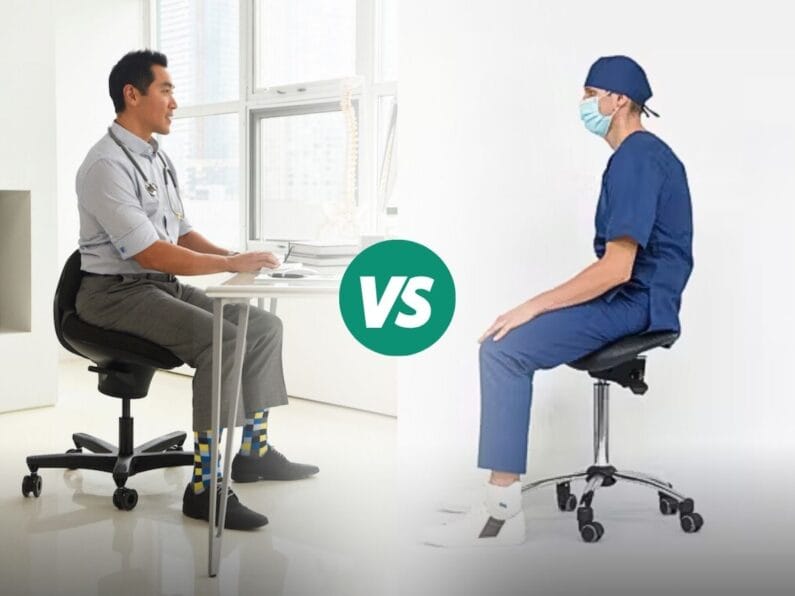
Active Muscles, Not Passive Support
The most important thing a physiotherapist considers when recommending a chair is not lumbar cushioning or armrest height. It is whether the chair keeps the body’s postural muscles engaged or allows them to switch off completely.
Physiotherapy is built on the principle that muscles need use to stay healthy. A chair that does all the work of supporting the spine — through fixed lumbar supports and rigid backrest structures — creates muscular passivity. The very muscles responsible for maintaining spinal stability and upright alignment become inactive, weaken over time, and lose their ability to protect the spine during the everyday movements that cause injury.
A physio-recommended chair creates a seating environment where your core and postural muscles remain gently but continuously active. This is not about discomfort or instability — it is about the difference between a chair that holds you and a chair that works with you.
Neutral Pelvic Alignment
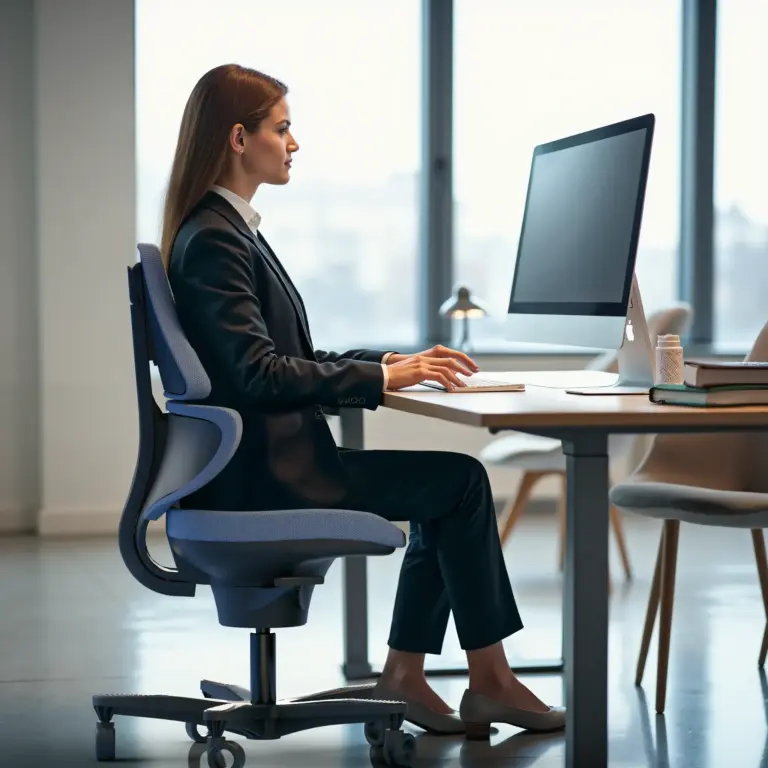
The second criterion is pelvic positioning. In a neutral pelvis, the lumbar curve is maintained, the thoracic spine can extend, and the head can balance over the shoulders. This is the postural alignment that physiotherapists spend considerable effort trying to restore in patients whose years of desk work have progressively distorted it.
A flat or posteriorly-angled seat promotes the sacral sitting posture — weight on the sacrum, posterior pelvic tilt, flattened lumbar curve — that chiropractors and physiotherapists see contributing to the majority of sitting-related back complaints. A physio-recommended chair positions the pelvis in neutral from the start, without requiring sustained muscular effort to maintain.
Pressure Distribution
Physiotherapists and rehabilitation specialists understand that sustained pressure on the same tissue for hours at a time causes ischemia, nerve irritation, and compensatory muscle guarding. A chair that concentrates sitting pressure on the coccyx, sacrum, or narrow bands of soft tissue creates the discomfort that leads to fidgeting, compensatory postures, and eventually pain.
The preferred chair distributes pressure broadly across the sitting bones and upper thighs, protecting vulnerable structures and allowing the user to remain in good postural alignment without pain undermining their concentration.
Support for Movement, Not Against It
The human body is not designed to be stationary. Prolonged static posture — even in theoretically correct alignment — impairs circulation, reduces disc nutrition, and generates the muscle fatigue that causes postural collapse. Physiotherapists routinely prescribe movement as part of posture rehabilitation. A chair that actively prevents or discourages movement is working against the treatment.
The physio-recommended standard is a chair that supports movement — gentle, continuous, low-amplitude motion that keeps circulation flowing, discs hydrated, and postural muscles cycling between engagement and recovery.
The Inseparable Link Between Core Strength and Posture
Why Core Strength Is the Foundation
Physiotherapy practice is clear on this: core strength and posture are not separate qualities. Good posture is the visible expression of adequate core strength — the external result of an internal muscular system functioning as it should. Poor posture is, in most cases, a symptom of core weakness, not a primary condition in itself.
The core is not just the abdominals. It includes the deep spinal stabilizers (multifidus, erector spinae), the pelvic floor, the diaphragm, and the hip stabilizers — a three-dimensional muscular cylinder that controls every movement of the trunk and protects the spine under load. When this system is strong and well-coordinated, upright posture is effortless and sustainable. When it is weak or poorly activated, posture deteriorates regardless of how much the person tries to “sit up straight.”
How Desk Work Undermines Core Strength
The most damaging feature of conventional office chairs is not their shape — it is their effect on the core musculature. When a chair provides complete postural support, the core switches off. The deep stabilizers that should be engaged at a low level throughout the day become inactive. Over weeks and months, they weaken and lose their motor pattern — their ability to activate automatically in response to postural demand.
This is why so many desk workers find that rebuilding their postural musculature requires significant rehabilitation effort. Their muscles have not simply weakened — they have lost the automatic, reflexive activation that healthy posture depends on. Physiotherapy often involves retraining these activation patterns as much as building raw strength.
Sitting as Core Training
The most efficient way to develop this muscular foundation in office workers is to integrate core engagement into the sitting environment rather than treating it as a separate exercise activity. This is the principle behind active sitting — using the chair itself as a low-level but continuous training stimulus for the muscles that posture depends on.
When a chair requires continuous subtle adjustment to maintain balance and position, it engages the deep stabilizers that conventional chairs allow to rest. Over the course of a full workday, this accumulates into hours of low-intensity core activation — a volume of stimulus that targeted exercise sessions cannot replicate.
Why CoreChair Meets the Physio Standard

Research-Backed Core Engagement
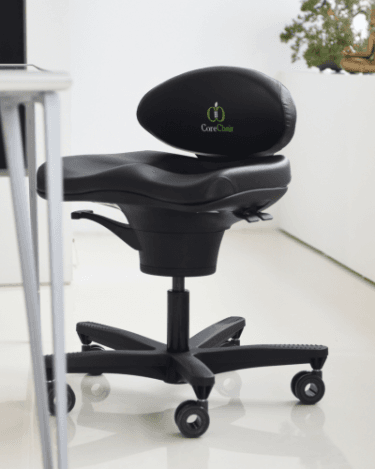
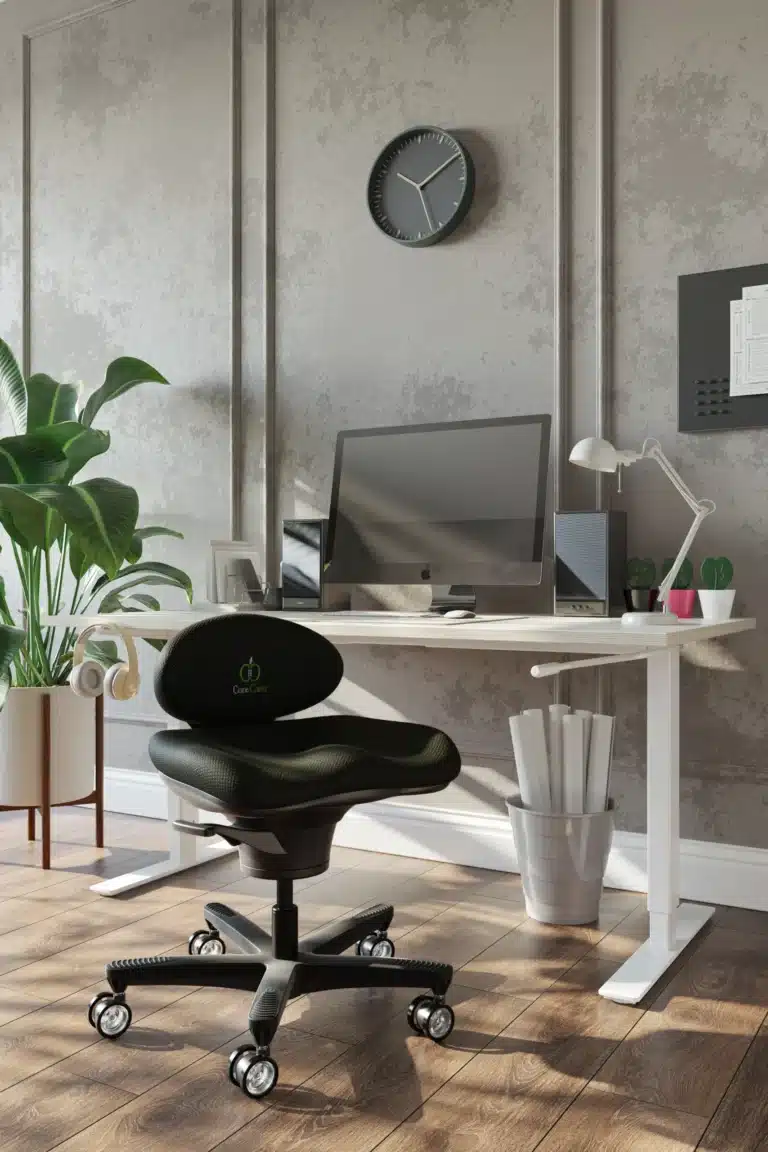
CoreChair is engineered around the principles that physiotherapists use to assess sitting environments. Its sculpted seat and patented 360-degree movement base create the conditions for genuine active sitting — continuous, safe, low-amplitude movement that keeps the core engaged without requiring effort or producing fatigue.
Research from the University of Waterloo directly measured this effect: CoreChair significantly increased trunk muscle activation compared to both conventional ergonomic chairs and stability balls. This is the clinical evidence that active sitting genuinely builds postural strength through a chair — it is a measured outcome, not a theoretical claim.
The study also found that CoreChair users moved more throughout the sitting session, maintaining the variety of positions that physiotherapists recommend and that static chairs prevent.
Neutral Pelvic Positioning
CoreChair’s sculpted seat surface is designed to position the pelvis in neutral alignment automatically. The ischial tuberosities — the sit bones — bear the load, the sacrum is unloaded, and the lumbar curve is maintained without active muscular effort to establish it. This is the pelvic alignment that physiotherapists identify as the foundation of healthy sitting, and CoreChair delivers it structurally rather than through willpower.
This means the core muscles that fire on CoreChair are firing from a correct postural baseline — reinforcing healthy movement patterns rather than compensating for structural dysfunction.
Superior Pressure Distribution
Cornell University research confirmed that CoreChair achieves significantly better sitting pressure distribution than high-end conventional ergonomic chairs. Pressure is spread more evenly through the appropriate load-bearing structures, protecting the sensitive tissue and bony prominences that conventional chairs compress over time.
This pressure advantage is directly relevant to the physiotherapy standard — sustained pressure is a primary driver of the discomfort and compensatory posture that undermine both core engagement and postural quality during long work sessions.
Physiological Benefits That Support Recovery
For patients in active physiotherapy rehabilitation, what happens in the chair between sessions matters as much as the session itself. Memorial University research found that CoreChair reduced perceived back pain and improved lower limb blood flow — the circulatory support that tissue healing and nerve function depend on.
The University of Guelph study measured improved cognitive performance and physiological measures during active sitting — indicating that the benefits of CoreChair extend beyond the musculoskeletal to the systemic health outcomes that physiotherapy rehabilitation aims to support.
The CoreChair Elite offers additional adjustability for patients with specific rehabilitation requirements — allowing precise positioning for individuals whose treatment plan requires particular pelvic or lumbar configurations.
How to Improve Core Strength and Posture With Active Sitting
Step 1: Start With the Right Chair
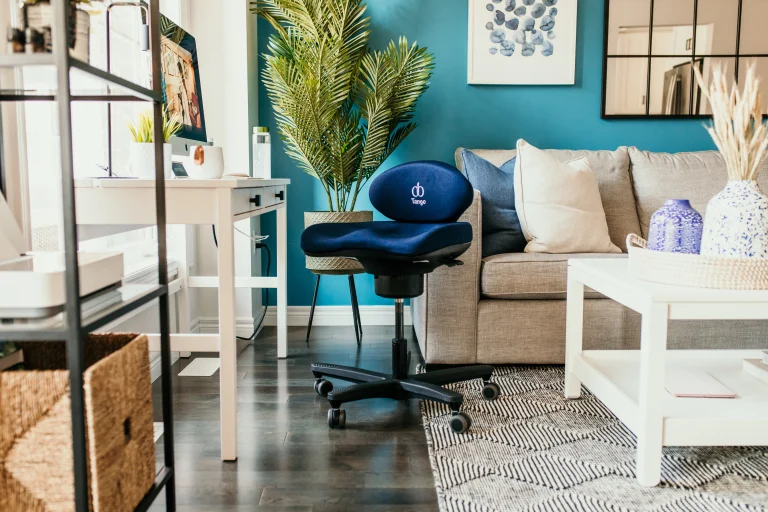
Building a strong postural foundation begins with the seating environment. Replace a passive static chair with CoreChair’s Classic model to establish the active sitting baseline that core engagement requires. This is the first step physiotherapists would endorse because it changes the environment rather than relying on behavioral change that fatigues.
Step 2: Allow an Adjustment Period
If you have been sitting passively for years, your core stabilizers will need time to adapt to the demands of active sitting. Begin with shorter sessions and gradually increase duration as your endurance builds. Most users find that their stamina improves significantly within two to three weeks as dormant stabilizer muscles reactivate and strengthen.
Step 3: Combine With Targeted Core Exercises
Active sitting and targeted exercise are complementary, not substitutes for each other. Physiotherapy-approved core exercises — dead bugs, bird dogs, pallof presses, and diaphragmatic breathing — address specific weaknesses and movement patterns that active sitting cannot fully target. Use CoreChair to maintain core engagement throughout the day and use targeted exercises to build the specific strengths your physiotherapist identifies.
Step 4: Address Your Full Workstation
Postural alignment and spinal stability depend on the entire workstation environment. Monitor height, keyboard position, and chair height all influence the postural demands placed on your core. A physiotherapist can assess your setup and identify adjustments that complement the work CoreChair is already doing. The goal is a workstation that supports the foundation of your overall postural health.
Step 5: Move Every Hour
Even with CoreChair’s continuous movement stimulus, regular standing and walking breaks are important. Every 60 minutes, leave your desk for two to three minutes. This resets your circulatory system, gives your stabilizers a different type of demand, and reinforces the movement habit that separates healthy workers from those who develop progressive postural dysfunction.

The Chair That Works the Way Physios Think
Physiotherapists do not recommend chairs that do the work for you. They recommend chairs that work with you — that maintain the movement, alignment, and muscle engagement that the body requires to stay healthy through a full working day.
CoreChair’s research-backed design meets this standard more comprehensively than any conventional ergonomic chair. It is the chair that actively supports spinal health and postural improvement rather than passively promising to fix what it is quietly making worse.
Explore the full CoreChair collection and discover what physiotherapists, researchers, and everyday users say about sitting that actually works for your body.
Your chair should not be your physiotherapist’s competition. It should be their ally.
Research and References on CoreChair Benefits
- Cornell University Pressure Mapping Study This study demonstrates better weight distribution and comfort on CoreChair when compared to high-end ergonomic chairs, indicating that CoreChair provides superior support for long hours of sitting.
- University of Waterloo Posture & Muscle Recruitment Study The study shows that CoreChair significantly increases trunk stability, promotes movement, and activates core muscles, helping to improve posture and reduce the strain that comes with traditional seating.
- University of Guelph Physiological & Cognitive Measures Study This research highlights that CoreChair improves blood flow, enhances cognitive performance, and promotes more movement. These benefits contribute to better overall health and productivity.
- Memorial University Active Sitting Study The findings indicate that CoreChair reduces perceived back pain, improves sitting posture, and boosts lower limb blood flow, making it an effective option for individuals who sit for long periods.
- Mayo Clinic NEAT™ Certification CoreChair has received NEAT™ Certification for its ability to increase daily energy output, in line with NEAT™ (Non-Exercise Activity Thermogenesis) guidelines, showing that it helps people stay active throughout the day.
- Biomechanical Benefits of Active Sitting (Leger et al., 2023) Active chairs, like CoreChair, increase trunk movement, muscle activity, and postural variation, contributing to better overall biomechanics and reducing the risks of sedentary behavior.
- Active Sitting vs Traditional Sitting and Standing (Leger et al., 2022) Active sitting, as facilitated by CoreChair, improves circulation, engages muscles more effectively, and boosts energy expenditure, making it superior to both traditional sitting and standing postures.
- Physiological and Cognitive Outcomes with Multi-Axial Chair (Triglav et al., 2019) Active multi-axial chairs, such as CoreChair, improve circulation and reduce cognitive errors, highlighting the dual benefits of physical health and mental performance when using CoreChair.
- Effects on Reading and Typing Productivity (Doroff et al., 2019) Active sitting with CoreChair supports cognitive performance and task productivity, showing that users can maintain focus and perform better in activities like reading and typing while seated on CoreChair.